
How to Protect Plants from Frost Tonight (and Will Mums Survive?)
A quick, research-backed checklist for frost and freeze nights
When a frost advisory or freeze warning is in the forecast, a few minutes before sunset can save your tomatoes, flowers, and fall mums. Here’s how cold is too cold, which plants need help, how to cover them properly, and what to do the morning after.
Ice crystals form on leaves, usually on clear, calm nights. It kills tender plants such as tomatoes, basil, and impatiens. Hardy crops shrug it off.
Plant tissue freezes through and cells rupture. Covers usually stop working at this point, so harvest or move what you can.
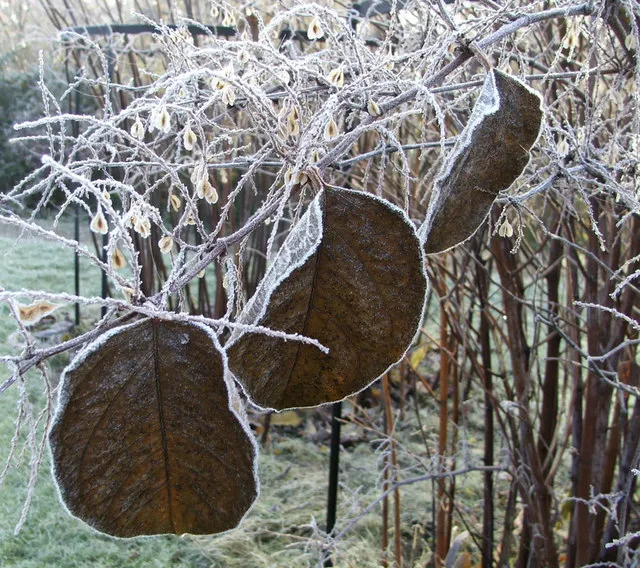

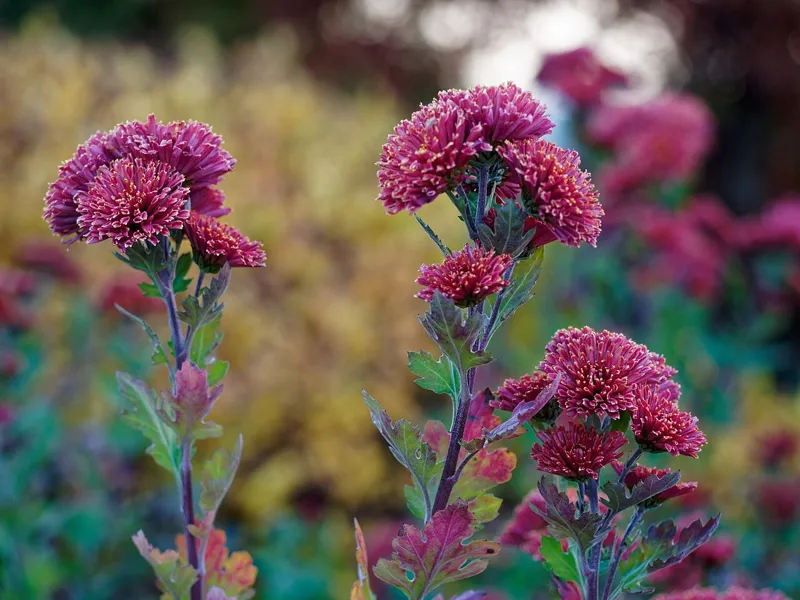
_Photo_F.D.Richards,_SE_Michigan,_11_2020_(50580762778).jpg)
Frost vs. freeze: what the forecast means
- Frost forms when leaves and the ground radiate heat to a clear sky and drop to freezing, even if the official air temperature reads a few degrees higher. Low spots and open lawns frost first.
- Freeze means the air itself, and the inside of the plant, drops below 32°F. A freeze does more damage than a frost.
- Hard (killing) freeze is about 28°F or colder. Iowa State Extension notes covers are usually no longer effective below about 28°F, and damage can happen above that if freezing lasts 5 hours or more.
Which plants are tender, and which are hardy?
| Group | Plants | What to do |
|---|---|---|
| Killed by a light frost (32°F) | Tomatoes, peppers, eggplant, beans, sweet corn, cucumbers, summer squash, melons, okra, sweet potatoes, basil; annual bedding plants such as impatiens, coleus and begonias; tropical and houseplants summering outdoors | Harvest or cover before the first frost; bring containers indoors |
| Tolerates light frost (28–32°F) | Beets, carrots, cauliflower, celery, chard, lettuce, radishes, parsley, peas; pumpkins and winter squash only briefly | Cover when a freeze below 28°F is forecast |
| Hardy (survives a hard freeze below 28°F) | Kale, collards, cabbage, broccoli, Brussels sprouts, kohlrabi, turnips, spinach, leeks, garlic; established perennials, trees and shrubs suited to your zone | Usually no cover needed; flavor of kale and Brussels sprouts often improves |
| Garden mums in the ground | Chrysanthemum × morifolium. Open flowers may brown in a frost and a hard freeze ends the bloom; established plants are perennial in about zones 5–9 (cultivar-dependent) | Cover flowers on frosty nights; leave stems standing over winter; mulch 3–4 in. after the ground freezes |
| Garden (“hardy”) mums still in containers | Roots in a pot are exposed on all sides, so plants freeze far more easily than in the ground; fall-bought, still-potted mums rarely survive winter outdoors | Bring into an unheated garage or basement, or a cold frame, before a hard freeze; keep the soil barely moist |
| Florist mums (gift and grocery-store pots) | Bred for indoor display, not cold hardiness | Treat as an annual or keep indoors |
Groupings from Michigan State, South Dakota State and NC State Extension vegetable guides and Virginia Tech, Iowa State and University of Missouri guides on mums. Varieties differ, and a long freeze does more damage than a brief dip.
How to cover plants the right way
- Water the day before. Moist soil holds more daytime heat and gives it back overnight. Don’t dig or cultivate just before a frost; loose, dry soil lets cold air in.
- Use sheets, blankets, or frost cloth. Lightweight fabric is best. Row cover can add a few degrees of protection, and sometimes more.
- Drape it all the way to the ground. The cover works by trapping heat rising from the soil, not the plant’s own heat. Weigh the edges down with bricks or soil and don’t gather it around the stem.
- Keep plastic off the leaves. Plastic touching foliage conducts cold, so the leaves freeze where it touches. If plastic is all you have, hold it up on stakes, buckets, or chairs.
- Cover before sunset. That way you trap the day’s warmth in the soil.
- Bring containers in. Move potted plants, including mums, into a garage, shed, or porch. Group pots you can’t move against the house and mulch around them.
- Uncover in the morning. Remove covers once the air is back above freezing. Frost nights are usually followed by sunny days, and heat builds fast under a cover, especially plastic.
Wet covers lose their power: Colorado State Extension notes that blankets and sheets work only while dry. A soaked cover can chill the plant by evaporation.
Harvest tender crops before a freeze
- Tomatoes: pick every fruit that is at least “mature green” (pale, shiny, starting to lighten) and ripen it indoors at room temperature.
- Peppers, eggplant, beans, cucumbers, summer squash, okra: harvest everything usable. They won’t survive even a light frost.
- Winter squash and pumpkins: bring them in before a hard freeze. Fruit that has started to color will keep coloring off the vine.
- Sweet potatoes: dig them before frost, ideally before the soil drops below 50°F.
- Leave the hardy ones: kale, collards, Brussels sprouts, parsnips, and carrots can stay in the garden and often taste sweeter after cold weather.
Mums and frost: in the ground vs. in a pot
Garden mums (Chrysanthemum × morifolium, once sold as “hardy mums”) are perennial in roughly zones 5–9, but hardiness varies by cultivar. Virginia Tech Extension explains why they’re no longer called “hardy.” A light frost may brown open flowers, but the plant keeps going.
- In the ground: leave the stems and foliage standing through winter (Iowa State found mums survive better this way). After the ground freezes, add 3–4 inches of loose mulch such as straw, pine needles, or evergreen boughs to prevent frost heaving.
- In containers: potted roots freeze much more easily. Bring pots into an unheated garage, basement, or cold frame before a hard freeze, and keep the soil barely moist until spring. Mums planted late in fall, while in full bloom, often don’t root in time to survive winter.
- Florist mums: grown for indoor display and not winter hardy.
After frost damage: don’t rush to prune
- Wait. Cold injury often takes days or weeks to show fully, and damaged leaves protect the living tissue below from the next freeze.
- Prune woody plants in spring once new growth shows what is alive. Scratch a twig: green under the bark means alive, brown means dead. Cut back to living wood.
- Annuals and vegetables killed by frost can be pulled any time. Tender perennials, such as some salvias and lantana, may resprout from the roots.
- The only exception: remove broken limbs that could fall right away.
When does the first frost usually arrive?
| USDA zone | Typical first fall frost (32°F) | Earlier to later locations in the zone |
|---|---|---|
| Zone 3 | Sep 23 | Sep 7 – Oct 1 |
| Zone 4 | Sep 30 | Sep 19 – Oct 7 |
| Zone 5 | Oct 7 | Sep 26 – Oct 18 |
| Zone 6 | Oct 19 | Oct 5 – Oct 28 |
| Zone 7 | Oct 28 | Oct 17 – Nov 8 |
| Zone 8 | Nov 10 | Oct 31 – Nov 20 |
| Zone 9 | Dec 1 | Nov 6 – Dec 20 |
| Zone 10 | Frost is occasional. In a typical year many locations never reach 32°F; when frost does come it is usually in January. | |
| Zone 11 | Frost is rare to absent. | |
How we calculated this table: for each ZIP code we take the nearest NOAA NCEI 1991–2020 Climate Normals station’s 50%-probability 32°F first-fall-frost date, then report the median across the zone and the range covering the middle half of its ZIP codes. A 50% date means frost comes earlier than this in half of years. Get the date for your own address in the ZIP planner.
Find planting dates for your zone: Zone 3 · Zone 4 · Zone 5 · Zone 6 · Zone 7 · Zone 8 · Zone 9 · Zone 10 · Zone 11. Or enter your ZIP for your nearest station’s frost dates.
Frequently asked questions
Will mums survive frost?
Garden mums in the ground handle a light frost (around 32°F). Open flowers may brown, but the plant survives. A hard freeze (28°F or colder) ends the bloom. Mums still in their nursery pots are much more vulnerable because the roots are exposed. Bring them into an unheated garage or basement before a hard freeze, or cover them on frosty nights.
What temperature is a frost vs. a hard freeze?
Light frost and freeze damage to tender plants starts around 32°F. A hard (killing) freeze is about 28°F or colder, and covers usually stop protecting plants once the air drops below about 28°F, especially if the cold lasts five hours or more.
Can I use plastic to cover plants from frost?
Only if it doesn’t touch the leaves. Plastic conducts cold, and foliage touching it often freezes. Sheets, blankets, or frost cloth are better. Hold any cover off the plant with stakes, let it reach the ground, and remove it in the morning.
Should I water plants before a frost?
Yes. Moist soil absorbs more heat during the day and releases it at night. Water dry soil the day before a frost, but avoid waterlogging it.
When should I prune frost-damaged plants?
Wait. Damage often isn’t fully visible for days or weeks, and dead leaves protect living tissue from the next cold snap. Prune woody plants in spring once new growth shows what is alive. Remove only hazardous broken limbs right away.
Sources & further reading
- Iowa State University Extension and Outreach (Yard and Garden): How to protect plants from frost and freeze
- Michigan State University Extension: Protecting trees and shrubs from frost damage
- Michigan State University Extension: Identifying and preventing freeze damage in fall vegetables
- South Dakota State University Extension: Fall frost tolerance of common vegetables
- NC State Extension: Frost and freeze protection for vegetable crops
- Colorado State University Extension: Frost protection and extending the growing season
- University of Florida IFAS Extension: Winter plant protection
- Virginia Cooperative Extension (Virginia Tech): Overwintering mums
- Iowa State University Extension and Outreach (Yard and Garden): Growing chrysanthemums in Iowa
- University of Missouri Integrated Pest Management: Winter care of hardy mums
- UC Statewide Integrated Pest Management Program (UC ANR): Freezing and frost
- N.C. Cooperative Extension, Wayne County Center: Care for cold damaged plants
- Frost dates: NOAA NCEI U.S. Climate Normals 1991–2020; zones: USDA 2023 Plant Hardiness Zone Map ZIP data (PRISM Climate Group, Oregon State University).
More guides
Frost dates by city · All planting calendars · Planting peonies in fall · Weed guide