Yellow Woodsorrel (Oxalis): How to Identify and Control It
Oxalis stricta · Perennial broadleaf (often annual)
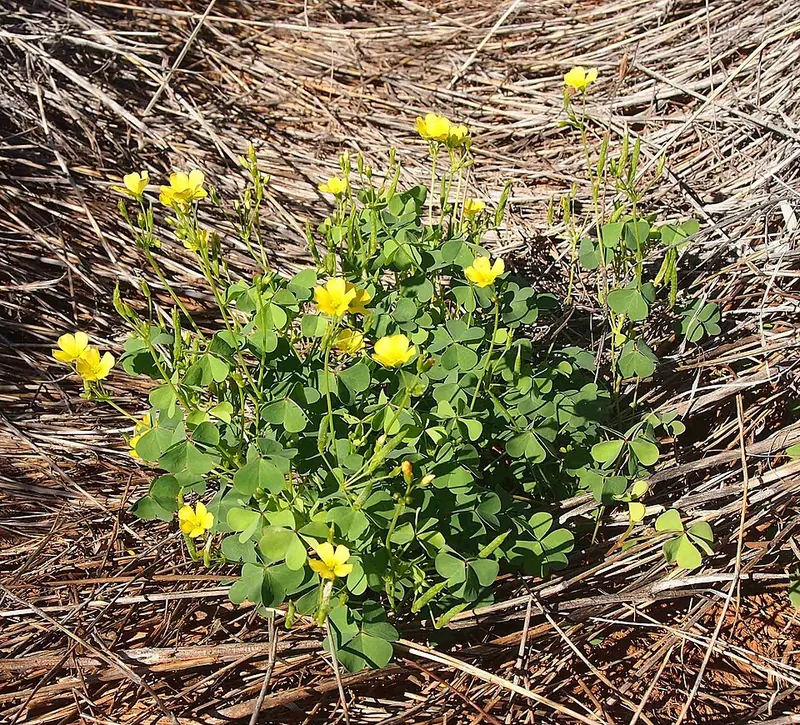

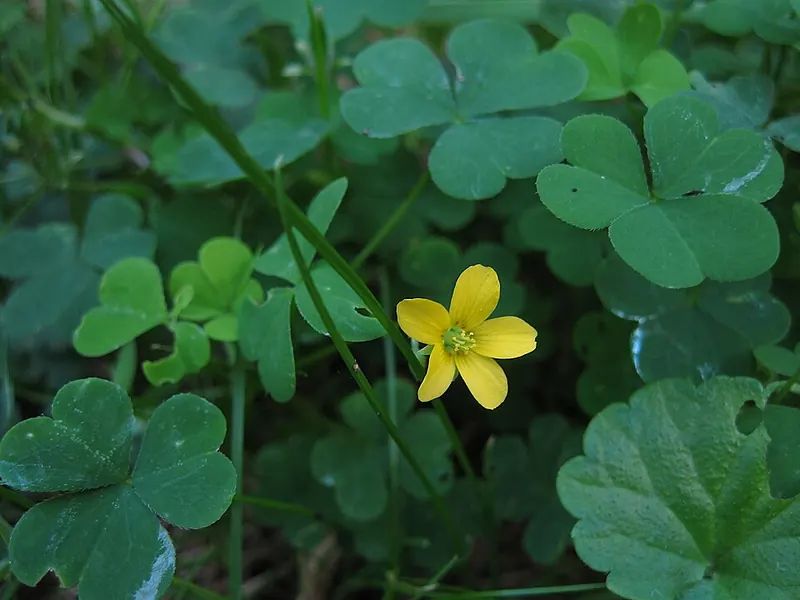

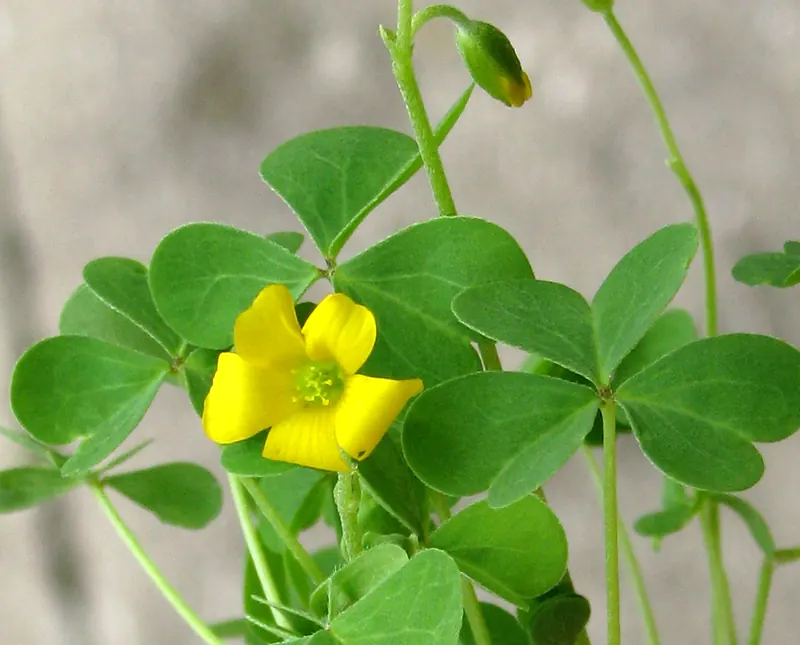

How to identify yellow woodsorrel
- Clover-like leaves with three heart-shaped leaflets that fold at night
- Small five-petaled yellow flowers
- Upright to spreading stems
- Narrow seed pods that burst and fling seed
Why it shows up
Common in lawns, beds, greenhouses and nursery pots. Exploding seed pods spread it, and it tolerates many soils.
Where it's a problem
- Northeast & Mid-Atlantic (zones 4–8)
- Southeast (zones 7–10)
- Midwest (zones 4–7)
- Great Plains & Texas (zones 3–9)
- West & Pacific Northwest (zones 3–10 (1–8 in Alaska))
Control methods
1. Cultural (prevention)
- Thicken turf; avoid overwatering
- Inspect nursery pots before planting
2. Mechanical
- Pull before pods ripen, getting the shallow roots
3. Organic options
- Mulch beds
4. Chemical options
Herbicide safety — always follow the label. The label is the law: use only products labeled for your site, turfgrass or crop, and follow rates, timing, weather limits and protective equipment directions exactly. Keep people and pets off treated areas as directed, and check state and local rules. Active ingredients named here are examples from extension guidance, not endorsements; availability varies by state.
- Pre-emergents labeled for oxalis in beds
- In lawns, products containing triclopyr or fluroxypyr, often with other broadleaf herbicides
When to treat yellow woodsorrel by USDA zone
| USDA zone | Typical timing (from NOAA frost-date medians) |
|---|---|
| Zone 3 | Best: Aug 19 to Oct 7 (fall, around the first frost on Sep 23); a second option is spring after full green-up (from ~Jun 7) |
| Zone 4 | Best: Aug 26 to Oct 14 (fall, around the first frost on Sep 30); a second option is spring after full green-up (from ~May 31) |
| Zone 5 | Best: Sep 2 to Oct 21 (fall, around the first frost on Oct 7); a second option is spring after full green-up (from ~May 24) |
| Zone 6 | Best: Sep 14 to Nov 2 (fall, around the first frost on Oct 19); a second option is spring after full green-up (from ~May 17) |
| Zone 7 | Best: Sep 23 to Nov 11 (fall, around the first frost on Oct 28); a second option is spring after full green-up (from ~May 2) |
| Zone 8 | Best: Oct 6 to Nov 24 (fall, around the first frost on Nov 10); a second option is spring after full green-up (from ~Apr 14) |
| Zone 9 | Best: Oct 27 to Dec 15 (fall, around the first frost on Dec 1); a second option is spring after full green-up (from ~Mar 16) |
Zones 10–11 (frost rare): follow germination flushes after rains; pre-emergents in late summer/fall for winter weeds and late winter for summer weeds. Find your exact frost dates with the ZIP planner. Soil temperature and the product label take priority over the calendar.
Frequently asked questions
How do I get rid of yellow woodsorrel naturally?
Start with cultural and mechanical controls: Thicken turf; avoid overwatering; Inspect nursery pots before planting; Pull before pods ripen, getting the shallow roots.
What does yellow woodsorrel look like?
Clover-like leaves with three heart-shaped leaflets that fold at night; Small five-petaled yellow flowers; Upright to spreading stems; Narrow seed pods that burst and fling seed.
When is the best time to treat yellow woodsorrel?
Fall, from about a month before to two weeks after your first fall frost, is usually most effective because plants move sugars (and herbicide) down into their roots.
Where is yellow woodsorrel a problem in the US?
Yellow Woodsorrel is common in: Northeast & Mid-Atlantic, Southeast, Midwest, Great Plains & Texas, West & Pacific Northwest.
Sources & further reading
- NC State Extension Gardener Plant Toolbox: Oxalis stricta
- UC IPM (University of California) weed gallery: weed photo gallery
- Marble et al. (2016). Impact of Application Rate, Timing, and Indaziflam Formulation on Early Postemergence Control ofOxalis stricta. Weed Technology. doi:10.1614/wt-d-16-00002.1
- Herbicide examples are typical active ingredients named in university extension guides; products and registrations vary by state. See your state Cooperative Extension weed-control guide.
Related weeds in the same regions
Crabgrass · Dandelion · White Clover · Field Bindweed · Yellow Nutsedge · Common Chickweed · Broadleaf Plantain · Creeping Charlie (Ground Ivy) · All 27 weeds
Planning a garden? See planting calendars by state & zone.