Puncturevine: How to Identify and Control It
Tribulus terrestris · Summer annual broadleaf


_2.jpg)
How to identify puncturevine
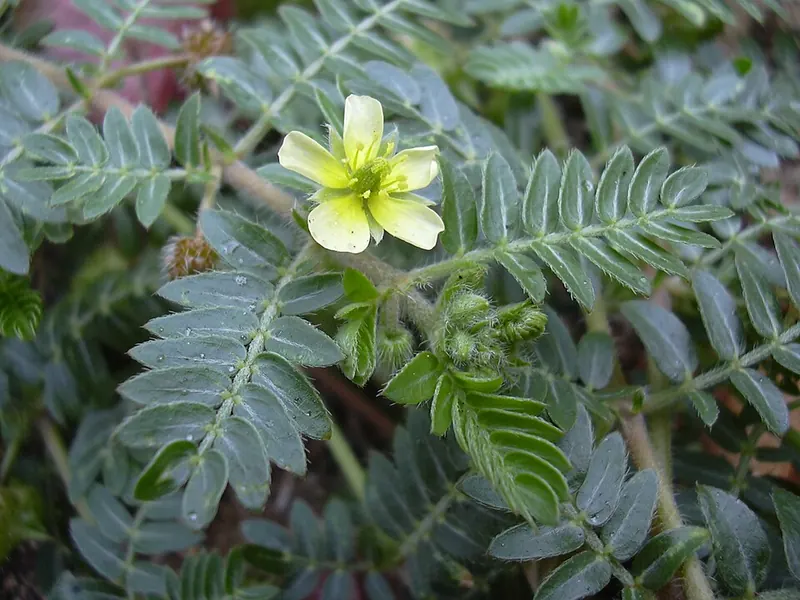
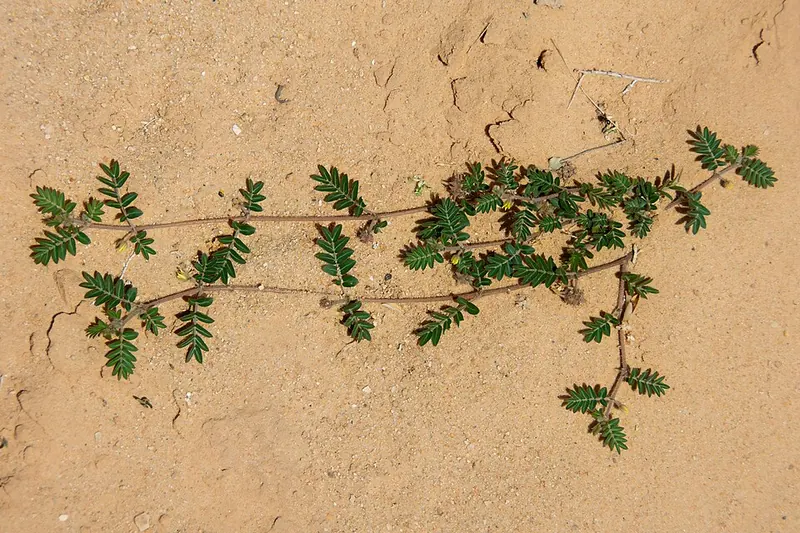
- Prostrate stems radiating up to several feet
- Opposite leaves divided into 4–8 pairs of small leaflets
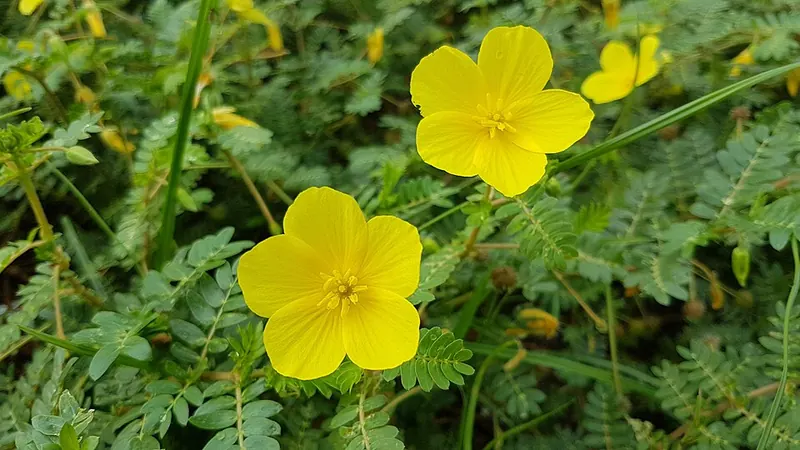
- Small five-petaled yellow flowers
- Hard, spiny burs that break into tack-like segments
Why it shows up
A weed of hot, dry, sandy or compacted ground in the West and Plains. Burs puncture bike tires and paws and hitchhike long distances.
Where it's a problem
- Great Plains & Texas (zones 3–9)
- Southwest & Mountain (zones 4–10) — Abundant on dry roadsides and lots; biocontrol weevils were released in parts of the Southwest.
- West & Pacific Northwest (zones 3–10 (1–8 in Alaska)) — Common in California's Central Valley and the dry interior West.
Control methods
1. Cultural (prevention)
- Improve and irrigate turf so it outcompetes
- Mulch bare areas
2. Mechanical
- Hoe or pull before burs form; collect fallen burs
3. Organic options
- Biological control weevils have been released in some western states
4. Chemical options
Herbicide safety — always follow the label. The label is the law: use only products labeled for your site, turfgrass or crop, and follow rates, timing, weather limits and protective equipment directions exactly. Keep people and pets off treated areas as directed, and check state and local rules. Active ingredients named here are examples from extension guidance, not endorsements; availability varies by state.
- Pre-emergents labeled for puncturevine (e.g. pendimethalin, oryzalin where labeled)
- Post-emergent broadleaf herbicides on young plants
When to treat puncturevine by USDA zone
| USDA zone | Typical timing (from NOAA frost-date medians) |
|---|---|
| Zone 3 | Pre-emergent around Apr 19–May 3 (2–4 weeks before the typical last frost, May 17); spot-treat or pull escapes in early summer |
| Zone 4 | Pre-emergent around Apr 12–Apr 26 (2–4 weeks before the typical last frost, May 10); spot-treat or pull escapes in early summer |
| Zone 5 | Pre-emergent around Apr 5–Apr 19 (2–4 weeks before the typical last frost, May 3); spot-treat or pull escapes in early summer |
| Zone 6 | Pre-emergent around Mar 29–Apr 12 (2–4 weeks before the typical last frost, Apr 26); spot-treat or pull escapes in early summer |
| Zone 7 | Pre-emergent around Mar 14–Mar 28 (2–4 weeks before the typical last frost, Apr 11); spot-treat or pull escapes in early summer |
| Zone 8 | Pre-emergent around Feb 24–Mar 10 (2–4 weeks before the typical last frost, Mar 24); spot-treat or pull escapes in early summer |
| Zone 9 | Pre-emergent around Jan 26–Feb 9 (2–4 weeks before the typical last frost, Feb 23); spot-treat or pull escapes in early summer |
Zones 10–11 (frost rare): follow germination flushes after rains; pre-emergents in late summer/fall for winter weeds and late winter for summer weeds. Find your exact frost dates with the ZIP planner. Soil temperature and the product label take priority over the calendar.
Frequently asked questions
How do I get rid of puncturevine naturally?
Start with cultural and mechanical controls: Improve and irrigate turf so it outcompetes; Mulch bare areas; Hoe or pull before burs form; collect fallen burs.
What does puncturevine look like?
Prostrate stems radiating up to several feet; Opposite leaves divided into 4–8 pairs of small leaflets; Small five-petaled yellow flowers; Hard, spiny burs that break into tack-like segments.
When is the best time to treat puncturevine?
Prevent it with a pre-emergent applied 2–4 weeks before your average last spring frost, when soil reaches about 55°F.
Where is puncturevine a problem in the US?
Puncturevine is common in: Great Plains & Texas, Southwest & Mountain, West & Pacific Northwest.
Sources & further reading
- NC State Extension Gardener Plant Toolbox: Tribulus terrestris
- UC IPM (University of California) weed gallery: weed photo gallery
- Johnson et al. (1993). Imazethapyr and Imazaquin Control Puncturevine (Tribulus terrestris) but Carry Over to Spinach (Spinacia oleracea). Weed Technology. doi:10.1017/s0890037x00036915
- Herbicide examples are typical active ingredients named in university extension guides; products and registrations vary by state. See your state Cooperative Extension weed-control guide.
Related weeds in the same regions
Crabgrass · Dandelion · White Clover · Field Bindweed · Yellow Nutsedge · Common Chickweed · Broadleaf Plantain · Common Purslane · All 27 weeds
Planning a garden? See planting calendars by state & zone.