
How to Grow Garlic Chives: Planting, Spacing, Care & Harvest
Quick answer
Plant rooted clumps/divisions after frost danger (UMN). Not the same as onion chives. NC State Low poison severity for Allium tuberosum.
Garlic chives at a glance


Weeks relative to last frost (LF). Colored weeks show when our ZIP planner schedules each step.
Jump to
Updated
Planting dates for your ZIP: the ZIP planting planner counts each window from your local frost dates.
Organic pests and diseases: see also organic pest control. Use any product as the label directs.
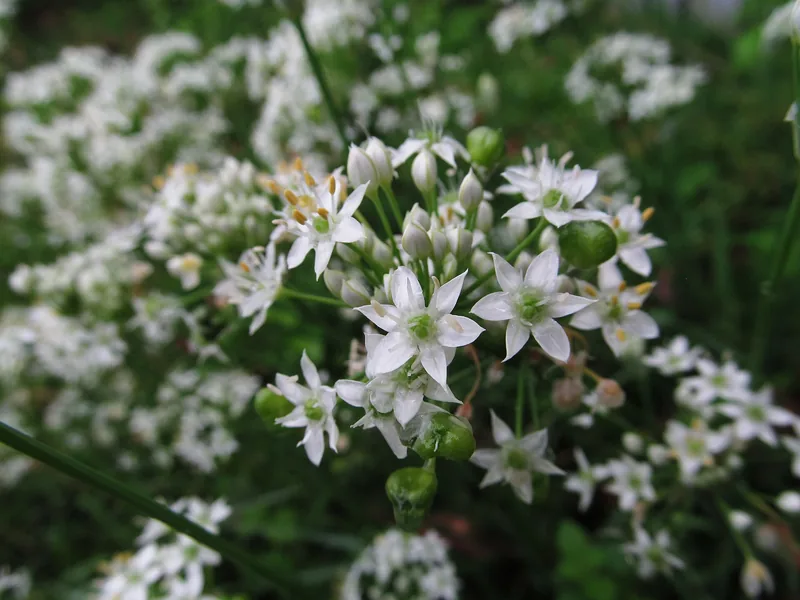
Not onion chives: garlic chives are Allium tuberosum (flat leaves, garlic flavor). See onion chives.
Safety: NC State poison severity Low — ingestion can cause nausea, vomiting, diarrhea. Culinary small amounts are the usual kitchen use; keep pets/livestock in mind. (NC State Allium tuberosum)

Planting timing
UMN Growing chives: easiest method is “planting rooted clumps in spring after frost danger has passed.” Divide every 3–4 years. (UMN chives) UNH/Cornell also allow spring or fall seed/division — seasonal, no extra frost-week integers.
Depth and spacing
UNH: seed ¼ inch deep; space about 12 inches; plants 18–24 inches tall.
Sun, soil and water
WI/UNH: full sun (UNH allows part shade); well-drained. Drought-tolerant once established (WI).
Care
Deadhead to limit self-seeding (NC/WI). Divide about every 3 years (WI) / 3–4 years (UMN).
Harvest
WI: cut leaves anytime they are green. Flat leaves with garlic flavor (UMN).
Pests and diseases
Few serious problems on WI framing; drainage and rotation help alliums generally.
Related: chives · ZIP planner · organic pest control
Frequently asked questions
When do I plant garlic chives?
Divisions after frost (UMN).
Same as chives?
No — A. tuberosum; flat leaves; garlic flavor.
Will it self-seed?
Yes — deadhead (NC/WI).
More grow guides: All grow guides
Sources
- NC State Extension: NC State Allium tuberosum
- University of Minnesota Extension: UMN chives