
How to Grow Jerusalem Artichoke (Sunchoke): Planting, Spacing, Care & Harvest
Quick answer
Plant tubers or pieces with 2–3 buds in early spring (NC State). — early-spring wording only. Harvest about two weeks after flowers fade. Contain deliberately — any leftover piece resprouts.
Jerusalem artichoke at a glance


Jump to
Updated
Planting dates for your ZIP: the ZIP planting planner counts each window from your local frost dates.
Organic pests and diseases: see also organic pest control. Use any product as the label directs.
Not globe artichoke: Jerusalem artichoke / sunchoke is Helianthus tuberosus (a sunflower tuber), not Cynara bud artichoke. See also globe artichoke.
Containment: NC State: “Once established in the garden it may be difficult to remove. Any tiny piece of the plant left in the soil will sprout new plants.” Use a dedicated bed, barrier, or containers.

Planting timing
NC State: “Tubers may be planted in early spring. Similar to potatoes, whole tubers or pieces of tuber with at least two to three strong buds should be planted. Do not allow the pieces of tuber to dry out before planting.” (NC State Helianthus tuberosus) Zones listed 3a–9b. Early spring has .
Depth and spacing
NC: available space 3–6 feet; height 6–10 feet, width 3–5 feet. Exact planting depth inches are not quoted on the Toolbox page — plant pieces with buds up like potato seed pieces without inventing a depth. Plan containment from day one.
Sun, soil and water
NC: full sun (6+ hr) to partial shade (2–6 hr); well-drained; prefers slightly alkaline pH 7–7.5; most soils OK if drained; heavy waterlogged clay reduces yields.
Care
NC: appearance can look weedy; trim after bloom (Aug–Oct) or leave seed for birds. Few pesticides are labeled. Persistent — harvest all tubers you want removed or accept a colony.
Harvest
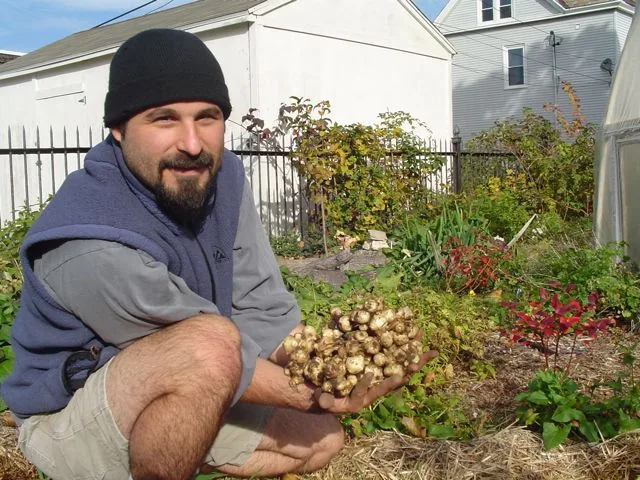
NC: dig tubers in fall “approximately two weeks after the flowers fade (October–December).” Edible raw or cooked; texture like water chestnut. Yellow sunflower heads Aug–Sep; nectar to first frost for pollinators.
Pests and diseases
NC: slugs and swift moths may hole tubers — weeding and moisture control. Rust, leaf fungal spots, and powdery mildew are frequent — improve airflow and sanitation; few labeled pesticides for home use.
Related: globe artichoke · ZIP planner · all grow guides
Frequently asked questions
Is this the same as globe artichoke?
No — Helianthus tuberosus (sunflower tuber), not Cynara bud artichoke.
When do I plant?
Early spring tubers with 2–3 buds (NC).
Will it take over the garden?
Yes risk — rhizomes and leftover pieces resprout (NC). Contain deliberately.
When do I dig tubers?
About 2 weeks after flowers fade in fall (NC).
More grow guides: All grow guides
Sources
- NC State Extension: NC State Helianthus tuberosus