
How to Grow Annual Black-Eyed Susan: Planting, Spacing, Care & Bloom
Quick answer
Start indoors up to 8 weeks before frost (Clemson). Plant annuals outdoors after last chance of frost (Clemson). This page is annual Rudbeckia hirta — not black-eyed Susan vine (Thunbergia).
Jump to
Updated
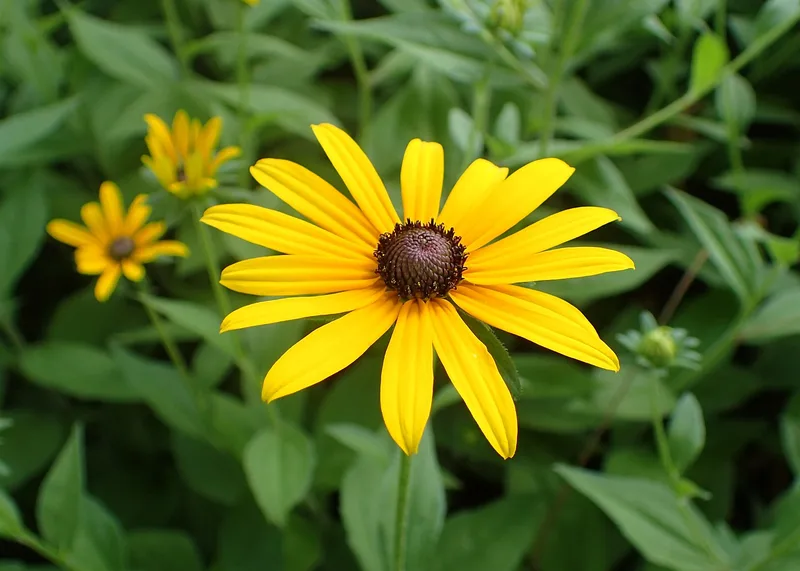
Annual black-eyed Susan (Rudbeckia hirta). Not black-eyed Susan vine (Thunbergia). Perennial Rudbeckia species are brief notes only — not a twin page.

Sourced from university extension guides. For dates where you live, use the ZIP planting planner.
Planting timing
Clemson: “Annual Rudbeckia are planted in spring after the last chance of frost.” Seed: sow early to mid-fall or early to mid-spring; spring seed often needs stratification about 3 months at 40°F. “Seeds can be sown indoors up to 2 months before frost.” Cover ¼ to ½ inch; germination about 2 weeks. (Clemson HGIC 1192) Planner: Start indoors last frost −8; Transplant last frost 0.
Depth and spacing
Clemson seed cover ¼–½ inch. Plants average about 2–3 ft tall and 1–2 ft wide; NC lists height about 2–4 ft. Space for air circulation.
Sun, soil and water
Full sun (>6 hr); tolerates partial shade; evenly moist, well-drained; drought/heat tolerant once established (Clemson). Avoid overfertile lawn-edge soil for best flower show (NC).
Care
Deadhead for rebloom (Clemson). Divide perennial types every 3–4 years spring or fall (Clemson) — section note for short-lived perennial stands. Remove dead foliage fall/winter/early spring.
Bloom
Late spring through early fall; excellent cut flowers (Clemson). No single days-to-bloom integer is sourced.
Pests and diseases
NC: powdery mildew; snails and slugs. Clemson: powdery mildew, leaf spots, stem rots — cultural spacing, drip irrigation, remove dead material. Aphids: soap or summer oil if needed; caterpillars: Bt kurstaki as labeled; Japanese beetles: handpick/soap/neem/Bt galleriae (UMN). Slugs: handpick or iron phosphate bait (UC IPM).
Related: ZIP planner · organic pest control
Frequently asked questions
When do I plant annual black-eyed Susan?
After last frost. Indoor start up to −8 (Clemson).
Same as black-eyed Susan vine?
No — Rudbeckia hirta vs Thunbergia; separate pages.
Do I deadhead?
Yes for rebloom (Clemson).
Sources
- Clemson Cooperative Extension: Clemson HGIC 1192
- University of California Agriculture and Natural Resources (UC ANR): Snails and slugs