
How to Grow Morning Glory: Planting, Care & Seed Toxicity
Quick answer
Start indoors about 8–10 weeks before last frost (NC State Extension Gardener Handbook ch). 10). Direct sow 2–3 weeks after last frost when soil is warm. Scarify seed and soak 12–24 hours (NC State). Seeds are the toxic part — NC State low severity; large amounts of seeds may cause vomiting or hallucinations. Not the same plant as moonflower (Ipomoea alba).
Morning glory at a glance


Weeks relative to last frost (LF). Colored weeks show when our ZIP planner schedules each step.
Jump to
Updated
Poison (required): NC State rates Ipomoea purpurea poison severity Low. Toxic principle: indole alkaloids. Poison part: seeds. Symptoms listed include vomiting; large amounts of seeds may cause hallucinations. Problem for cats, dogs, and horses. Keep seeds away from children and pets; do not ingest. This page is not medical advice. (NC State Ipomoea purpurea)

Sourced from university extension guides. For dates where you live, use the ZIP planting planner.
Planting timing
NC State Extension Gardener Handbook ch. 10 lists morning glory (Ipomoea purpurea) under tender annuals — plant after frost threat is past. Indoor sowing (chapter-general for ornamentals): start seeds eight to 10 weeks (8–10 weeks) before the last spring frost. Direct sowing: wait two to three weeks (2–3 weeks) after the last spring frost (cold soil under about 60°F → poor germination/rot). (NC State handbook ch. 10) Planner: Start indoors last frost −10 to −8; Direct sow / transplant last frost +2 to +3. Species page: nick/scarify seed; soak 12–24 hours before planting. (NC State morning glory)
Size and support
NC State: vine about 6–10 ft tall and 3–6 ft wide. Trellis or other support required. Full sun; moderately fertile, moist, well-drained soil; tolerates poorer soils. Self-seeds and can be weedy — deadhead or remove seedlings.
Care and bloom
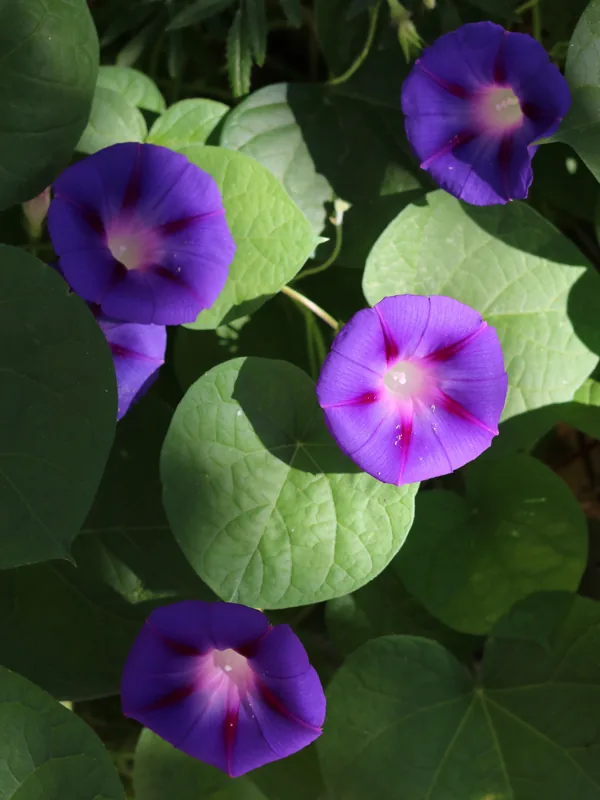
Flowers open in the morning and fade in the afternoon; early summer to fall (NC State). Prune to control size. Distinct from moonflower (Ipomoea alba), which blooms at night — keep them on separate pages.
Seed toxicity
NC State poison severity: Low. Poison part: seeds. Large amounts of seeds may cause vomiting or hallucinations. Keep seed packets and spilled seed away from children and pets. (NC State)
Pests and diseases
NC State lists aphids and spider mites; powdery mildew and root rot. Soft-bodied pests: soap or oil with thorough coverage (UC IPM aphids). Drainage for root rot. Use any product as the label directs.
Related: ZIP planner · organic pest control
Related night vine: moonflower
Frequently asked questions
When do I plant morning glory?
Start indoors last frost −10 to −8, or direct sow last frost +2 to +3 (NC State handbook).
Morning glory vs moonflower?
Different species: Ipomoea purpurea (day bloom) vs Ipomoea alba (night bloom).
Are the seeds poisonous?
Yes — NC State low severity; seeds are the toxic part. Do not ingest; keep away from children and pets.
Sources
- NC State Extension: NC State Ipomoea purpurea; NC State handbook ch. 10
- University of California Agriculture and Natural Resources (UC ANR): UC IPM aphids