
How to Grow Gourds: Planting, Spacing, Care & Harvest
Quick answer
Direct sow after last frost when soil is warm — about 65–70°F (NC State, UAEX, ACES). No sourced indoor-start frost-week integer. Related cucurbits —
Gourds at a glance


Weeks relative to last frost (LF). Colored weeks show when our ZIP planner schedules each step.
Jump to
Updated
Planting dates for your ZIP: the ZIP planting planner counts each window from your local frost dates.
Organic pests and diseases: see also organic pest control. Use any product as the label directs.
Gourds — hard-shell bottle gourds (Lagenaria siceraria), ornamental Cucurbita gourds, and luffa class notes (UAEX three classes). Peer cucurbit pests live on squash/pumpkin pages.

Planting timing
NC State (Lagenaria): “Direct seed outdoors after the danger of frost has passed and the ground temperature reaches 70°F.” (NC State Lagenaria) UAEX: wait for all chances of frost to pass and soil to warm. (UAEX gourds PDF) Alabama ACES birdhouse guide: direct sow when soil ≥65°F. (ACES birdhouse gourds) Planner: Direct sow last frost 0 with soil 65–70°F. Indoor start weeks are not integer-sourced — do not invent.
Depth and spacing
NC: several seeds in mounds 3 ft apart on supports or 4–6 ft if trailing. Alabama birdhouse: hills 6–8 ft apart; 5–6 seeds/hill at ½–1 inch deep; thin to 2–3 plants. UAEX: hill planting like pumpkins/watermelons; trellis for straight long fruits.
Sun, soil and water
Full sun; warm well-drained soil; long season (UAEX/NC). Consistent moisture (NC). Mulch for moisture/weeds/cleaner fruit (UAEX).
Care
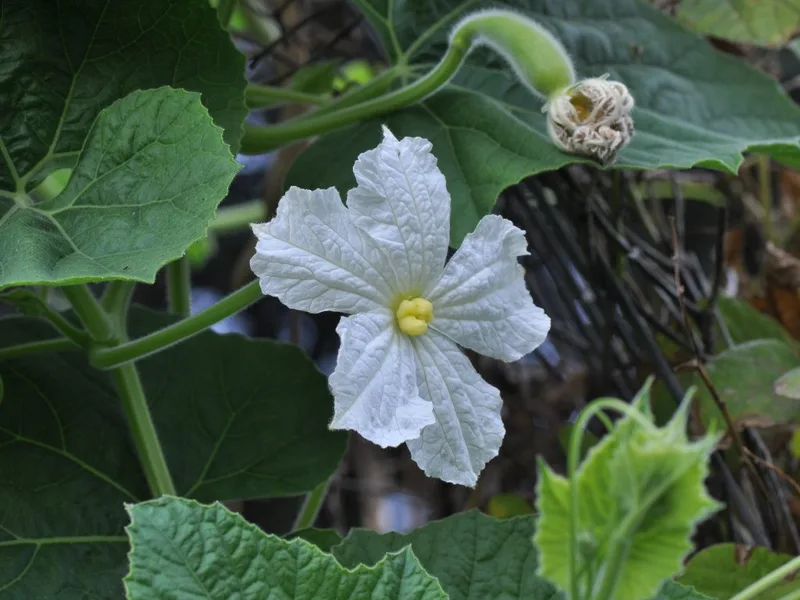
Support/trellis for ornamental hard-shell fruit (NC). Night-blooming white flowers (Lagenaria) — hand pollination can help (NC). Day-blooming yellow/orange (Cucurbita ornamentals) (UAEX). Insect pollination required.
Harvest
NC: harvest when skin has hardened. MU: leave Lagenaria until vines die or freeze; freeze doesn’t harm mature fruit. Cure warm/dry until seeds rattle (often months). Alabama: fingernail test / brown hard rind; frost OK on mature fruit. No single home-garden DTM integer is sourced here — long-season crop.
Pests and diseases
NC: aphids, cucumber beetles, squash bugs, stink bugs, cutworms, pickleworm, squash vine borers; anthracnose, wilts, mildews. Organic toolkit matches squash — row cover until flowering, handpick squash bugs, sanitation. For pest detail, see squash and pumpkins.
Related: squash · pumpkins · ZIP planner · organic pest control
Frequently asked questions
When do I plant gourds?
After last frost when soil is warm (65–70°F) (NC/UAEX/ACES).
Same as squash or pumpkin?
Related cucurbits — separate page; don’t merge URLs.
When to harvest hard-shell types?
When rind is hard; often leave until vines die — cure until seeds rattle (NC/MU/ACES).
More grow guides: All grow guides
Sources
- NC State Extension: NC State Lagenaria
- University of Arkansas Cooperative Extension: UAEX gourds PDF
- Alabama Cooperative Extension System: ACES birdhouse gourds