
How to Grow Summer Squash and Zucchini: Planting, Spacing, Care & Harvest
Quick answer
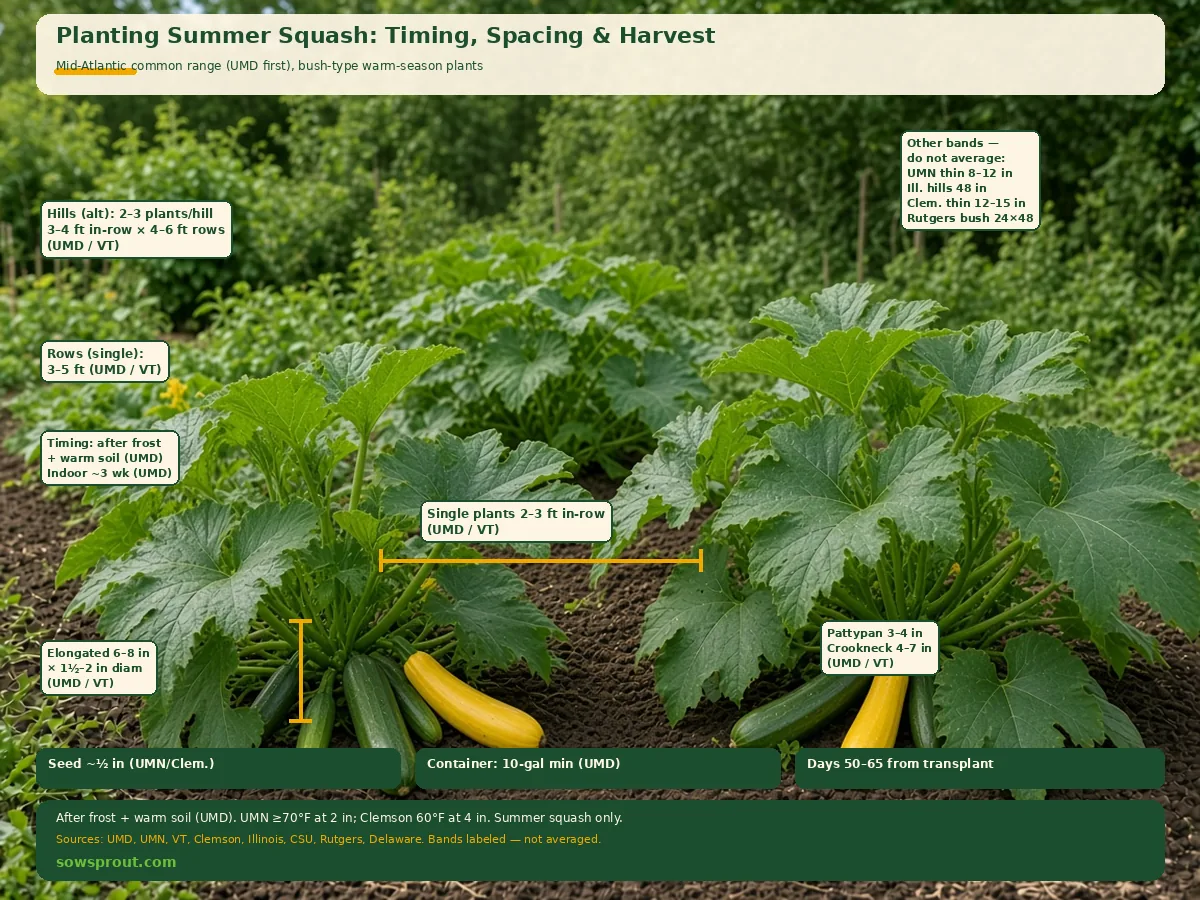
Summer squash and zucchini are very tender warm-season plants. Sow seed after frost danger has passed and the soil has warmed, or start seeds indoors about 3 weeks before planting time in small containers and set them out carefully (UMD). Space hills of two to three plants 3 to 4 feet apart in the row with 4 to 6 feet between rows, or grow single plants 2 to 3 feet apart in the row with 3 to 5 feet between rows. Give vine crops about 1 inch of water a week, soak the soil at the base rather than spraying the leaves, and water more once fruit starts. Pick elongated fruit at about 6 to 8 inches long and 1½ to 2 inches across, pattypans at 3 to 4 inches across, and yellow crooked necks at 4 to 7 inches long — while rinds are still soft enough to mark with a thumbnail. Use the ZIP planting calendar for your local frost date — not a national plant month.

Squash at a glance


Weeks relative to last frost (LF). Colored weeks show when our ZIP planner schedules each step.
Jump to
Updated
Summer squash and zucchini are very tender warm-season plants. Sow seed after frost danger has passed and the soil has warmed, or start seeds indoors about 3 weeks before planting time in small containers and set them out carefully (UMD). Space hills of two to three plants 3 to 4 feet apart in the row with 4 to 6 feet between rows, or grow single plants 2 to 3 feet apart in the row with 3 to 5 feet between rows. Give vine crops about 1 inch of water a week, soak the soil at the base rather than spraying the leaves, and water more once fruit starts. Pick elongated fruit at about 6 to 8 inches long and 1½ to 2 inches across, pattypans at 3 to 4 inches across, and yellow crooked necks at 4 to 7 inches long — while rinds are still soft enough to mark with a thumbnail. Use the ZIP planting calendar for your local frost date — not a national plant month.
Planting dates for your ZIP: use the ZIP planting planner and frost dates / planting calendars. No national plant month. Sister cucurbit: how to grow cucumbers.
Organic pests, diseases and fertilizer: see how to grow squash organically. Use any product as the label directs.
Timing (frost and warm soil)
Hardiness labels disagree — keep both labels. UMD / Virginia Tech call summer squash very tender (frost injures top growth; needs warm weather). CSU lists summer squash under Tender vegetables sown around the average last spring frost (CSU Extension). Lead with UMD/VT on this page; caption CSU Tender as a planting-guide class, not the same word.
Direct sow after frost danger has passed and soil has warmed (UMD, VT, Illinois). Soil-temperature support (labeled, not averaged): UMN at least about 70°F at 2-inch depth; Clemson about 60°F at 4 inches; CSU min germination about 60°F. Indoor start: UMD about 3 weeks before planting time in 3-inch containers; CSU vine-crop transplants often 2–3 weeks from seeding — roots dislike disturbance.
Second crop (regional): UMD “Plant a second crop July 1 - 15.” UMD also suggests planting summer squash about 2–3 times in the season. Illinois: some gardeners plant early and again for late summer / fall. UMN: seed only part of the planting first, then finish about three weeks later. Month windows are regional; link ZIP frost tools.
Direct seed vs transplants
Direct seeding is preferred (UMN, CSU). If you transplant, keep plants young and disturb roots as little as possible (UMD, CSU). Thin extras by snipping with scissors (UMD). Seed depth about ½ inch (UMN, Clemson); Illinois about 1 inch; CSU 1–1½ inches — labeled band. Row covers warm air and block pests, but remove them once flowering begins so bees can reach flowers (UMN), unless the type sets without pollination. Starter / sidedress language points to a soil test and organic squash — no product rates here.
Spacing: hills and single plants
Lead with Mid-Atlantic UMD / VT; attribute other bands — do not average. UMD: “Hills (two to three plants per hill) 3’- 4’ in-row x 4’- 6’ between rows.” “single plants 2’- 3’ in-row x 3’- 5’ between rows.” Virginia Tech matches those hill and single-plant bands. Labeled alternates: UMN thin to 8–12 inches, hills of 3–4 seeds about 5–6 feet apart; Illinois single plants about 24–36 inches or hills about 48 inches apart; Clemson row thin about 12–15 inches with rows about 3 feet (hill rows often 4–6 feet); Rutgers planning table bush 24 × 48 and vine 36 × 72; CSU equal-distance about 36–48 inches. Summer squash is typically a non-vining bush (UMD, VT, Illinois) — no invented trellis spacing on this page.
Watering
UMN: vine crops need about 1 inch of water a week; soak thoroughly; “Do not use a sprinkler or spray the plants with a hose.”. Trellised plants may need water more often (UMN watering note only). UMD: water deeply at the base, especially in hot, dry weather and once the first fruits start to form. Clemson: moisten soil to at least about 6 inches. Mulch after soil is warm.
Pollination and misshapen fruit
Separate male and female flowers. UMD: “Members of the squash family produce male flowers for 1 to 2 weeks before female flowers appear.” That first flush dropping is normal. Female flowers show a tiny squash behind the petals. UMD: “Twisted or deformed squash are the result of insufficient pollination.” (UMD Extension). Blooms that are not pollinated drop; cool, rainy, or cloudy weather cuts bee activity (UMN). Remove over-mature fruit so plants keep setting.
Summer vs winter squash (short contrast): summer squash is harvested immature with a tender rind; winter squash is left to form a hard rind for storage (UMD, VT, Illinois). Full winter squash / pumpkin culture is out of scope here.
Harvest
Harvest-size bands — lead with UMD / VT; do not average alternates. UMD: harvest immature fruits about 6 to 8 inches long and 1½ to 2 inches in diameter for elongated types; 3 to 4 inches across for pattypans; 4 to 7 inches long for yellow crooked neck. Virginia Tech matches. If a thumbnail will not mark the rind, it is over-mature — remove it (UMD, VT). Illinois / Clemson publish overlapping size cues — attribute, do not blend into one number.
Illinois: fruit is usually ready to pick within about 4 to 8 days after flowering, faster in heat. Days to maturity: UMD “50 - 65 from transplant.”; VT summer squash 50 to 65 days; Clemson about 55 after planting; CSU typical about 50 — publish as a band.
Containers and vertical culture
UMD lists 10 gallons as the minimum container volume for summer squash (UMD Extension). Keep moisture steady — pots dry fast. Bush types fit small spaces best.
Vertical culture is only partly sourced: UMN notes trellised plants may need watering more often; UMD containers page says squash stems can be tied to a trellis, wire panel, or arch as they grow. No Mid-Atlantic extension page here gives a full summer-squash trellis spacing system — do not invent one.
Common failure reasons
| Problem | What extensions say |
|---|---|
| Blossoms drop | First flowers male (normal); unpollinated blooms drop (UMD) |
| Misshapen / twisted fruit | Insufficient pollination (UMD, Clemson); cool/rainy weather cuts bees (UMN) |
| Huge seedy fruit | Left on the vine too long; rind too hard for a thumbnail (UMD, VT) |
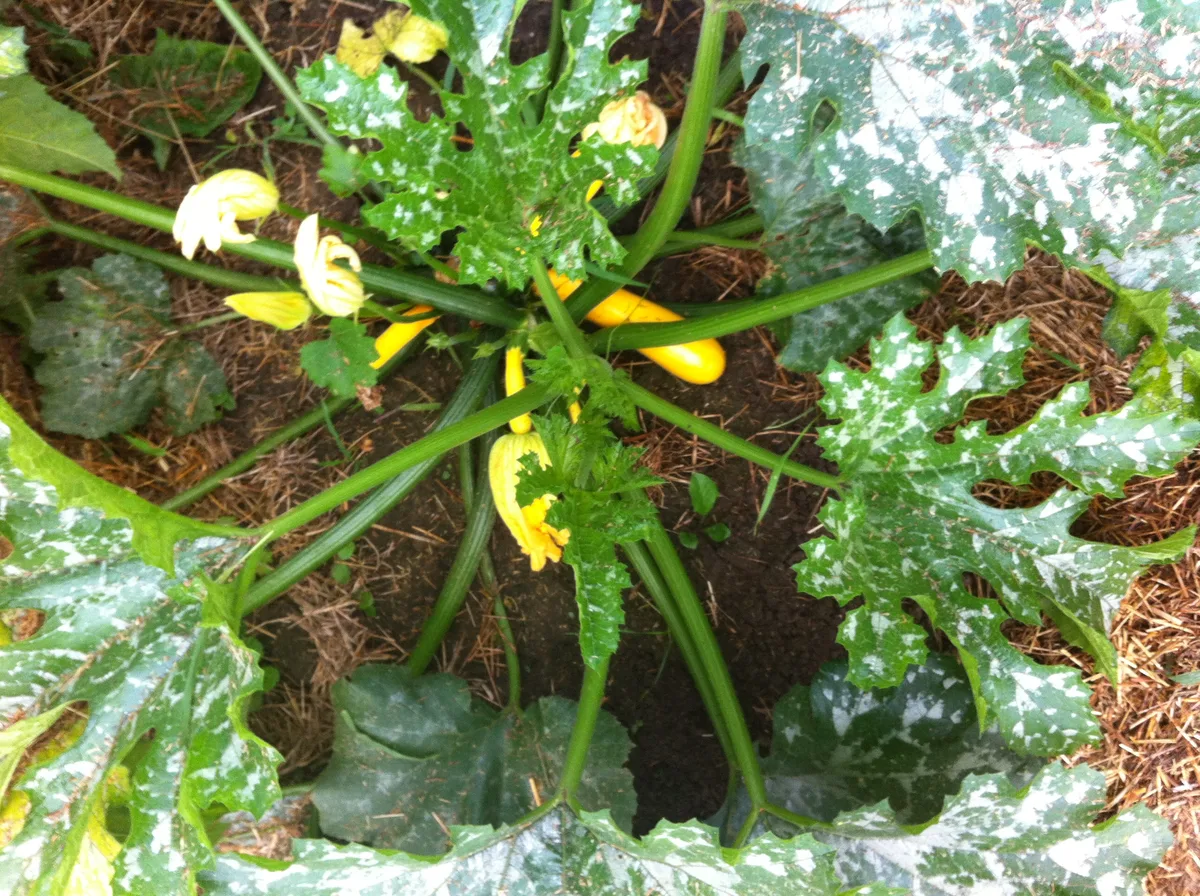
| White leaf coating | Powdery mildew (UMD) — see organic squash |
| Poor germination / stalled transplants | Cold soil; root disturbance (UMN, Clemson, CSU) |
Pests and diseases (squash bugs, vine borer, powdery mildew, etc.): cultural notes only here — full IPM on organic squash. No fertilizer product rates. UMD Extension · UMN Extension · Illinois Extension · Virginia Tech SPES-779 · Clemson HGIC · UMD powdery mildew
Frequently asked questions
When should I plant summer squash or zucchini?
After frost danger has passed and the soil has warmed (UMD, VT), or around the average last spring frost for tender crops (CSU). Many guides want soil near 60–70°F before sowing (Clemson 60°F at 4 inches; UMN 70°F at 2 inches) — labeled support, not averaged. Start indoor plants about 3 weeks before planting time in small containers (UMD). Check your ZIP planting calendar.
Should I plant a second summer squash crop?
UMD: plant a second crop July 1–15. UMD also recommends planting summer squash 2–3 times during the growing season. Illinois notes some gardeners plant for early summer and again for late summer and fall. Treat month language as regional and tie it to your frost calendar.
How far apart should you plant squash?
UMD: hills of two to three plants 3 to 4 feet in-row by 4 to 6 feet between rows; single plants 2 to 3 feet in-row by 3 to 5 feet between rows (VT matches). UMN: thin to 8 to 12 inches; hills 5 to 6 feet apart. Illinois, Clemson, and Rutgers give other bands — do not average.
Why are my squash blossoms falling off?
Usually normal or a pollination problem. UMD: members of the squash family produce male flowers for 1 to 2 weeks before female flowers appear. Blooms drop if they are not pollinated. Low bee activity in cool, wet weather or after pesticide sprays can cause it.
Why are my squash misshapen or twisted?
Insufficient pollination. UMD: twisted or deformed squash are the result of insufficient pollination. Clemson: poor pollination results in no fruit or poorly formed fruit. Cold, rainy, or cloudy weather can reduce bee activity (UMN).
How long does squash take to grow after pollination?
Illinois: summer squash is usually ready to pick within 4 to 8 days after flowering, and grows especially fast in hot weather. Overall days from planting or transplanting are about 50 to 65 for summer squash (UMD from transplant; VT).
When is zucchini or summer squash ready to harvest?
Pick while immature and tender. UMD: elongated types about 6 to 8 inches long and 1½ to 2 inches in diameter; pattypans 3 to 4 inches across; yellow crooked neck 4 to 7 inches long. If a thumbnail will not mark the rind, it is over-mature — remove it.
Why are my squash leaves turning white?
Likely powdery mildew. UMD: powdery mildew grows as a white powdery coating over the surfaces of leaves. Start with resistant types and remove plant debris at season’s end; see how to grow squash organically for pest and disease detail.
How much water do summer squash need?
UMN: about one inch a week; soak thoroughly; do not use a sprinkler or hose spray on the plants. UMD: water deeply at the base, especially once the first fruits start to form.
Can you grow squash in a container?
Yes. UMD lists 10 gallons as the minimum container volume for summer squash. Keep moisture steady — pots dry fast.
Can you grow squash vertically?
Partly sourced. UMN notes plants trellised to grow vertically may need watering more often. UMD’s containers page says squash stems can be tied to a trellis, wire panel, or arch as they grow. No Mid-Atlantic extension page here gives a full summer-squash trellis spacing system — prefer bush types for small spaces rather than inventing trellis spacing.
How long does summer squash take from seed or transplant to harvest?
UMD: 50 to 65 days from transplant. VT: summer squash 50 to 65 days. Clemson: about 55 days after planting. CSU typical days to harvest: 50. Publish as a band — do not invent one national day count.
Related: gourds
More grow guides: Cucumbers · Tomatoes · Peppers · Beans · Cabbage · Broccoli · Lettuce · Garlic · Potatoes · All grow guides
Sources
- Colorado State University Extension: CSU Extension
- University of Maryland Extension: UMD Extension; UMD Extension; UMD Extension; UMD powdery mildew
- University of Minnesota Extension: UMN Extension
- University of Illinois Extension: Summer squash
- Virginia Cooperative Extension (Virginia Tech): Virginia Tech SPES-779
- Clemson Cooperative Extension: Clemson HGIC