
How to Grow Tomatoes: Planting, Spacing, Care & Harvest
Quick answer
Transplant tomatoes after frost risk is past and soil has warmed; bury enough stem so only about two or three sets of true leaves show (or trench-plant leggy starts); space about 18 to 36 inches in the row with about 48 to 60 inches between rows (tighter when staked, wider when sprawling); stake or cage early; soak the root zone thoroughly for about 1 inch of water a week (more on sand or when fruit is sizing); pick as color begins to change to limit cracking and rot; and before a killing frost, bring in mature-green fruit for cool, moist holding. Use the ZIP planting calendar for local frost windows rather than a national plant date.

Tomatoes at a glance


Weeks relative to last frost (LF). Colored weeks show when our ZIP planner schedules each step.
Jump to
Updated
Transplant tomatoes after frost risk is past and soil has warmed; bury enough stem so only about two or three sets of true leaves show (or trench-plant leggy starts); space about 18 to 36 inches in the row with about 48 to 60 inches between rows (tighter when staked, wider when sprawling); stake or cage early; soak the root zone thoroughly for about 1 inch of water a week (more on sand or when fruit is sizing); pick as color begins to change to limit cracking and rot; and before a killing frost, bring in mature-green fruit for cool, moist holding. Use the ZIP planting calendar for local frost windows rather than a national plant date.
Planting dates for your ZIP: use the ZIP planting planner and planting calendars for frost windows. We do not invent a national plant date.
Organic pests, diseases and fertilizer: see how to grow tomatoes organically. Use any product as the label directs.
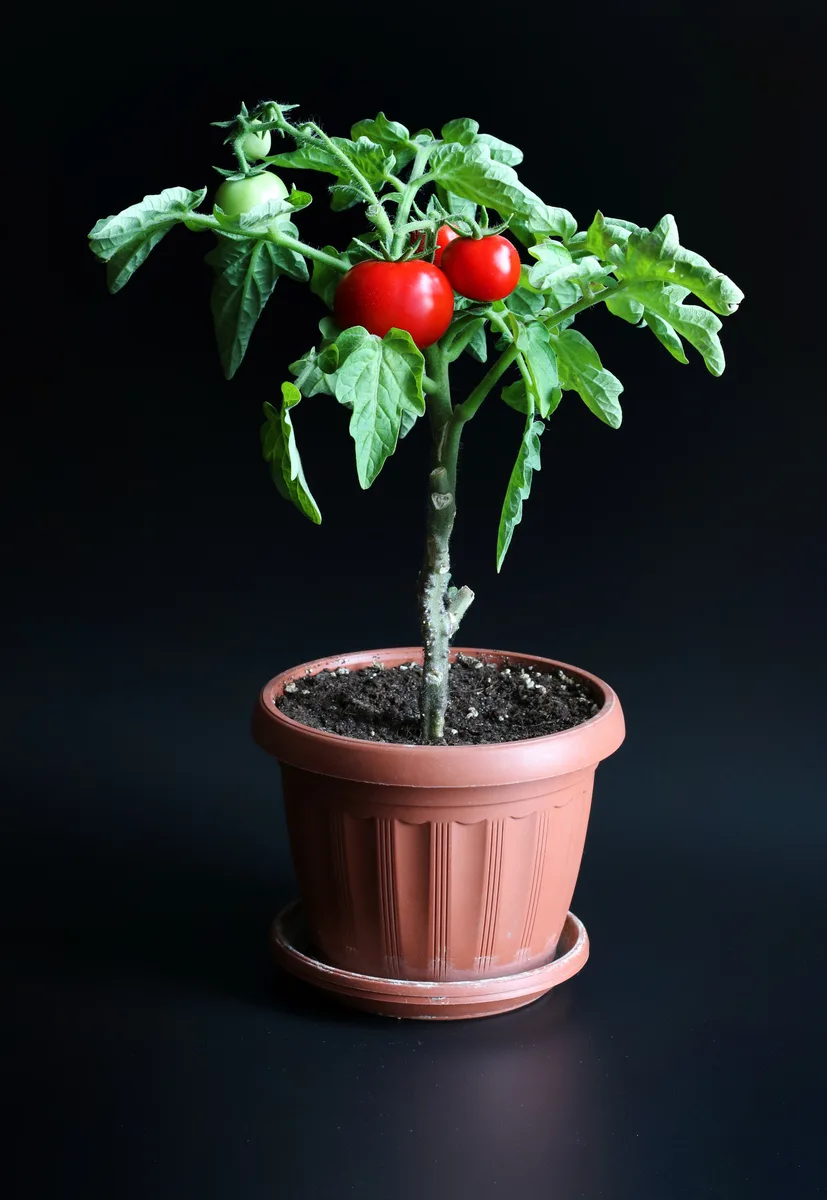
Growth habit
- Determinate (bush): Growing tip ends in flowers/fruit; concentrated ripening; often about 24 to 30 inches (UMN). Good for canning batches and containers.
- Indeterminate (vining): Keeps growing until frost or disease; needs stake, cage, or trellis (UMN, UMD, Rutgers, Clemson, VT). Often three to five feet or more (UMN).
- Semi-determinate: More compact than full indeterminates but can crop until frost (Rutgers).
Fruit-type classes (traits only): cherry/grape, beefsteak (more crack-prone — UMD), paste/plum. No named cultivars on this page.
Timing and transplants
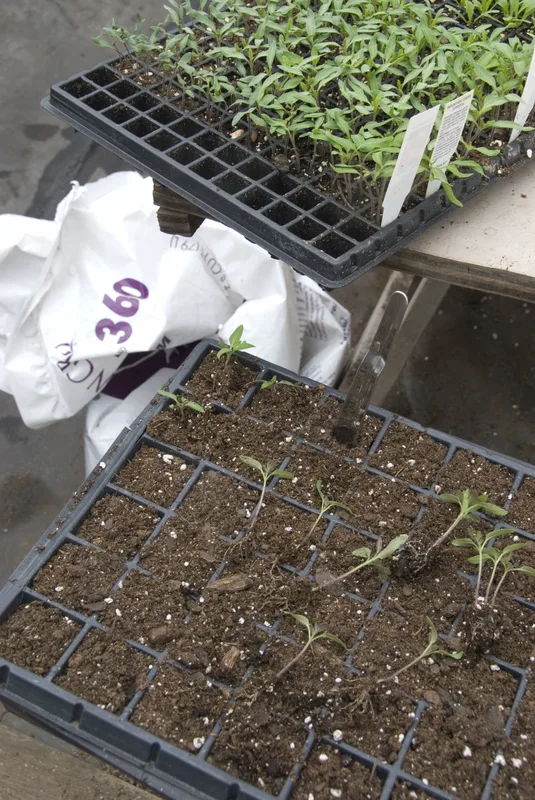

Warm-season / very tender. UMD: “Transplant after all danger of frost is past and when the soil has warmed.” NDSU’s chart: start seeds indoors about 6 weeks before your last frost and set plants out about 2 weeks after it (NDSU H1139). UMN: start indoors five to six weeks before planting outside. Rutgers / Clemson / VT often start 6–8 weeks before outdoor plant — those start windows are attributed, not averaged.
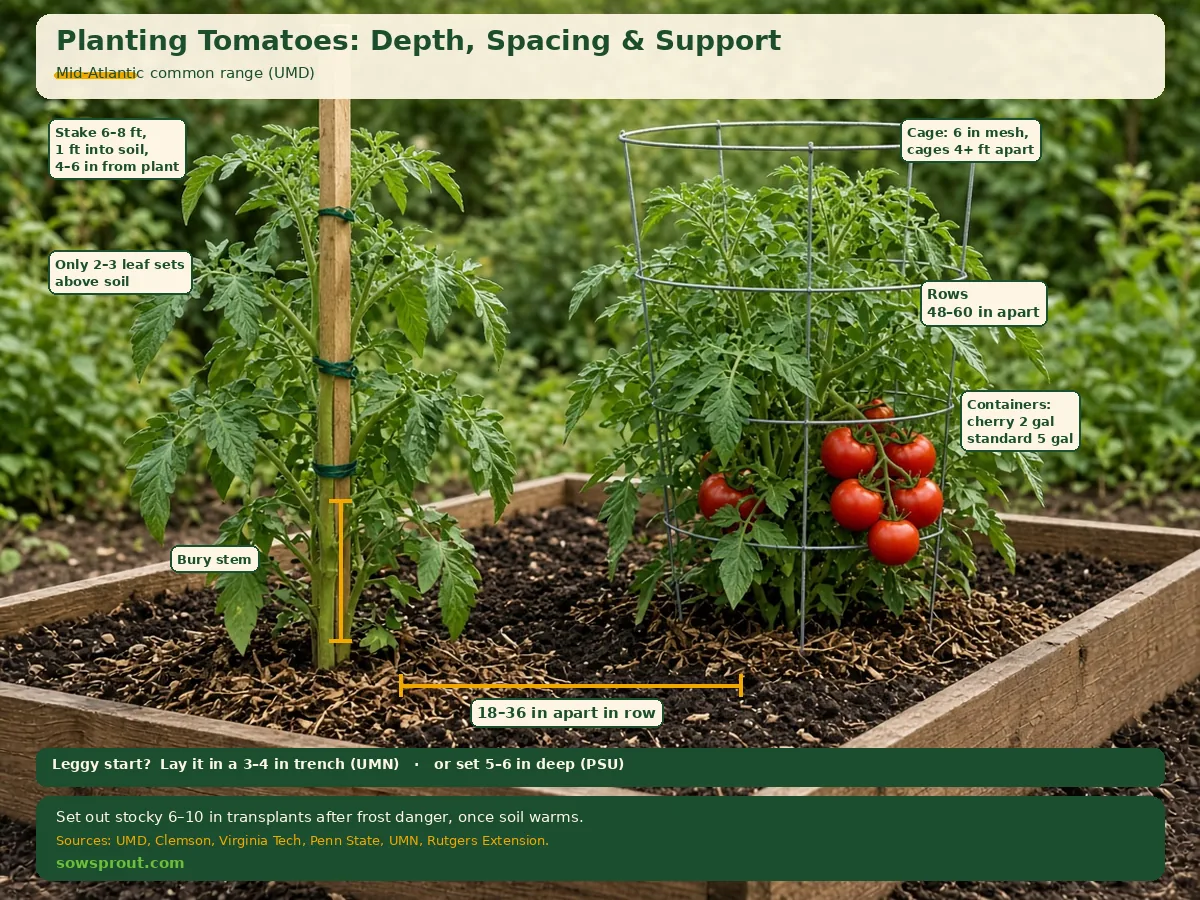
Bury the stem: UMD “Set tomato transplants in the ground covering the main stem so that only two or three sets of true leaves are exposed.” (Clemson / VT same idea). Penn State often plants about 5–6 inches deep after removing lower leaves. Leggy plants: trench / horizontal plant so roots form along the buried stem (UMN trench about 3–4 inches; UMD/Clemson/VT). Install stakes/cages at planting so roots are not later damaged. Select stocky plants about 6 to 10 inches tall (UMD, Clemson, VT).
Spacing and support
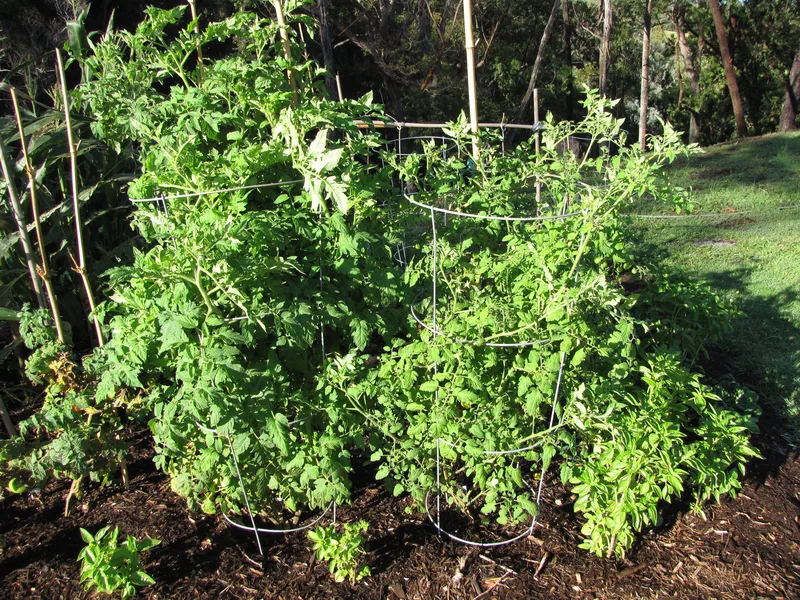

Lead with UMD Mid-Atlantic band; attribute others — do not average. UMD: “18”-36” in rows x 48”-60” between rows. Spacing depends on such factors as the growth habit of the plants and whether staked or caged.”. Virginia Tech: about 18 to 36 inches when staked or caged. Rutgers: 1½ to 2 feet in-row when staked/caged, about 3 feet if sprawling, rows 3 to 4 feet apart. Clemson often 24 inches in-row with rows about 3 feet. Penn State: determinate about 2 feet / indeterminate about 3 feet; staked 18–24 inches. UMD’s 48–60 in between rows is wider than Clemson/VT’s common 3 ft staked rows — label both.
Stakes: UMD wooden or steel stakes 6- to 8-feet long and 1½- to 2-inches wide; drive one foot into the soil about 4 to 6 inches from the plant soon after transplanting. Cages: about 6-inch mesh; UMD space cages at least 4 feet apart. Put supports in at planting.
Watering
Water figures disagree — publish with attribution. UMN: “One inch of rainfall or irrigation per week is ideal.” “Always soak the soil thoroughly when watering.” “Light watering can cause shallow root development, increase the crop's exposure to hot weather and drought stress, and reduce fruit quality.”. Rutgers: at least 1 inch each week. Penn State: about 1–1½ inches per week. UMD: water deeply and regularly; a mature tomato plant may require 2–3 gallons of water weekly when rain is lacking. Mulch after soil warms (about 3–4 inches organic mulch in many guides) to hold moisture and limit soil splash.
Cracking / splitting
UMD: cracking is “a common weather-related condition caused by soil moisture fluctuations, persistent rainfall, and heavy dews”. “Many large-fruited tomato cultivars, like the beefsteak types, are prone to significant cracking.” Prevention: “Mulch vegetable plants with available organic materials”; water deeply and regularly; “Consider harvesting fruits prior to full ripeness during periods of frequent rainfall or heavy dew.” (UMD Extension). No spray recipes here.
Blossom-end rot
UMD: BER is “caused by a shortage of calcium in enlarging fruits”. “Factors that encourage blossom-end rot include low soil pH and low levels of calcium, inconsistent watering, shallow watering or droughty conditions, and excessive use of nitrogen fertilizers.” Prevention: “Maintain soil pH in the 6.3-6.8 range”; “Keep plants well mulched and watered throughout the growing season” (UMD Extension). UMN emphasizes even moisture, mulch, and soil-test fertilizer — Minnesota soils usually already have calcium; do not present gypsum as a UMN rule.
Gypsum (UMD only): When soil calcium is low, UMD says to mix about ¼ cup gypsum into each planting hole before transplanting. Lead with watering, mulch, and pH from a soil test; attribute gypsum to UMD alone. No calcium-chloride spray recipes on this page.
Harvest (including green fruit before frost)
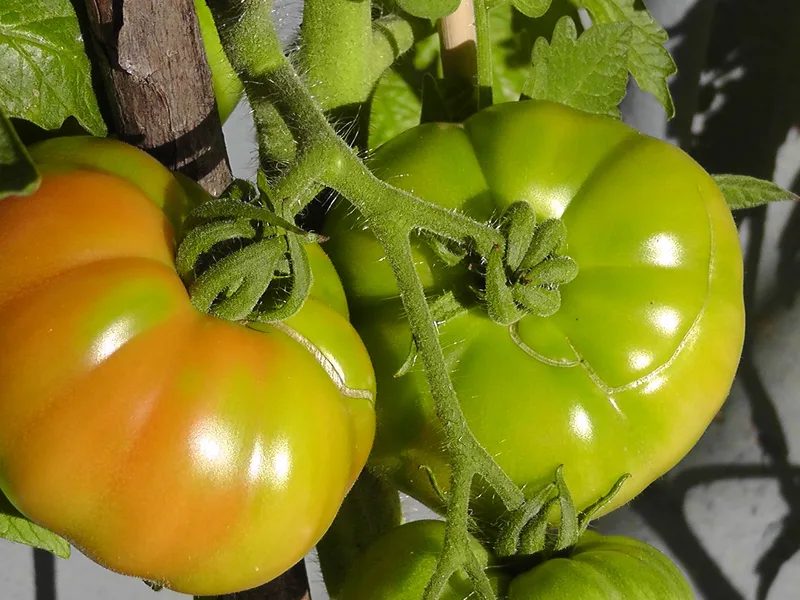

Days to maturity bands differ (UMD 65–90 from transplant; VT 55–105; Clemson first harvest often 52–90 by type) — publish as a range, not one number. UMD: “Harvest as soon as fruit color begins to change. This prevents many fruit problems (cracking, splitting, insect feeding, diseases) and increases the yield of edible fruit.” Before frost: “Pick green tomatoes before the first killing frost and store in medium cool (50°- 70°F), moist (90% RH) conditions for 1 to 3 weeks.”. Ripen near about 70°F when wanted. Clemson / VT use similar cool moist holding bands.
Containers
UMD minimum container sizes: 2 gallons for cherry tomatoes and 5 gallons for standard tomatoes (UMD Extension). UMN: “If your garden plot is small or you plan to grow tomatoes in containers, bush-type plants may be the only option.”. Warm-season crops need about 6–8 hours direct sun; pots dry fast — check moisture often.
Common failure reasons
| Problem | What extensions say |
|---|---|
| Cracked / split fruit | Moisture swings, heavy rain after drought, heavy dew; large beefsteak types more prone (UMD, Rutgers, UMN) |
| Blossom-end rot | Calcium shortfall in fruit from uneven water, low pH/Ca, excess N (UMD, UMN, Rutgers, Penn State) |
| All leaves, little fruit | Excess nitrogen; temps too hot or too cool for set (Rutgers, VT) |
| Sunscald | Fruit exposed after foliage loss / heavy pruning |
| Disease splash | Overhead water; soil splash; crowding; wet leaves overnight |
| Weak / cold-stunted starts | Planted into cold soil; unhardened transplants; set out too early |
Pests and fungal diseases: cultural notes here; full IPM on organic tomatoes. No fertilizer product rates on this page. UMD Extension · UMN Extension · Rutgers FS678 · Clemson HGIC · Penn State Extension
Frequently asked questions
How much water do tomatoes need per week?
About 1 inch of rainfall or irrigation per week is ideal (UMN, Rutgers). Penn State cites about 1 to 1½ inches. Always soak thoroughly; light watering makes shallow roots and weaker fruit (UMN). UMD notes a mature plant may need about 2 to 3 gallons weekly when rain is lacking. Those figures are attributed, not averaged.
Why are my tomatoes splitting?
Uneven soil moisture — especially a lot of water after dry weather — plus persistent rain and heavy dew (UMD cracking page). Large beefsteak-type fruit crack more readily. Prevent with deep, regular watering, mulch, and harvesting before full vine-ripeness in rainy spells (UMD).
Why are my tomatoes rotting on the bottom?
Blossom-end rot: calcium shortage in enlarging fruit, usually from inconsistent or shallow watering, low pH/calcium, or excess nitrogen (UMD). Keep pH near 6.3–6.8, mulch, water deeply, and remove affected fruit (UMD, UMN, Rutgers). UMD allows ¼ cup gypsum in the planting hole when soil calcium is low — gypsum is an UMD recommendation, not a universal UMN rule.
How far apart should you plant tomatoes?
UMD: about 18 to 36 inches in the row and 48 to 60 inches between rows, depending on growth habit and staking vs caging. Rutgers: 1½ to 2 feet in-row when staked or caged, about 3 feet if sprawling, with rows 3 to 4 feet apart. Do not average those bands. No raised-bed-specific spacing source was found; use the same bands in beds.
Can you grow tomatoes in a pot?
Yes. UMD minima: 2 gallons for cherry tomatoes and 5 gallons for standard tomatoes. Bush/determinate types suit small spaces and containers (UMN). Give warm-season sun (about 6–8 hours) and check moisture often.
When should you transplant tomatoes outdoors?
After frost danger is past and soil has warmed (UMD, UMN, Rutgers, Clemson, VT). NDSU’s chart sets transplants about 2 weeks after the last frost when seeds were started about 6 weeks before that frost. Use the ZIP planting calendar for local dates — no national plant date.
How deep should you plant tomato transplants?
Bury stem so only about two or three sets of true leaves show (UMD, Clemson, VT), or set soil just below the lowest leaves (Rutgers). Penn State often plants about 5 to 6 inches deep after removing lower leaves. Leggy plants can go in a shallow trench so the stem roots underground (UMN trench about 3 to 4 inches).
Should you pick tomatoes before they are fully red?
UMD recommends harvesting as soon as color begins to change to limit cracking, insects, and disease — fruit finish ripening indoors. Before a killing frost, pick green fruit and hold about 50°–70°F at high humidity for 1 to 3 weeks, then ripen near 70°F (UMD, VT, Clemson).
More grow guides: Garlic · Lettuce · Potatoes · Peppers · Beans · Cucumbers · Squash · Broccoli · Cabbage · All grow guides
Sources
- North Dakota State University Extension: NDSU H1139
- University of Maryland Extension: UMD Extension; UMD Extension; UMD Extension; UMD Extension
- University of Minnesota Extension: UMN Extension
- Rutgers NJAES Cooperative Extension: Rutgers FS678
- Clemson Cooperative Extension: Clemson HGIC
- Penn State Extension: Tomatoes from seedlings to fruit