
How to Grow Elephant Ear: Planting, Care & Dig-Store
Quick answer
Start indoors in early spring and place outside when the weather warms (Wisconsin) — Midwest example late May or early June. No frost-week integer is sourced, so elephant ear is not on the ZIP planner. Dig after frost kills the foliage and store like cannas/dahlias. Medium poison — calcium oxalate (NC State).
Elephant ear at a glance


Jump to
Updated
Safety: NC State poison severity Medium for Colocasia esculenta. Oral irritation, swelling, drooling, vomiting, difficulty swallowing; “needles” sensation; all parts poisonous unless cooked first. Calcium oxalate. (NC State Colocasia esculenta) Wisconsin: leaves edible only if cooked; calcium oxalate can irritate skin. Not medical advice.
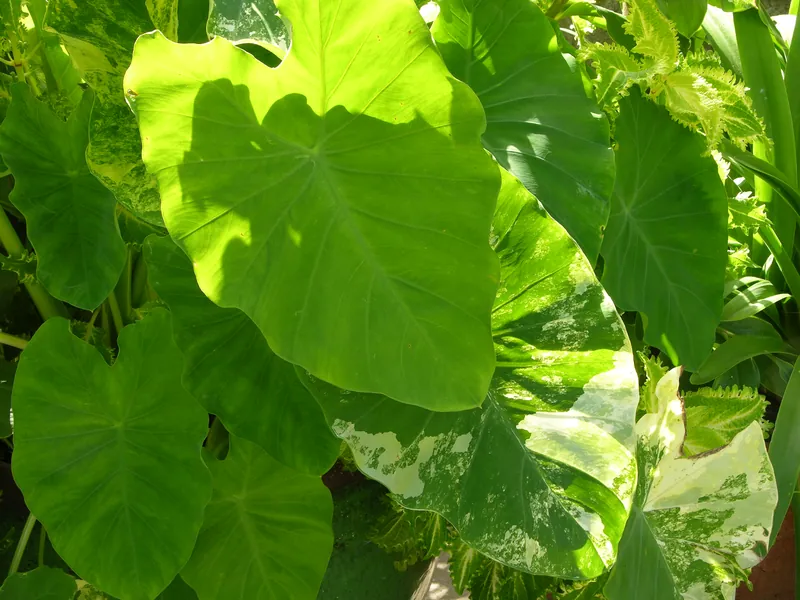

Sourced from university extension guides. For dates where you live, use the ZIP planting planner.
Planting timing
Wisconsin: frost-tender; “best started indoors in early spring and placed outside when the weather warms up”; “potting up the bulb in March … planted outside when the weather warms up, usually in late May or early June” — a Midwest calendar example, not a national frost-week integer. (Wisconsin elephant ears) No planner rule is published for outdoor set-out.
Depth and spacing
WI: pot with the top of the bulb close to the soil surface indoors. NC State: height about 3–6 ft; width about 3–6 ft.
Sun, soil and water
NC State: full sun to part shade; moist or occasionally wet soils OK. WI: fertile moist soil; dark-leaved types often prefer full sun; many tolerate part shade.
Care and dig-store
WI: dig after frost has killed the foliage, dry, and store like cannas and dahlias — see dig and store dahlias and cannas for peer methods. Or grow as an annual. You can also overwinter as a houseplant before temperatures fall into the 30s°F (WI).
Bloom and foliage
NC State: “Rarely flowers.” WI: bloom is not common in the Midwest. Foliage is the crop. First leaves may appear a few weeks after potting (WI) — that is emergence, not a days-to-bloom figure.
Pests and diseases
NC State: no serious insect or disease problems.
Related: dig-store dahlias & cannas · caladium · ZIP planner · organic pest control
Frequently asked questions
When do I plant elephant ears outside?
When weather warms after frost risk (Wisconsin). No frost-week integer is sourced.
Same as caladium?
No — Colocasia vs Caladium.
How do I overwinter?
Dig after frost and store like cannas/dahlias, or bring indoors (Wisconsin).
Sources
- NC State Extension: NC State Colocasia esculenta
- University of Wisconsin–Madison Extension: Wisconsin elephant ears