
How to Grow Gladiolus: Planting, Care & Cut Flowers
Quick answer
Plant gladiolus corms after frost danger is past (Iowa State; UMD). Missouri also allows starting about a month before average last frost. Succession every 1 to 2 weeks until early July. Large corms about 4 to 6 inches deep. For winter dig, cure and storage, see the dig-and-store guide.
Gladiolus at a glance


Weeks relative to last frost (LF). Colored weeks show when our ZIP planner schedules each step.
Jump to
Updated
Winter dig and store: do not repeat that here — see dig and store gladiolus for curing and cool storage.
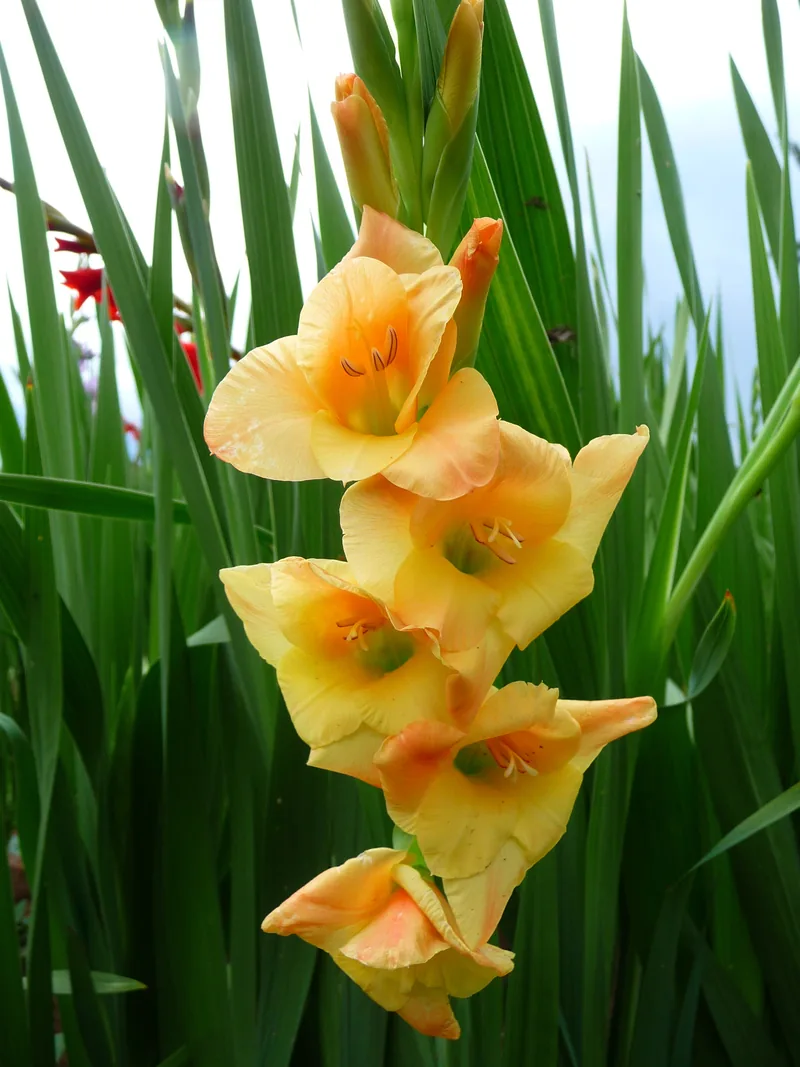

Sourced from university extension guides. For dates where you live, use the ZIP planting planner.
Planting timing
Iowa State: “Gladiolus bulbs (corms) should be planted after the danger of frost is past.” Make successive plantings every 2 weeks; bloom about 8 to 10 weeks after planting; final planting in early July (Iowa State). UMD: tender summer-flowering bulbs including gladiolus “are planted in the spring after danger of frost” (UMD Extension). Missouri: may be planted as early as a month before average last frost, then every two weeks; last planting no later than early July; 70 to 90 or more days to bloom (Missouri Extension). Iowa/UMD lead with after frost; Missouri allows about a month before — present both.
Depth and spacing
Iowa State: large corms 4 to 6 inches deep and 6 inches apart; small corms 3 inches deep; prefer corms 1½ to 2 inches in diameter (Iowa State). Missouri: large 4–6 inches; medium 3–4; small 2–3; in-row 2–3 inches for cutting beds or at least 6 inches for show spikes. Mississippi State: 3–5 inches deep and 4–6 inches apart (Mississippi State). Sources differ by corm size — show each. Pointed end up; full sun, well drained.
Sun, soil and water
NC State: full sun to partial shade; rich, well-drained soil; do not allow soils to dry out; protect from strong winds (NC State). Missouri: full sun; pH between 6.0 and 6.5; Mississippi State: pH 6.5–7 and about an inch of water per week. Mulch 2–4 inches (Missouri). No synthetic fertilizer rates; soil test; avoid fresh manure against corms.
Care and cutting
Stake tall spikes (Missouri). Cut when the first floret shows color; leave at least two, preferably four, leaves so the new corm can mature; store cut spikes upright (Missouri; MSU). NC State notes possible contact dermatitis / pet caution for corms — state plainly, not as medical advice.
Pests and diseases (organic)
Gladiolus thrips: most troublesome pest (Missouri); speckles/streaks, buds that fail to open (Clemson HGIC 2104). Cultural: sticky blue/yellow cards; conserve beneficials; insecticidal soap or spinosad when needed on labeled plants — follow the label (UC IPM thrips).
Aphids: strong water stream; insecticidal soap per label (UC IPM).
Corm rots: inspect before planting; discard soft or spotted corms; destroy diseased plants; proper curing on the dig-store page prevents most storage rot.
Related: dig and store gladiolus · organic pest control · ZIP planner
Frequently asked questions
When do I plant gladiolus?
After frost danger is past (Iowa State; UMD). Missouri also allows starting about a month before average last frost. Succession every 1–2 weeks; last plantings by early July where summers are short enough that corms still mature.
How deep do I plant the corms?
About 4–6 inches for large corms and shallower for small ones (Iowa; Missouri size tiers; MSU 3–5 inches).
Do I dig them every year?
In cold zones, yes — use the dig-and-store gladiolus section. Milder zones (often 8–10 per MSU; NC State hardy types with mulch) may leave some in ground.
Why are the flowers speckled or buds failing?
Suspect gladiolus thrips (Missouri; Clemson). Confirm, then cultural/least-toxic options per UC IPM / Clemson; follow labels.
Sources
- Iowa State University Extension: When should i plant gladiolus bulbs outdoors; How deep should i plant gladiolus bulbs
- University of Maryland Extension: UMD Extension
- University of Missouri Extension: G6620
- Mississippi State University Extension: Gladiolus for the farmer florist
- NC State Extension: Gladiolus
- Clemson Cooperative Extension: Clemson HGIC 2104
- University of California Agriculture and Natural Resources (UC ANR): UC IPM thrips; Aphids