
How to Grow Irises: Planting, Care & Organic Iris Borer Control
Quick answer
Bearded iris: divide and plant in July or August so rhizomes root before winter (Iowa State, Illinois, Wisconsin). Set rhizomes at or just below the soil surface; space about 12 to 18 inches (Illinois, Wisconsin) or 12 to 24 inches (Iowa State). Organic iris borer: remove debris, crush young larvae in spring, optional azadirachtin or spinosad when shoots are 4 to 6 inches, or nematode drench in June to early July (Wisconsin). — calendar window only.
Irises at a glance


Jump to
Updated
Focus: bearded iris (Iris × germanica group). Siberian iris notes appear where sources distinguish them. No weeks-before-frost planner rule — Midwestern guides give a July–August calendar window.
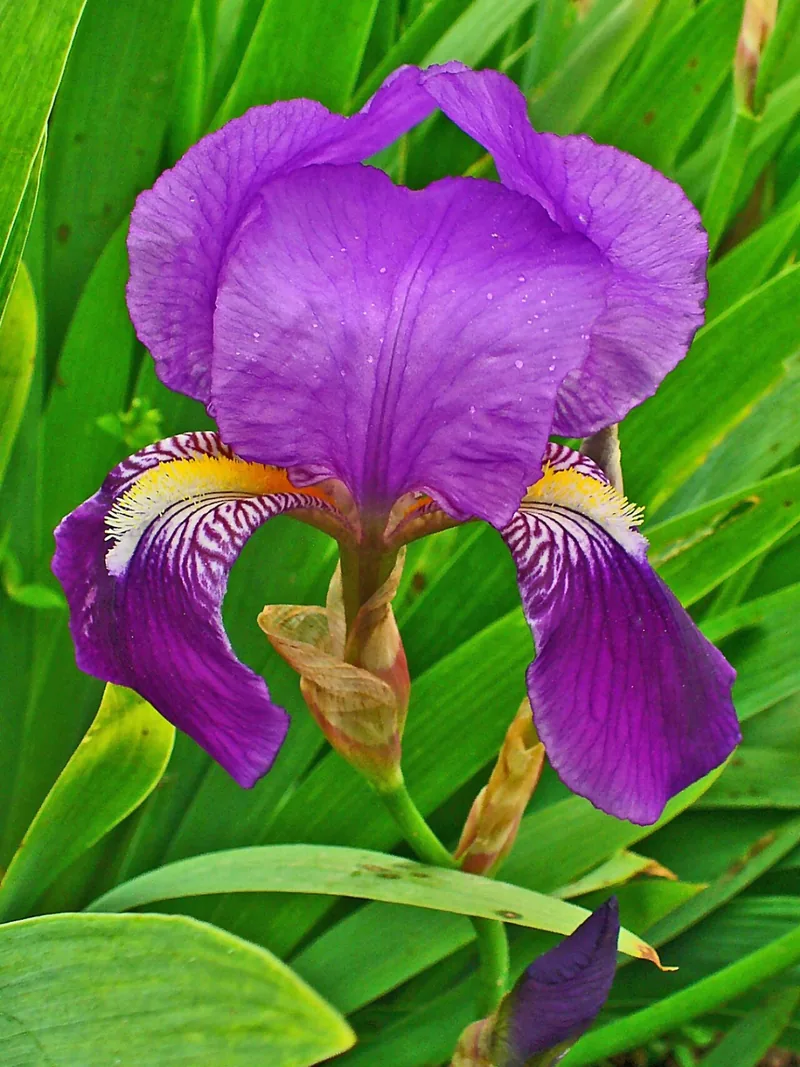

Sourced from university extension guides. For dates where you live, use the ZIP planting planner.
Planting timing
Iowa State: divide and transplant bearded iris every 3–5 years; July or August is best. (Iowa State) Illinois Extension: July and August after bloom so rhizomes establish before winter. (Illinois Extension) Wisconsin: after flowering, often July or August so replants root before freezing weather. (Wisconsin Horticulture)
Siberian iris (Iowa State): early spring or late summer (August). UMN’s general “four to six weeks before the ground freezes” line for fleshy-root perennials names peony and Siberian iris — it is not the bearded iris rule; keep bearded planting as July–August.
Depth and spacing
Iowa State bearded: rhizome just at or below the soil surface; space 12 to 24 inches; groups of three or more of one cultivar; full sun at least 6 hours. Illinois: rhizome slightly exposed / not too deep (deep planting invites rot); space 12–18 inches; groups of 3–7; full sun 6–8 hours; well-drained soil. Wisconsin dividing guide: space 12–18 inches; triangle groups of three with fans pointing outward. Present both spacing ranges with their sources. When dividing, cut leaves to about one-third height (Iowa State; Illinois).
Sun, soil and water
Bearded iris: fertile, well-drained, full sun. Wet sites favor bacterial soft rot (Iowa State); raised beds or organic matter help on clay. Siberian iris: full to part sun; moist fertile soils; pond edges can work (Iowa State).
Care
Divide when flowering declines or clumps crowd — that also helps with borer and soft rot (Illinois; Wisconsin). Discard soft, smelly, or borer-damaged rhizomes; sanitize tools (Illinois: 10% bleach or disinfecting wipes). Optional late-fall mulch on new transplants; remove it early in spring so the soil can dry (Illinois).
Pests and diseases (organic)
Iris borer: Wisconsin’s most serious iris pest; pinkish-white larva in rhizomes late June–July; soft-rot bacteria often follow. Bearded iris are hardest hit. Eggs overwinter on iris and nearby plant debris; hatch in early May; adults lay eggs late August–September. (Wisconsin XHT1041)
- Remove old plant debris near iris to destroy overwintering egg sites.
- In spring, crush small (~¼ inch) larvae by hand as they tunnel into leaves.
- Organic insecticide options Wisconsin lists include azadirachtin or spinosad (also pyrethrins/permethrin on the sheet — prefer azadirachtin/spinosad on this organic page). Apply when new shoots are 4 to 6 inches (about 4–6 inches) long; a second spray 10 to 14 days later, before larvae tunnel deep. Follow the product label; this page does not give product rates.
- Parasitic nematodes (Heterorhabditis or Steinernema) as soil drenches in June–early July can also work (Wisconsin).
- At divide: extract and kill borers; cut out damaged tissue; discard mushy rhizomes.
Bacterial soft rot: often follows borer feeding. Drainage, discard rotten rhizomes, and fall/spring debris cleanup (Wisconsin).
Related: when to plant peonies · fall perennial cutback · organic pest control · ZIP planner
Frequently asked questions
When do I plant or divide bearded iris?
July or August in Iowa, Illinois, and Wisconsin Extension guidance — a midsummer calendar window, not a weeks-before-frost number.
How deep do rhizomes go?
At or just below the surface; slightly exposed is OK (Illinois). Do not plant deep.
How do I control iris borer organically?
Clean up debris, crush young larvae in spring, optional azadirachtin or spinosad when shoots are 4–6 inches (repeat 10–14 days), or an entomopathogenic nematode drench in June–early July (Wisconsin). Follow labels; no product rates on this page.
Sources
- Iowa State University Extension: Transplanting and dividing iris
- University of Illinois Extension: 2021 08 20 how divide and plant bearded iris
- University of Wisconsin–Madison Extension: Wisconsin Horticulture; Wisconsin XHT1041