
How to Grow Lavender: Planting, Spacing, Care & Harvest
Quick answer
Transplant after frost danger has passed and soil is near 60°F (UMN; Penn State). Needs full sun and sharp drainage — raised beds on clay. Do not hard-prune into old wood; no pruning after mid-August (UMD).
Lavender at a glance


Weeks relative to last frost (LF). Colored weeks show when our ZIP planner schedules each step.
Jump to
Updated
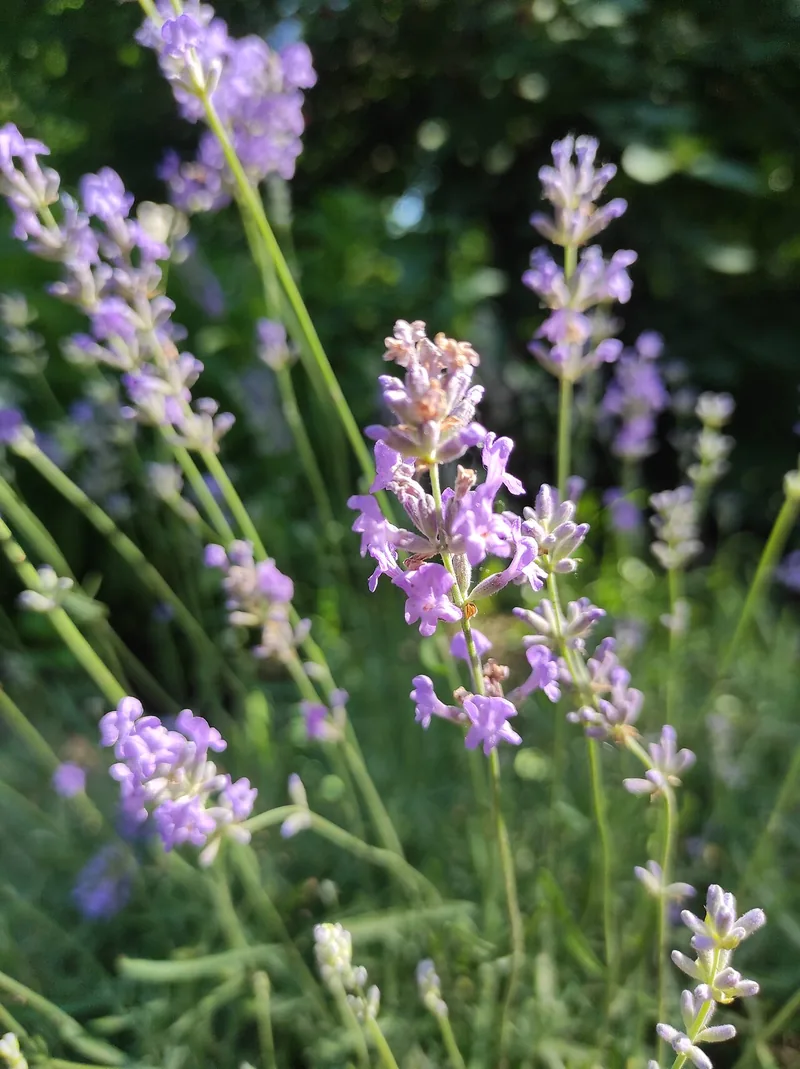
English lavender (Lavandula angustifolia). UMD: “Do not spray insecticides on herbs.” Drainage decides winter survival more often than air temperature alone.

Sourced from university extension guides. For dates where you live, use the ZIP planting planner.
Planting timing
UMN growing herbs: transplant “after the danger of frost has passed.” Lavender listed under warm-season herbs that “prefer soil near 60°F.” Start seeds indoors under lights in late winter, about 6 to 8 weeks before transplanting outdoors. (UMN Extension)” Penn State: “Lavender is planted … in spring after all danger of frost is over.” (Penn State Extension) UMD: propagate by seed or cuttings; “If winters are severe, the plant will need protection.” (UMD lavender) UMD herb care: cuttings best for lavender (seeds “can be tricky”); take softwood cuttings spring or early summer.
Depth and spacing
NC State: broadly mounded dwarf shrub up to 2 feet tall and 3 feet wide; available space 12 inches–3 feet. (NC State) Penn State: commercial spacing commonly 3 to 4 feet between plants and 6 to 10 feet between rows (equipment-driven); home gardens should space to mature width (~2–3 ft) with air flow. Six-inch-high raised beds improve drainage. Plant at the same depth as the nursery pot. Crowding raises disease risk (UMN: crowding → weak growth, poor air circulation).
Sun, soil and water
Sun: NC State full sun (≥6 hours). Penn State: 6–8 hours direct sun. UMD: rocky, dry, sunny sites with abundant lime. Soil / drainage: NC State “perfectly drained soil, preferably on the dry side”; dies in heavy clays; neutral to alkaline. Penn State: sandy loam pH 6 to 8; well-drained; does not tolerate heavy clay — amend or raise beds. UMD Mediterranean herbs: sunny dry sites, light (sandy) soil; do not add sand to clay — build a raised bed instead. Water: Penn State irrigate first year to establish; drought-tolerant after; “does not tolerate wet soils”; irrigate deeply but infrequently. UMN: water deeply once per week for outdoor garden herbs (soak to 8 inches); avoid soggy soil. Winter wet + cold: UMD — “Excessively wet, cold soil can cause Mediterranean herbs such as rosemary, thyme, and lavenders to die over the winter.” (UMD herb problems) Penn State: avoid frost pockets and windy winter-exposure sites; survives to about −20°F if not kept perpetually cold and wet.
Care and pruning
Pruning: UMD — lavender is a sub-shrub, not a herbaceous perennial. “Do not severely cut it back as this can kill it.” Wait until spring new growth, then remove winter damage and dried spikes; deadhead/shape after bloom for possible rebloom; “Do not prune after mid-August.” NC State: cut back yearly; remove spent spikes after flowers fade. Fertilizer: UMN “Fertilize lightly”; rich soils reduce essential oil. Penn State: fertilizer usually not needed on well-prepared soils after establishment. UMD: highly fertile soil → lush weak flavor and more rot. Mulch for winter heaving (UMD herb care): straw/oak leaves/evergreen boughs 4 inches after ground freezes; leave until spring growth shows — keep crowns/stems dry.
Harvest and use
UMD: “Cut whole flower spikes when the first flowers begin to open and dry.” Perennial; NC State blooms in summer; flowers usually lavender-purple (also pink/white). Uses: UMD sachets, perfume, baking; NC State potpourri, crafts, dried arrangements. NC State low poison severity: nausea/vomiting possible; problem for pets — do not encourage ingestion.
Pests and diseases (organic)
NC State: “No significant problems.” Susceptible to leaf spot and root rot from overwatering; good air circulation helps prevent leaf spot. UMD herb problems: “Do not spray insecticides on herbs.” Cultural drainage and air flow first. Overwatering / root and crown symptoms: UMD — wilting or yellowing of lower leaves; same look as drought once roots are damaged. Aphids / four-lined plant bug / spider mites appear on herbs generally (UMD) — for lavender prefer water spray / prune damaged growth; no insecticide sprays on culinary herbs per UMD.
Related: ZIP planner · organic pest control · basil plant care
Frequently asked questions
When do I plant lavender outside?
After frost danger has passed and soil is near 60°F (UMN); Penn State after all danger of frost. Planner last frost 0/0 — wording is after last frost, not weeks before.
Why did my lavender die over winter?
Often wet cold soil / poor drainage (UMD), frost pocket, or wind exposure (Penn State) — not only low air temperature.
How do I prune it?
Light spring cleanup after new growth; deadhead after bloom; never hard-cut into old wood; no pruning after mid-August (UMD).
Can I grow it in clay?
Only with a raised bed and sharp drainage (UMD; Penn State; NC State). Do not fix clay by mixing in sand alone (UMD).
Sources
- University of Minnesota Extension: UMN Extension
- Penn State Extension: Agritourism diversification lavender production
- University of Maryland Extension: Lavender; UMD herb problems
- NC State Extension: Lavandula angustifolia