
How to Grow Petunia: Planting, Care & Bloom
Quick answer
NDSU: start indoors about 10 weeks before last frost; transplant about 2 weeks after last frost. Harden off first (UMD). Full sun to partial shade; heavy shade cuts blooms (NC State). Deadhead for best flowering until frost.
Petunia at a glance


Weeks relative to last frost (LF). Colored weeks show when our ZIP planner schedules each step.
Jump to
Updated
Garden petunias are usually hybrids (Petunia × hybrida). Tender annual in most of the US (NC State hardy only USDA 10a–11b).

Sourced from university extension guides. For dates where you live, use the ZIP planting planner.
Planting timing
NDSU time chart: sow 10 weeks before last frost; transplant 2 weeks after last frost. (NDSU H1139) Planner uses start indoors −10 and transplant +2. Purdue HO-80: Common Garden Petunia — sun/semi-shade; height 12–18 inches; bloom June–Oct; sowing A-May (direct) or B-April (indoors). (Purdue HO-80) NC State: seeds January–March under glass; germination 72 to 75°F; many gardeners buy transplants; pinch purchased plants before transplant for bushiness; tender perennial hardy only USDA 10a–11b → annual in colder zones. (NC State) UMD: set out annuals after last frost for the area; harden off first. (UMD planting annuals)
Depth and spacing
NC State: depending on hybrid, need 1 to 3 feet of space. Height 6–18 inches; width 1–3 feet. Purdue: 12–18 inches tall class for common garden petunia. Seed is very fine — surface sow / barely cover is typical for plugs; buy transplants if seed is difficult. Exact seed depth is not numeric on the fetched pages, so we do not invent one.
Sun, soil and water
Sun: NC State full sun to partial shade; heavy shade reduces blooms. Purdue sun or semi-shade. Soil: NC State light, well-drained; tolerates poor soils if drained; moderate drought tolerance. Water: keep moist while establishing; avoid chronic wet (root rot). NC State lists root rot / Phytophthora issues on some types. Deadhead for best bloom; pinch leggy plants (NC State).
Care
Fertilizer: UMD care of annuals/perennials — fertilize annuals in spring; compost-rich beds may need little — no product rates. Habit groups without brand lists: cascading/trailing for baskets; larger-flowered vs smaller more-abundant flowering types. Overwinter: NC State may overwinter indoors in a bright cool spot away from heated air (optional). Deer: NC State “seldom damaged by deer.”
Bloom
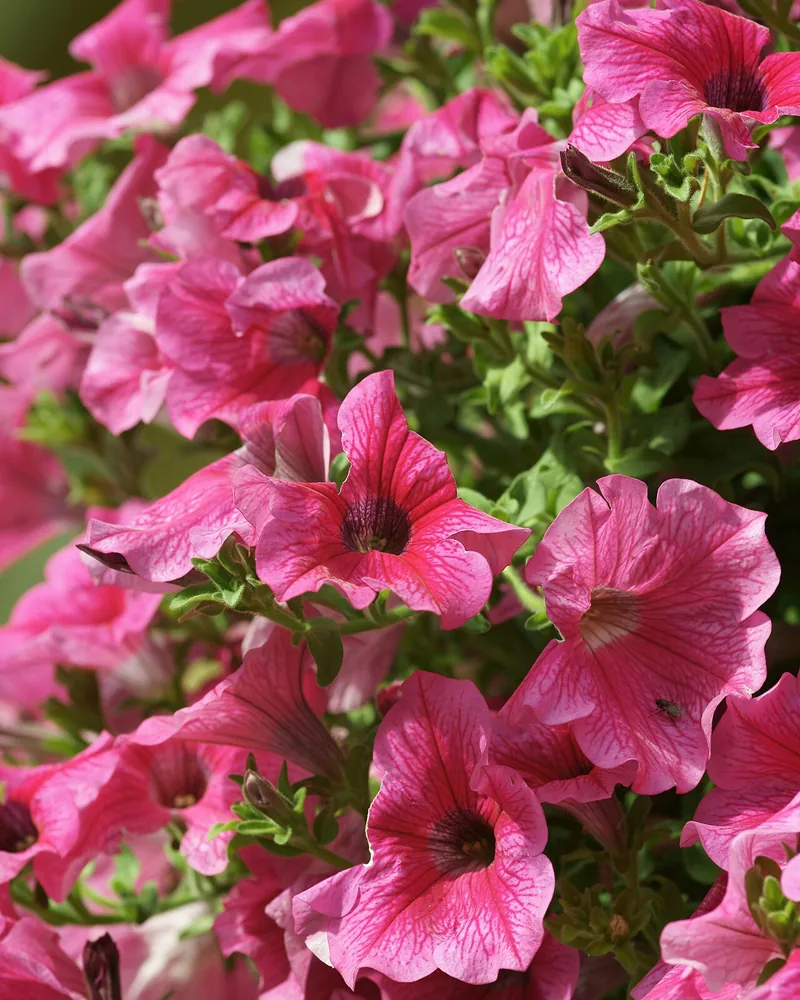
Continuous summer bloom until frost (NC State; Purdue June–Oct). Flowers funnel-shaped, many colors including variegated (NC State). No single days-to-maturity figure — bloom until frost after spring transplant.
Pests and diseases (organic)
Aphids, whiteflies, thrips, leafminers: NC State lists aphids, flea beetles, slugs/snails among insects. UC IPM aphids: strong water spray; insecticidal soap or oil with thorough coverage; follow label; not on drought-stressed plants or above 90°F. (UC IPM aphids) Soap/oil and spinosad for thrips/leafminers — follow labels (UC IPM less-toxic insecticides). Slugs/snails: handpick; iron phosphate bait per label (UC IPM).
Diseases: NC State root rot, gray mold (Botrytis), tobacco mosaic virus; some types poor Phytophthora resistance — cultural: drainage, air flow, avoid overhead wetness late day; discard badly infected plants.
Related: ZIP planner · organic pest control · what flowers to plant in fall
Frequently asked questions
When do I put petunias outside?
After frost danger; NDSU/planner about 2 weeks after average last frost (+2). Harden off first (UMD).
When do I start seeds indoors?
About 10 weeks before last frost (NDSU chart). Germination likes ~72–75°F (NC State).
Why aren’t they blooming in shade?
NC State: heavy shade — plants survive but blooms suffer. Move to full sun / bright partial shade.
Sources
- North Dakota State University Extension: NDSU H1139
- Purdue University: Purdue HO-80
- NC State Extension: Petunia x hybrida
- University of Maryland Extension: UMD planting annuals
- University of California Agriculture and Natural Resources (UC ANR): UC IPM aphids; UC IPM less-toxic insecticides; Snails and slugs