
What Flowers to Plant in Fall (by Zone)
Quick answer
Plant pansies and violas when the soil is between 45 and 65°F and nights are below 65°F, and ornamental kale, which colors up as nights turn cold. Plant spring bulbs until the ground is frozen. Perennials should go in about six weeks before the first frost, so in zones 3 to 8 that window has mostly passed by late October; in zones 9 to 11, fall into winter is the main season for cool-season annuals.
Jump to
- Pansies and violas: plant when the soil is 45 to 65°F
- Ornamental cabbage and kale: color comes with cold nights
- Snapdragons, petunias and winter annuals in frost-rare areas
- Spring bulbs: plant until the ground freezes
- Perennials: fall planting needs a head start
- Fall mums: enjoy them now, plant them in spring
- Marigolds (Tagetes): summer annuals that bloom into fall
- More guides
- Frequently asked questions
Updated
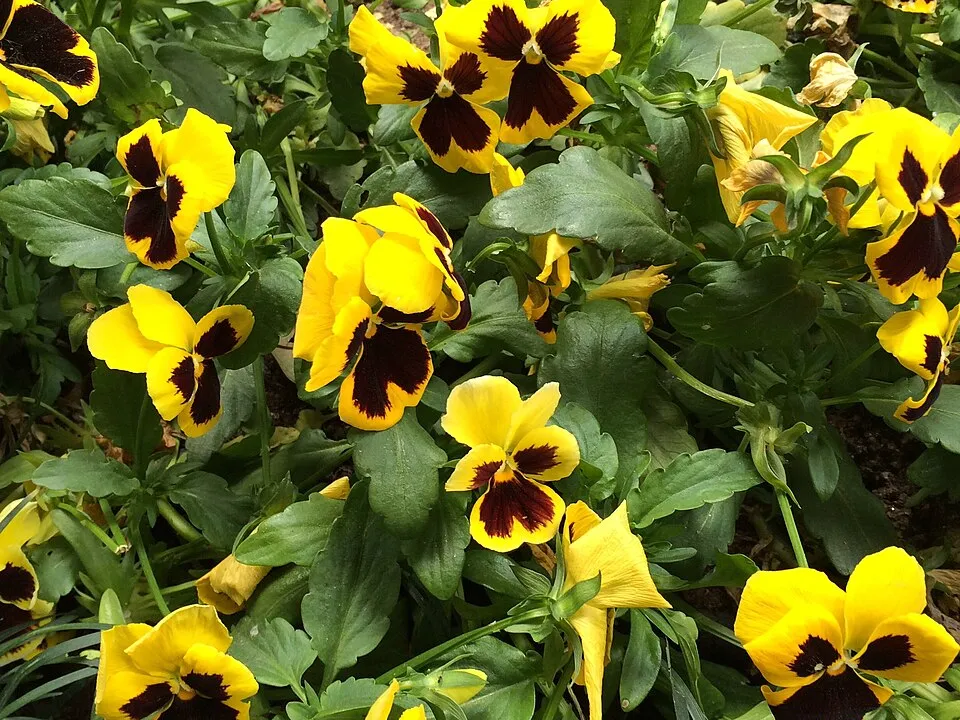

Fall is the time for cool-season flowers, spring bulbs and, in milder zones, perennials. What works depends on your zone: in cold zones the window for new perennials has mostly closed by late October, while in zones 9 to 11 fall into winter is the main planting season for cool-season annuals. Enter your ZIP in the planner for the dates at your nearest NOAA station.
Pansies and violas: plant when the soil is 45 to 65°F
UGA Extension: “pansies require soil temperatures between 45° F and 65° F for best growth.” Planted too late, “When soil temperatures fall below 45° F, pansy roots literally shut down and stop functioning.” Planted too early in warm weather, they “can appear yellow. Their stems stretch”. (UGA Extension B1359) UF/IFAS adds: “Pansies thrive in air temperatures below 65˚ Fahrenheit at night.” (UF/IFAS Gardening Solutions)
They are tough once settled: “Healthy plants can generally survive short periods of temperatures down to the single digits without protection.” UGA suggests 2 to 4 inches of pine straw over the bed when air is “expected to drop below 20° F for several hours”, and calls gray-green wilting below 25°F “a normal defense response to cold weather”. Pansies “must have well-drained soils and cannot tolerate wet feet”.
Example dates (Georgia only, UGA Table 1): zones 8a and 8b, Oct. 15 to Nov. 1; zone 7b, Oct. 1 to Oct. 15; zones 6b and 7a, Sept. 15 to Oct. 1. Florida (UF/IFAS): “Planting month for zone 8: February, October, November, or December”; “zone 9: February, November, or December”; “zone 10 and 11: November or December”. Elsewhere, use the soil and night-temperature rules above.
Ornamental cabbage and kale: color comes with cold nights
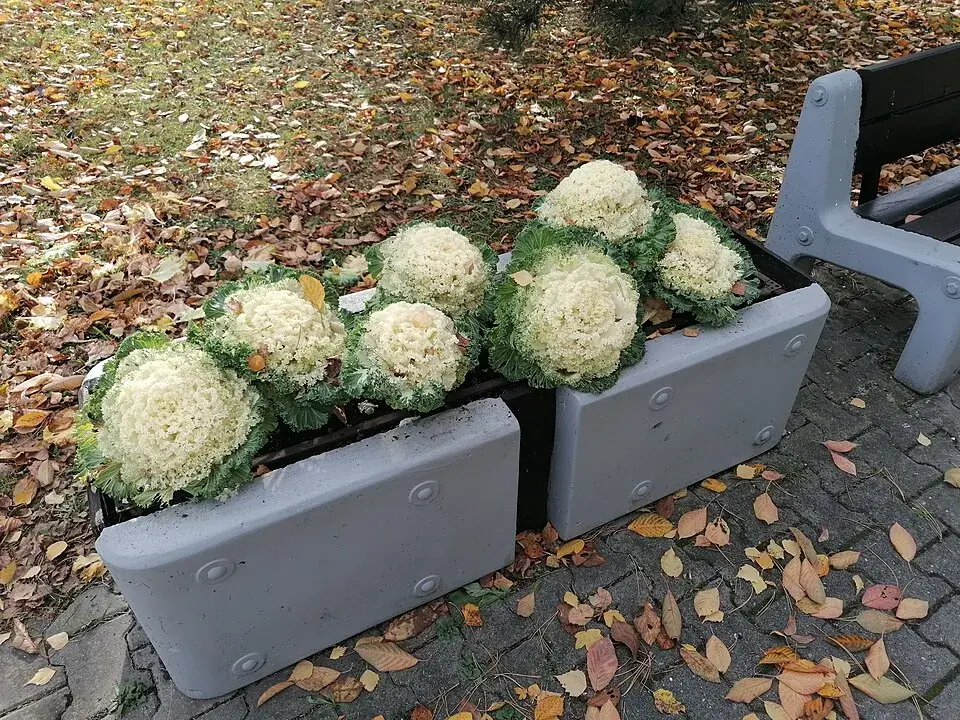
Wisconsin Horticulture: colors get “great, vivid colors below 50 °F”, and “once acclimated they can survive temperatures as low as 5 °F, so plants often last well into November and December.” Plant them “in a sunny location in a moderately moist, fertile soil. Bury the stem so the lowest leaves are flush with the soil surface.” They “do not tolerate summer heat”, and they work in “mixed or single container plantings” (Wisconsin Horticulture). UMass: “It will take 2 to 4 weeks to develop intense coloration from the start of cool night temperatures.” (UMass Amherst)

Snapdragons, petunias and winter annuals in frost-rare areas
This is Florida guidance from UF/IFAS; it fits frost-rare areas, so don’t apply these months to colder states. “Plan to change flower beds to winter annuals in November or even later; it's important to wait for cooler weather so that the new plants aren't stressed by heat and high humidity.” (UF/IFAS Gardening Solutions) Snapdragons: “Plant snapdragons as weather cools in the fall”, and “Continue to plant them in full sun through February”. (UF/IFAS Gardening Solutions) Petunias: “In Florida, October and November are the best time to plant petunias.” (UF/IFAS Gardening Solutions)
Spring bulbs: plant until the ground freezes
Illinois Extension: “Most bulbs can be planted until the ground is frozen.” (Illinois Extension) For tulip and daffodil dates by zone, see when to plant tulip and daffodil bulbs.
Perennials: fall planting needs a head start
Illinois Extension says perennials “should be planted about six weeks before the first frost of the year.” and “Mulching can wait until night-time temps are getting around 32°F.” (Illinois Extension) UVM Extension: “Plants that are tucked into the soil at least four to six weeks before the ground freezes will be adequately established before winter.” “Do not add fertilizer, as it is not needed by the plant at this time.” (UVM Extension)
| USDA zone | Typical first fall frost, median (10th–90th pct) | Target for planting perennials (6 weeks before the median) |
|---|---|---|
| Zone 3 | Sep 23 (Sep 7 – Oct 1) | Aug 12 |
| Zone 4 | Sep 30 (Sep 19 – Oct 7) | Aug 19 |
| Zone 5 | Oct 7 (Sep 26 – Oct 18) | Aug 26 |
| Zone 6 | Oct 19 (Oct 5 – Oct 28) | Sep 7 |
| Zone 7 | Oct 28 (Oct 17 – Nov 8) | Sep 16 |
| Zone 8 | Nov 10 (Oct 31 – Nov 20) | Sep 29 |
| Zone 9 | Dec 3 (Nov 17 – Dec 26) | Oct 22 |
| Zone 10 | Frost occasional to rare (70% of zone 10 ZIP codes’ nearest stations record 32°F in fewer than half of years). Where frost is regular: Dec 26 | No date: plant in the cool season |
| Frost rare | No date |
About this table: For each ZIP code we use the nearest NOAA NCEI 1991–2020 U.S. Climate Normals station’s 50%-probability 32°F first-fall-frost date (half of years frost earlier). Median across the zone’s ZIP codes, with the 10th–90th percentile range. Source: data/zonefrost.json. The target is the median minus 6 weeks (the Illinois rule); UVM’s ground-freeze rule usually falls later, so treat the target as a safe date, not a hard cutoff. Enter your ZIP in the planner for the dates at your nearest NOAA station.
By early November, the six-week target has passed in zones 3 to 9. Perennials planted now are a gamble: water them in and mulch once nights get near 32°F (Illinois).
Lupine (fall seed for Russell hybrids)
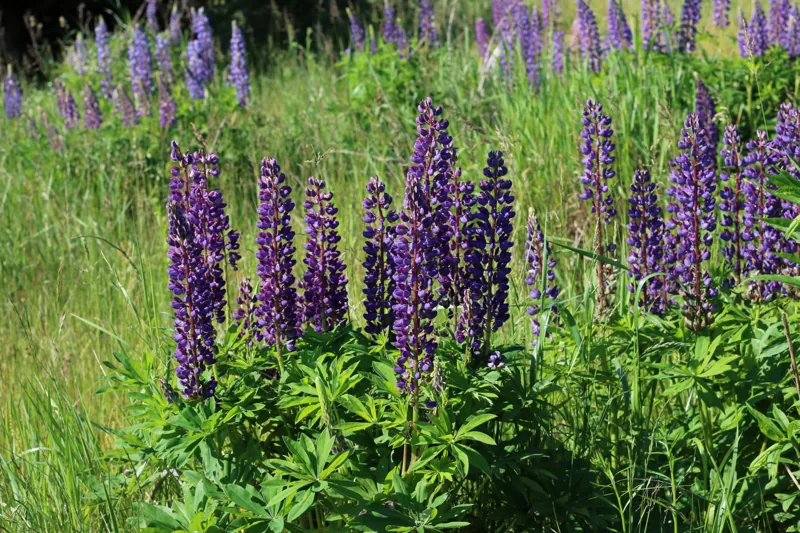

NC State on hybrid lupines (Russell hybrids): “Plant seeds in the fall.” Cool mountain gardens are preferred; in warm zones 7–8 they are often grown as annuals. No source gives a weeks-before-frost number for Lupinus. (NC State Lupinus)
Site: full sun; organically rich, well-drained soil; consistent water; afternoon shade in heat; mulch to cool roots. Deep taproot — direct sow preferred (hard to transplant). Short-lived about 2–5 years (NC State). They fix nitrogen — generally no heavy feeding; omit printed fertilizer rates.
Poison (brief): NC State lists low severity poison characteristics for Lupinus — poisonous to humans and pets if chewed or eaten. Not medical advice; keep away from pets and children who chew plants.
Pests (organic/cultural): slugs/snails, aphids, powdery mildew (NC State). Handpick slugs or use iron phosphate as the label directs; soap/oil for aphids; improve air flow for mildew.
Fall mums: enjoy them now, plant them in spring
Iowa State (cold-winter guidance): “fall planted garden mums usually don't survive the winter even when given winter protection. Flowering mums purchased in late summer or early fall should be regarded as temporary additions to the landscape.” (Iowa State) Illinois: “Spring is the ideal time to plant mums.” If you plant in fall, “apply 4 inches of mulch to your plants when the ground begins to freeze”, and “avoid the temptation to cut them back” (Illinois Extension).
Marigolds (Tagetes): summer annuals that bloom into fall
Not calendula. Garden marigolds are Tagetes (African T. erecta, French T. patula, signet T. tenuifolia). Pot/English marigold is Calendula officinalis — see calendula. Purdue HO-80 lists African bloom July–Oct and French June–Oct in sun (Purdue HO-80). French types are described as easy and largely free of diseases and pests (Purdue) — a toughness line, not a guarantee.
When to plant: University of Idaho CIS 1209: start indoors about 3 weeks; germination soil 70–85°F, 5–8 days; warm-season transplants about 1 to 3 weeks after average last frost. The ZIP planner follows Idaho (start indoors last frost −3 to 0; direct sow / transplant 0 to +2). NDSU’s chart lists a longer 6-week indoor start and transplant about 3 weeks after last frost — label that separately if you follow NDSU instead (NDSU H1139).
Japanese beetles: UMN lists marigold among preferred adult hosts; handpick into soapy water morning or evening; start early; do not use Japanese beetle traps (they attract more than they catch). Neem deters with repeat sprays — follow the label (UMN Japanese beetles). Disease list is thin in our sources — keep cultural sun, air flow, and avoid overhead late-day water.
More guides
Calendula (pot marigold) Petunia Tulip and daffodil bulbs Peonies Dig and store dahlias and cannas When to plant milkweed seeds Cut back perennials in fall Protect plants from frost First hard freeze dates What vegetables to plant in fall and winter ZIP planner
Frequently asked questions
What flowers can I plant in fall?
Cool-season flowers such as pansies, violas, ornamental cabbage and ornamental kale, plus spring bulbs until the ground freezes (Illinois Extension). Perennials need about six weeks before the first frost to settle in (Illinois Extension). In frost-rare areas, UF/IFAS says to switch beds to winter annuals such as snapdragons in November or later.
When should I plant pansies?
When the soil is between 45°F and 65°F (UGA Extension) and nights are below 65°F (UF/IFAS). In Georgia that is mid-September to early November depending on zone; in Florida, UF/IFAS lists October to December in zone 8 and November or December in zones 9 to 11.
Is it too late to plant perennials in October?
In zones 3 to 8, usually yes for a safe start: Illinois Extension wants perennials in about six weeks before the first frost, and that date has passed. UVM Extension allows four to six weeks before the ground freezes. If you plant now, water well, skip fertilizer (UVM) and mulch once nights are near 32°F.
Will fall mums come back next year?
Often not in cold climates. Iowa State says fall-planted garden mums usually don’t survive the winter even with protection, and Illinois Extension says spring is the ideal time to plant mums. If you plant in fall, mulch 4 inches deep when the ground begins to freeze and don’t cut them back.
Are garden marigolds the same as calendula?
No. Garden marigolds are Tagetes; pot/English marigold is Calendula officinalis. Marigolds are spring-planted summer annuals that bloom into fall (Purdue); plant after frost risk. See the marigolds section above.
What flowers can I plant in pots in fall?
Ornamental cabbage and kale work in mixed or single containers (Wisconsin Horticulture), and pansies and violas suit pots as long as the soil drains well (UGA Extension).
Sources
- University of Georgia Extension: Success with Pansies in the Winter Landscape (B1359)
- UF/IFAS Extension: Pansies; Winter Annuals; Snapdragon; Petunias
- University of Wisconsin–Madison Extension: Ornamental Cabbage and Kale
- UMass Extension: Flowering Cabbage and Kale
- University of Illinois Extension: Planting Bulbs; Establishing Perennials in the Early Fall; Why do my mums always die?
- University of Vermont Extension: Planting Perennials This Fall
- Iowa State University Extension: Will fall planted mums survive the winter?
- Purdue University: Purdue HO-80
- North Dakota State University Extension: NDSU H1139
- University of Minnesota Extension: UMN Japanese beetles
- NC State Extension: Lupinus (lupine)