
When to Plant Milkweed Seeds: Fall Sowing, Cold Stratification and Which Milkweed to Grow
Quick answer
Sow milkweed seed outdoors in late fall, after your first frost, so winter’s cold and moisture prepare it to sprout in spring. Or chill seed in a moist bag in the refrigerator for about 30 days and start it indoors 8 to 10 weeks before your last frost. Butterfly weed (Asclepias tuberosa) is a native milkweed, not an invasive plant. Of the common garden milkweeds, common milkweed is the one that spreads.
Jump to
- Can you plant milkweed seeds in fall?
- When to plant milkweed seeds by zone
- How to cold-stratify milkweed seeds in the refrigerator
- How to harvest milkweed seeds from pods
- Is butterfly weed invasive?
- Butterfly weed vs. swamp milkweed vs. common milkweed
- Warm zones: skip tropical milkweed
- More guides
- Frequently asked questions
Updated
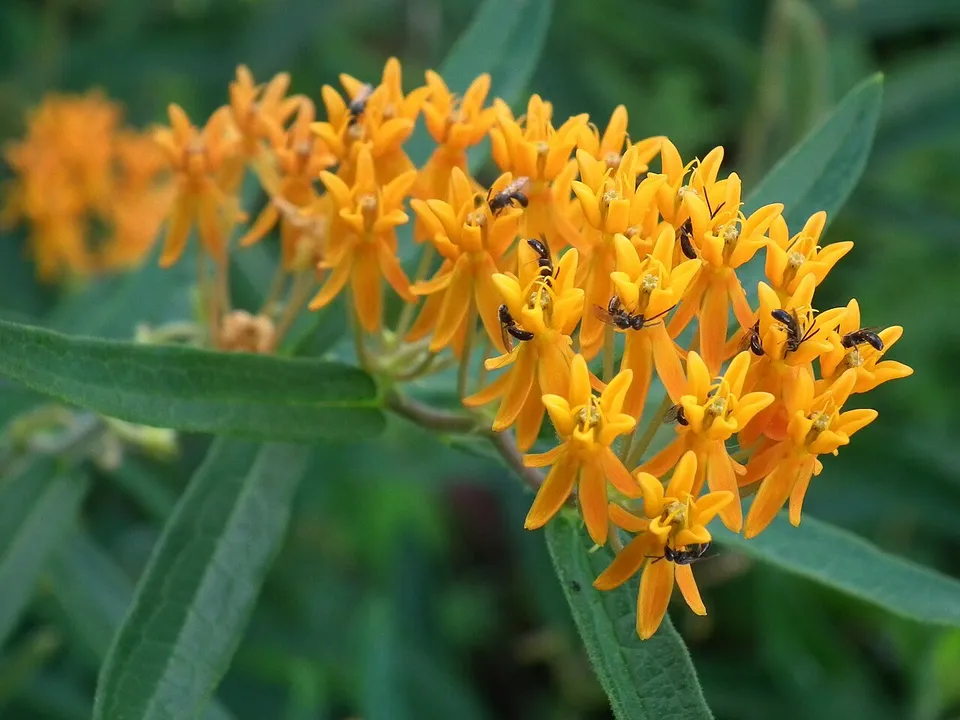

Milkweed seed needs a cold, moist winter before it will sprout, which makes late fall one of the easiest times to plant it. Here’s when to sow milkweed seeds outdoors in your USDA zone, how to cold-stratify seed in the refrigerator for a spring start, how to collect seed from the pods, and whether butterfly weed is invasive, from university extension guides.
Jump to: Planting in fall When to plant, by zone Cold stratification Harvesting seed from pods Is butterfly weed invasive? Which milkweed to grow Tropical milkweed
Can you plant milkweed seeds in fall?
- Yes, after frost. Wisconsin Extension, on butterfly weed: “Sow outdoors in place after frost in the fall, in a cold frame in early spring, or start indoors with bottom heat in late winter (8 to 10 weeks before average last frost) after a 1 month cold, moist stratification to carefully transplant outside later.” (Wisconsin Extension)
- Why fall works. Iowa State Extension (Linn County): “Milkweed seeds, like many native plants, need to feel a cold winter before they can germinate. If planting is going to occur in the spring, keep seeds cold until ready to plant.” (Iowa State Extension)
- Wait for cool soil. The same Iowa article names October and November as good months for fall sowing there and adds: “The soil needs to be cool enough that the seeds do not germinate immediately. Scatter seeds and cover with approximately ¼” soil.” Those months are Iowa timing; the table below gives the date for your zone.
- Iowa timing: early to mid-November. Iowa State Extension’s Yard and Garden FAQ says, for butterfly weed: “work up the soil in a protected location in early to mid-November” (Iowa State Extension). That is Iowa guidance; use the table below for your zone.
- Sow where the plants will stay. Butterfly weed plants “may not transplant well because of their deep taproots”, and they “bloom from seed in 2 to 3 years” (Wisconsin Extension). Iowa State says of milkweeds in general: “When planting milkweeds, choose your site carefully as they are difficult to transplant.”
When to plant milkweed seeds by zone
The rule: sow outdoors on or after your typical first fall frost, or start seed indoors 8 to 10 weeks before your typical last spring frost after a month in the refrigerator (Wisconsin Extension). In zones 3 to 7 the typical first frost has already passed by early November, so fall sowing can start now; zone 8 usually reaches it around Nov 10, and zone 9 in early December. Butterfly weed is “hardy in zones 3a to 9b” (Wisconsin), so the table stops at zone 9. Enter your ZIP in the planner for the dates at your nearest NOAA station.
| USDA zone | Sow outdoors: typical first fall frost (32°F), median (10th–90th pct) | Typical last spring frost (32°F), median | Start indoors (8 to 10 weeks before last frost) | Put seed in the refrigerator (about 4 weeks before starting indoors) |
|---|---|---|---|---|
| Zone 3 | On or after Sep 23 (Sep 7 – Oct 1) | May 17 | Mar 8 – Mar 22 | Feb 8 – Feb 22 |
| Zone 4 | On or after Sep 30 (Sep 19 – Oct 7) | May 10 | Mar 1 – Mar 15 | Feb 1 – Feb 15 |
| Zone 5 | On or after Oct 7 (Sep 26 – Oct 18) | May 3 | Feb 22 – Mar 8 | Jan 25 – Feb 8 |
| Zone 6 | On or after Oct 19 (Oct 5 – Oct 28) | Apr 26 | Feb 15 – Mar 1 | Jan 18 – Feb 1 |
| Zone 7 | On or after Oct 28 (Oct 17 – Nov 8) | Apr 11 | Jan 31 – Feb 14 | Jan 3 – Jan 17 |
| Zone 8 | On or after Nov 10 (Oct 31 – Nov 20) | Mar 24 | Jan 13 – Jan 27 | Dec 16 – Dec 30 |
| Zone 9 | On or after Dec 3 (Nov 17 – Dec 26) | Feb 24 | Dec 16 – Dec 30 | Nov 18 – Dec 2 |
| Zones 10–11 | Frost occasional to rare (70% of zone 10 ZIP codes’ nearest stations record 32°F in fewer than half of years) | — | Use the refrigerator method below | — |
About this table: For each ZIP code we use the nearest NOAA NCEI 1991–2020 U.S. Climate Normals station’s 50%-probability 32°F frost dates (half of years frost earlier in fall or later in spring). Median across the zone’s ZIP codes; the first-frost range runs from the 10th to the 90th percentile of ZIP codes. Indoor and refrigerator dates count back from the median last frost using the Wisconsin Extension timing (8 to 10 weeks, after 1 month of cold, moist stratification). Source: data/zonefrost.json, from NOAA NCEI 1991–2020 U.S. Climate Normals. Where frost is rare (zones 10 and 11), we suggest the refrigerator method to give seed its cold period; none of the sources above gives dates for those zones.
How to cold-stratify milkweed seeds in the refrigerator
- Soak, bag and chill. University of Arkansas Extension, for butterfly milkweed: “The seeds should be soaked overnight in water and then moved to a moist (not wet) media placed in a plastic bag. The bag should be placed in a refrigerator at 40°F for 30 days.” (University of Arkansas Extension)
- Or chill a seeded flat. Iowa State’s indoor method sows butterfly weed seed in a flat of commercial germination medium, slips it in a plastic bag and says to “place the bagged flat in the refrigerator”, leaving it there for “4 to 6 weeks” (Iowa State Extension).
- Then pot it up. “The seed (or seedlings if they have sprouted) should be planted in a nurse pot for growing out. It often takes an entire growing season before the young plant is sturdy enough to plant in the garden.” (University of Arkansas)
- Store seed dry until then. “The seeds should be held in dry storage until ready for stratification in mid-winter.” (University of Arkansas)
- Use deep pots. Wisconsin suggests “3 to 4 inch deep containers, particularly with separate cells,” so seedlings can be moved “without overly disturbing the roots.” (Wisconsin Extension)
- Setting plants out. Iowa State says transplants “seem to have a better success rate” than spring direct sowing, and plants go outside “Once the danger of frost is past and the plant has 4 leaves.” Iowa State starts them “4-6 weeks before the last frost date”, later than Wisconsin’s 8 to 10 weeks; the table uses Wisconsin’s timing.
How to harvest milkweed seeds from pods
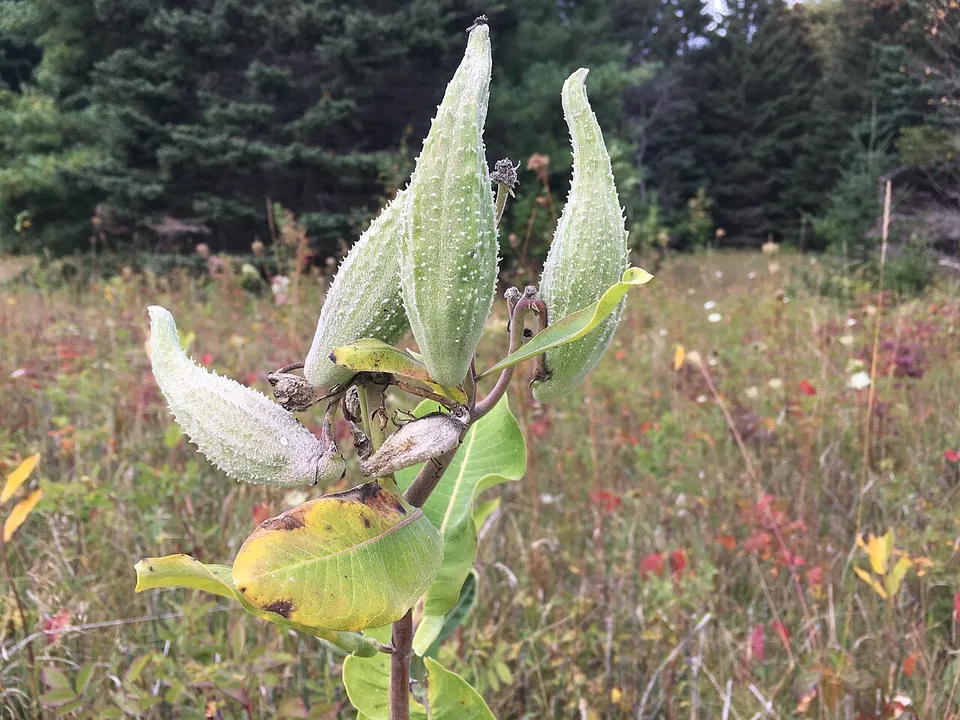

- Pick pods just before they open. Iowa State: “Mature pods are those that are within a day or two of opening. Squeeze the pods and if they don’t open easily, they are not mature enough. The seeds need to be mature and brown.” (Iowa State Extension)
- Butterfly weed timing. Iowa State’s Yard and Garden FAQ says to harvest butterfly weed pods “when the pods begin to split” (Iowa State Extension).
- Skip pods with milkweed bugs. The bugs “pierce and feed on milkweed seeds, rendering them inviable.” “Do not collect open pods containing these milkweed bugs.”
- Dry, then separate the silk. Iowa State dries pods “in an open area with good air circulation”, strips the seeds and silk into a paper bag, shakes it, and cuts a small hole in one bottom corner so the seeds fall out and the silk stays in the bag. “Store dried seeds in a cool dry environment.”
- What butterfly weed seed pods look like. Wisconsin: “These 3 to 6 inch long, grayish-green pods split open when mature, revealing rows of hundreds of flattened, brown seeds.” (Wisconsin Extension)
Is butterfly weed invasive?
Butterfly weed is a native milkweed, and none of the extension sources we use lists it as invasive. Wisconsin Extension says it is “native to much of North America from eastern Canada south to Florida, west to the Dakotas down to Colorado and the southwest, and into California. It is most widespread in the eastern half of the U.S.” (Wisconsin Extension) We did not check individual state invasive lists.
- It can self-seed. It “may reseed in the landscape if plants go to seed. Remove the pods before they split open if self-seeding is not wanted.” (Wisconsin)
- It stays in a clump. It grows “from a large taproot, forming clumps 1½ to 3 feet tall and wide.” (Wisconsin) UNH Extension names swamp milkweed, butterflyweed and whorled milkweed, “all of which tend to grow in clumps and are good choices for perennial beds.” (UNH Extension)
- The milkweed that spreads is common milkweed. UNH: “Once it is established it can spread from its rhizomatous root system.” SDSU says it “spreads by rhizomes that will allow the plant to spread quite rapidly in the garden, given the chance” (SDSU Extension).
- Butterfly weed is not butterfly bush. Butterfly bush (Buddleja davidii) is a different, non-native shrub that extension services do call invasive: see is butterfly bush invasive?
- “Mexican” milkweed is tropical milkweed. UF/IFAS lists tropical milkweed’s other names as “Mexican milkweed, scarlet milkweed, or scarlet butterfly milkweed”. It is a different species, covered below.
Butterfly weed vs. swamp milkweed vs. common milkweed
| Milkweed | Height | Site | Spreads? |
|---|---|---|---|
| Butterfly weed (Asclepias tuberosa) | “One to two-and-a-half feet” | Full sun; sandy or other well-drained soil, drought tolerant (Wisconsin) | Clump-forming; can self-seed (Wisconsin, UNH) |
| Swamp milkweed (Asclepias incarnata) | “Two to five feet” | “medium-wet to medium-dry soil”, full sun to part shade (SDSU) | Clump-forming (UNH) |
| Common milkweed (Asclepias syriaca) | “Three to five feet” | “medium to dry soil”, full sun to part shade (SDSU) | Spreads by rhizomes (UNH, SDSU) |
About this table: Heights and site conditions from SDSU Extension; butterfly weed site notes from Wisconsin Extension; growth habit from UNH Extension and SDSU.
- Butterfly weed “needs full sun to bloom and prefers sandy soil but grows in almost any type of well-drained soil, including gravel or clay. Plants are very drought tolerant once established.” “Unlike most members of the milkweed family, this species does not have milky sap.” It “is a larval host plant for several butterflies, including monarch (Danaus plexippus)” (Wisconsin).
- Swamp milkweed: “Although it prefers average moisture conditions, it can tolerate periods of dry weather, as well as some occasional standing water.” SDSU says monarchs “will readily use this plant as a food source for their larva.”
- Common milkweed: UNH: “In the landscape, common milkweed is often too aggressive and weedy to be widely appropriate for beds and borders. It is much better suited to unmaintained edges of fields or thickets.” To limit its spread, UNH suggests removing “immature seed pods.” SDSU says it “would best be used in a more-naturalized setting.”
- Fall cleanup: for butterfly weed, “It is best to wait until spring to cut foliage. Plants are slow to emerge late in the spring.” (Wisconsin) Mark the spot so you don’t dig into it in spring. More on what to leave standing: which perennials to cut back in fall.
Warm zones: skip tropical milkweed
- Invasive in Florida. UF/IFAS: tropical milkweed (Asclepias curassavica) “is listed as an invasive species in north, central, and south Florida by the UF/IFAS Assessment of Non-Native Plants” and “therefore should not be planted in Florida landscapes.” (UF/IFAS)
- Why it matters for monarchs. UF/IFAS says tropical milkweed “does not senesce (die back) in the winter and grows year-round in warm climates.” Where it already grows, plants “should be cut back in late October to simulate the natural die-back of native milkweed species and to remove plant tissue potentially contaminated with OE spores.” (OE is a protozoan parasite of monarchs.)
- Cut back, or replace. University of Georgia: “In the short term, we recommend cutting it back to ~6" each month during fall-winter (unless it dies back on its own, as it does in northern locations). In the long term, we suggest replacing it with a milkweed species native to your area.” (University of Georgia)
- Natives to plant instead. UF/IFAS says native milkweed sold in Florida tends to be limited to “butterfly milkweed (Asclepias tuberosa), swamp milkweed (Asclepias incarnata), and aquatic milkweed (Asclepias perennis)”.
More guides
Winter sowing in milk jugs Is butterfly bush invasive? What flowers to plant in fall Which perennials to cut back in fall When to plant tulip and daffodil bulbs Frost dates ZIP planner
Frequently asked questions
When should I plant milkweed seeds?
Either outdoors in late fall, on or after your first frost (Wisconsin Extension: “after frost in the fall”), or indoors in late winter, 8 to 10 weeks before your average last frost, after a month of cold, moist stratification. The table above gives the dates for USDA zones 3 to 9.
Can you plant milkweed seeds in fall?
Yes. Wisconsin Extension says to sow butterfly weed outdoors after frost in the fall, and Iowa State Extension (Linn County) says milkweed seeds need to feel a cold winter before they can germinate. Sow once the soil is cool enough that the seeds won’t sprout right away.
Do milkweed seeds need cold stratification?
Yes, if you plant in spring. Iowa State says milkweed seeds need a cold winter before they germinate and should be kept cold until spring planting. University of Arkansas Extension soaks butterfly milkweed seed overnight, then keeps it in moist media in a plastic bag in a 40°F refrigerator for 30 days.
How deep do you plant milkweed seeds?
Shallow. Iowa State Extension (Linn County) scatters the seeds and covers them with about 1/4 inch of soil.
When are milkweed pods ready to harvest?
When they are within a day or two of opening: squeeze a pod, and if it doesn’t open easily it isn’t mature. The seeds should be brown (Iowa State). Skip open pods with milkweed bugs, which make the seeds inviable.
Is butterfly weed invasive?
Butterfly weed (Asclepias tuberosa) is native to much of North America (Wisconsin Extension), and none of the extension sources we use lists it as invasive. It can self-seed, so remove the pods before they split if you don’t want seedlings. It is a different plant from butterfly bush, which is invasive in many regions.
Which milkweed spreads the most?
Common milkweed. UNH Extension says it spreads from its rhizomatous root system and is often too aggressive for beds and borders. Butterfly weed, swamp milkweed and whorled milkweed tend to grow in clumps (UNH).
Should I plant tropical milkweed?
Not in Florida, where UF/IFAS lists it as invasive. Where it already grows, UF/IFAS says to cut it back in late October, and the University of Georgia suggests replacing it with a milkweed native to your area.
Sources
- University of Wisconsin–Madison Extension: Butterfly Weed, Asclepias tuberosa (Wisconsin Horticulture)
- Iowa State University Extension: Planting Milkweed in Your Home Garden (archived); Yard and Garden FAQ: How do I germinate butterfly weed seeds?
- NOAA National Centers for Environmental Information: U.S. Climate Normals 1991–2020
- University of Arkansas Cooperative Extension: Plant of the Week: Asclepias tuberosa, Butterfly milkweed
- UNH Extension: Milkweed is taking over my perennial garden. How can I save some for monarch butterflies but keep it from spreading?
- South Dakota State University Extension: Garden-friendly Milkweeds to Plant in South Dakota
- UF/IFAS Extension: Getting the Most out of Your Milkweed (ENY-2140)
- University of Georgia, Odum School of Ecology: How You Can Help Monarch Butterflies (Q&A)