
When to Plant Tulip and Daffodil Bulbs: Timing by Zone, Depth and Care
Quick answer
Plant tulips and daffodils in fall once the soil at planting depth is below 60°F, no earlier than about six weeks before your first frost, and keep planting until the ground freezes. Set large bulbs 6 to 8 inches deep, measured from the bottom of the bulb. In mild-winter areas such as Florida, the Gulf Coast and coastal South Carolina, chill tulips in the refrigerator first and plant in December or January.
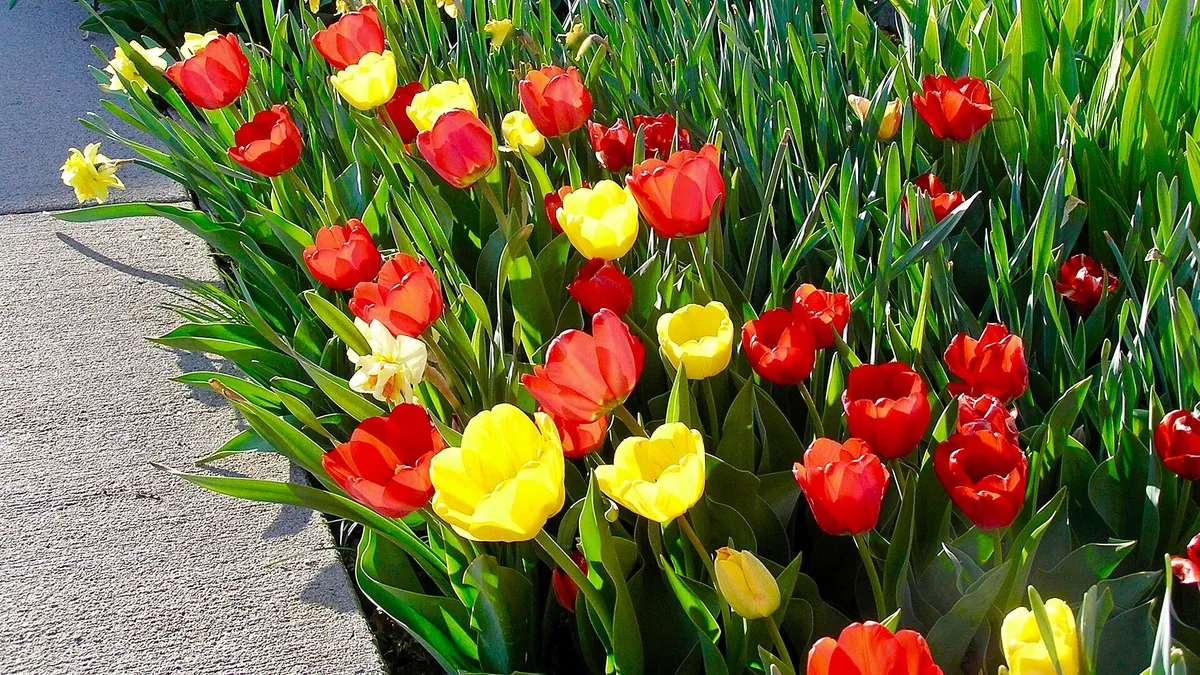
Tulips, daffodils and other spring bulbs go in the ground in fall, after the soil cools and before it freezes. Here is the timing rule extension services use, the earliest date for your USDA zone, how deep to plant, and what changes in mild-winter areas.
The timing rule: cool soil, then plant until the ground freezes
- Start when the soil cools. Plant “when the soil temperature falls below 60°F,” typically “mid-September through October” in New Jersey (Rutgers FS1220). Clemson says to wait until “the soil temperature at planting depth stays below 60 °F” (Clemson HGIC). Wisconsin says plant once ground temperatures are “around 50-55°F or lower (but not freezing)” (Wisconsin Extension).
- Not too early. “Spring bulbs can be planted in late fall, up until the ground is frozen, but not more than six weeks before the first frost” (Penn State Extension, Chester County Master Gardeners).
- Not too late. “Most bulbs can be planted until the ground is frozen” (Illinois Extension). Iowa State says tulips and other spring bulbs “can be planted as late as December if the soil isn’t frozen” (Iowa State). Wisconsin says to continue “till a couple weeks before the ground freezes.”
- Earlier is better for roots. South Dakota State says it’s best to have bulbs in “four to six weeks before the ground freezes,” and to start when nighttime temperatures stay in the “40 to 50-degrees Fahrenheit range” (SDSU Extension).
- In Iowa, “October is the ideal time to plant spring-flowering bulbs” (Iowa State).
Earliest bulb-planting date by USDA zone
The rule in this table: the earliest start is your typical first fall frost minus 6 weeks (Penn State’s rule above). Then wait until the soil at planting depth is below 60°F (Rutgers, Clemson), and keep planting until the ground freezes (Illinois, Iowa State).
| USDA zone | Typical first fall frost (32°F), median | Earlier to later locations (10th–90th percentile) | Earliest planting (6 weeks before the median frost) |
|---|---|---|---|
| Zone 3 | Sep 23 | Sep 7 – Oct 1 | Aug 12 |
| Zone 4 | Sep 30 | Sep 19 – Oct 7 | Aug 19 |
| Zone 5 | Oct 7 | Sep 26 – Oct 18 | Aug 26 |
| Zone 6 | Oct 19 | Oct 5 – Oct 28 | Sep 7 |
| Zone 7 | Oct 28 | Oct 17 – Nov 8 | Sep 16 |
| Zone 8 | Nov 10 | Oct 31 – Nov 20 | Sep 29 |
| Zone 9 | Dec 3 | Nov 17 – Dec 26 | Oct 22 (tulips need pre-chilling here; see below) |
| Zone 10 | Frost occasional to rare (70% of zone 10 ZIP codes’ nearest stations record 32°F in fewer than half of years) | n/a | Pre-chill tulips (see below) |
About this table: For each ZIP code we use the nearest NOAA NCEI 1991–2020 U.S. Climate Normals station’s 50%-probability first-fall date for 32°F (half of years frost earlier). We show the median across the zone’s ZIP codes, with the 10th–90th percentile range. Source: data/zonefrost.json, from NOAA NCEI 1991–2020 U.S. Climate Normals. Enter your ZIP in the planner for the dates at your nearest NOAA station.
In zones 3 to 5 the six-week date falls in August, while the soil is still warm. There the 60°F soil rule usually decides when you start. The six-week date is the earliest limit, not a target. Zone 11 is left out: none of the sources covers it.
How to plant tulip and daffodil bulbs
- Depth: “plant bulbs two to three times as deep as the bulb is tall. Large bulbs should be about 6-8 inches deep while smaller bulbs can be 3-4 inches deep. Measure planting depth from the bottom (not the top) of the bulb” (Wisconsin). Iowa State: daffodils and tulips “6 to 8 inches deep, crocuses and grape hyacinths 3 to 4 inches deep.”
- Spacing: “Larger bulbs should be spaced three to six inches apart, whereas smaller ones can be one to two inches apart” (South Dakota State).
- Point up: plant “with the point of the bulb upward and the root plate downward” (Rutgers).
- Dig the whole bed: loosening the bed is preferred over bulb planters, which “do not work well, especially in compacted or rocky soil” (Rutgers).
- Water once: watering after planting settles the soil and starts rooting. “Avoid over-watering at planting time since this can result in bulb rot” (Rutgers; same wording at Illinois).
- Plant in clumps: “put 5-8 in a hole together” (Wisconsin).
- Hyacinths: “use gloves; some people develop skin irritation after handling them” (Wisconsin).
- Before planting: “Store bulbs in a cool area below 60 °F until planting” (Clemson).
Mild-winter areas: chilling tulips (Florida, the Gulf Coast, Texas and the coastal Southeast)
- Clemson: “Most bulbs require a 12- to 16-week chilling period to produce flowers.” Coastal gardeners can refrigerate bulbs “in ventilated packages until planting.” In coastal South Carolina, “most bulbs should be planted in late December or early January,” while you can “Plant daffodils in October or November” (Clemson HGIC).
- Keep fruit away: “fruit-produced ethylene gas can prevent blooming” (Clemson). Texas A&M says not to store bulbs with “lettuce, tomatoes or apples,” and to use “a large, sealable plastic bag to keep them from drying out” (Texas A&M AgriLife).
- Texas A&M: tulips, crocus, some narcissus and Dutch hyacinth “require six to 10 weeks of chilling before planting.” Refrigerate “until about the first part of December,” then plant in “early to mid-December.” “Nighttime temperatures should be under 50 degrees for several weeks.”
- In Florida, use bulbs “pre-chilled for two to four months” and plant in winter. The bulbs “will bloom once” and “typically won’t bloom again” (UF/IFAS).
- Under-chilled bulbs “bloom close to the ground on very short stems” (Clemson).
- Bulbs that can return year after year in warm areas: “low-chilling daffodils, paperwhite narcissus, Summer Snowflake and grape hyacinth” (Texas A&M).
Sources differ on chilling time: Clemson gives 12 to 16 weeks for most bulbs, Texas A&M six to 10 weeks for tulips and similar bulbs, and UF/IFAS two to four months.
Tulips vs. daffodils: which come back?
- “Daffodils tend to live longer in our soils than tulips” (Wisconsin). Many hybrid tulips “may only return for a few years.” “Species” tulips “may work better,” or treat hybrids as annuals (Wisconsin).
- In South Carolina, tulips “can usually only be counted on for a single season of color” (Clemson).
- After bloom, leave the leaves: “the plant needs the green leaves to manufacture food (photosynthesis) that is stored in the bulb for next year’s growth” (Illinois).
- “Do not fertilize spring flowering bulbs after they have started flowering,” which encourages bulb rot (Rutgers).
Deer, squirrels and chipmunks
| Bulb | Rutgers deer-resistance rating |
|---|---|
| Daffodil (Narcissus) | Rarely Damaged (A) |
| Hyacinth, grape hyacinth, crocus | Seldom Severely Damaged (B) |
| Tulip | Frequently Severely Damaged (D) |
Ratings: Rutgers, Landscape Plants Rated by Deer Resistance (also as Rutgers fact sheet E271, PDF). Rutgers notes “no plant is deer proof.”
Rodents: daffodils or hyacinth “are poisonous to them (as opposed to tulips or crocus)” and “can deter them from digging.” Chicken wire over the bed, weighted down and removed in spring, also works (Wisconsin).
More fall planting: when to plant peonies dig and store dahlias and cannas protect plants from frost ZIP planner
Frequently asked questions
Is it too late to plant bulbs in November or December?
Not if you can still dig. Iowa State says tulips and other spring bulbs can be planted as late as December if the soil isn’t frozen, and suggests covering them with several inches of straw, pine needles or leaves after planting.
How deep do I plant tulip bulbs?
About 6 to 8 inches deep, measured to the bottom of the bulb (Wisconsin Extension, Iowa State).
Do I need to chill tulips?
Only in mild-winter areas such as Florida, the Gulf Coast, Texas and the coastal Southeast. There, refrigerate tulips before planting in December or January, away from fruit (Clemson, Texas A&M, UF/IFAS).
Sources
- Rutgers NJAES Cooperative Extension: FS1220: Spring Flowering Bulbs (Rutgers NJAES); Landscape Plants Rated by Deer Resistance; Landscape Plants Rated by Deer Resistance (E271, PDF)
- Clemson Cooperative Extension: Spring-Flowering Bulbs
- University of Wisconsin–Madison Extension: Plant Bulbs Now for Spring Color
- Penn State Extension: Chester County Master Gardeners, Bulbs, Corms, Rhizomes and Tubers
- University of Illinois Extension: Planting Bulbs
- Iowa State University Extension: Yard and Garden FAQ: Bulbs
- South Dakota State University Extension: Prepare for Early Spring Blooms by Planting Hardy Bulbs in the Fall
- NOAA National Centers for Environmental Information: U.S. Climate Normals 1991–2020
- Texas A&M AgriLife: Bulbs to blooms: Tips for fall bulb planting (Oct 24, 2024)
- UF/IFAS Extension: Tulips