
When Is the First Hard Freeze? 28°F Dates by Zone and Your Garden Checklist
Quick answer
A hard freeze is 28°F or colder for an extended time, and the National Weather Service says it kills most types of vegetation. The typical first hard freeze runs from about Oct 1 in zone 3 to mid-December in zone 9. It comes about one to two weeks after the first frost in most zones. Use it as your signal to finish digging tender bulbs, then mulch perennials, strawberries and tender roses once the cold has set in.
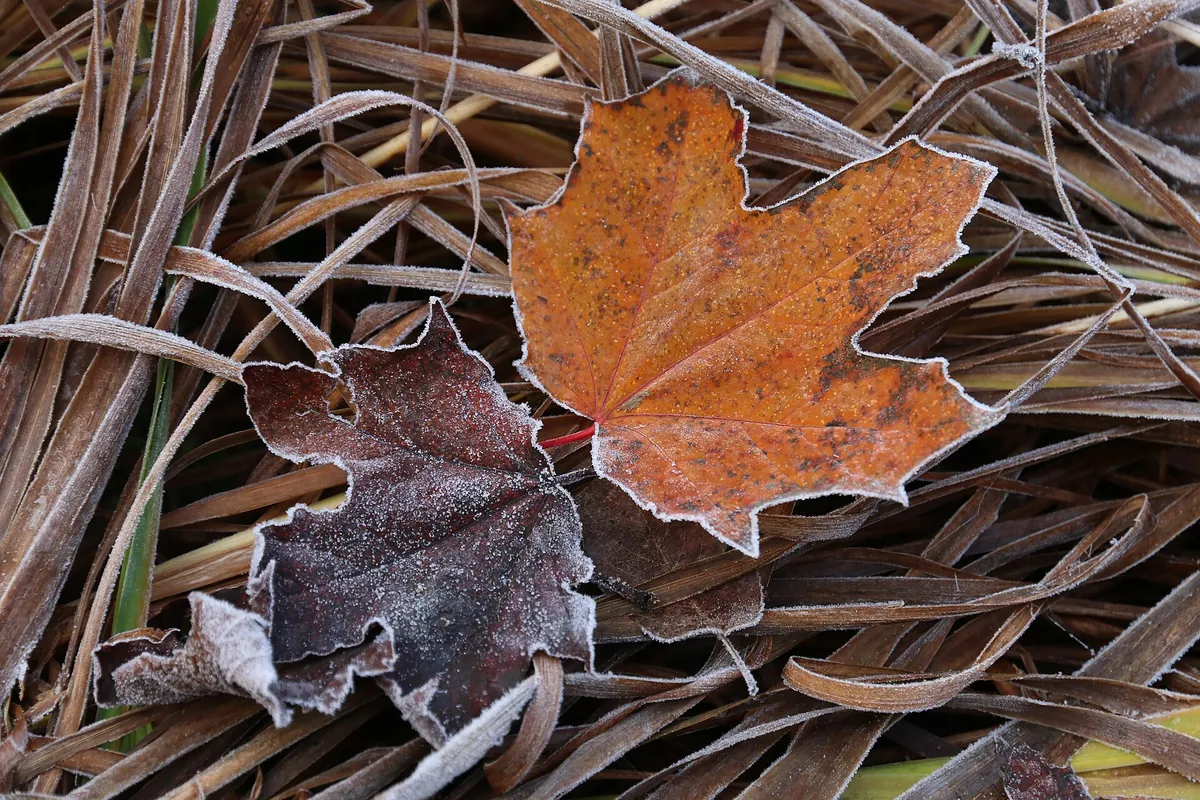
The first hard freeze, 28°F or colder, usually comes one to two weeks after the first frost. It’s the signal to finish fall jobs that can’t wait, and, once the ground starts to freeze, to mulch. Here are the typical 28°F dates for every USDA zone and the checklist that goes with them.
What a hard freeze is
- “A hard freeze occurs when the surface air temperature reaches 28°F or lower for an extended period of time, killing most types of vegetation” (National Weather Service glossary).
- A Freeze Watch “is issued when there is potential for significant, widespread freezing temperatures, but the occurrence, location, and/or timing is still uncertain.” A Freeze Warning is “Issued during the growing season when surface temperatures are expected to drop below freezing over a large area for an extended period of time, regardless whether or not frost develops” (National Weather Service glossary).
For frost vs. freeze and how to cover plants, see how to protect plants from frost.
First hard freeze (28°F) vs. first frost (32°F) by USDA zone
| USDA zone | Typical first frost (32°F) | Typical first hard freeze (28°F) | Hard freeze, earlier to later locations (10th–90th percentile) | Difference between the two typical dates |
|---|---|---|---|---|
| Zone 3 | Sep 23 | Oct 1 | Sep 19 – Oct 13 | ~8 days |
| Zone 4 | Sep 30 | Oct 9 | Sep 29 – Oct 18 | ~9 days |
| Zone 5 | Oct 7 | Oct 19 | Oct 5 – Oct 29 | ~12 days |
| Zone 6 | Oct 19 | Oct 30 | Oct 17 – Nov 6 | ~11 days |
| Zone 7 | Oct 28 | Nov 7 | Oct 28 – Nov 20 | ~10 days |
| Zone 8 | Nov 10 | Nov 22 | Nov 11 – Dec 4 | ~12 days |
| Zone 9 | Dec 3 | Dec 16 | Dec 1 – Jan 2 | ~13 days. In 17% of zone 9 ZIP codes with a 32°F date, the nearest station reaches 28°F in fewer than half of years |
| Zone 10 | Frost occasional to rare | Hard freeze rare: 90% of the zone 10 ZIP codes that have a 32°F date have no 50% 28°F date | — | — |
| Zone 11 | Frost rare | — | — | — |
About this table: NOAA NCEI 1991–2020 U.S. Climate Normals (NCEI). For each ZIP code, the nearest station’s 50%-probability first-fall date for 32°F (data/zonefrost.json) and 28°F (data/zonefreeze28.json). We use a station’s 28°F date only when it records 28°F in at least half of years. The table shows the median across the zone’s ZIP codes, with the 10th–90th percentile range. The last column is the difference between the two zone medians, not a figure for any one location. Half of years see these temperatures earlier than a 50% date. Enter your ZIP in the planner for the dates at your nearest NOAA station.
Before the hard freeze
- Dig tender bulbs. Dig dahlias “before a hard freeze.” For cannas, “do not let them be subjected to a hard freeze, which will turn the stem to mush” (Wisconsin Extension). How-to: dig and store dahlias and cannas.
- Bring in geraniums and other tender perennials. Dig in-ground geraniums “before a hard freeze” (Wisconsin Extension). See when to bring potted plants inside.
- Move hardy potted plants to shelter in an unheated garage at 20–45°F (Illinois, Iowa State).
- Plant the last spring bulbs. They can go in until the ground freezes (Illinois). See when to plant tulips and daffodils.
- Water evergreens before the ground freezes. See how to protect shrubs in winter.
After the hard freeze, once the ground starts to freeze: mulch
- Perennials and bulb beds: “Apply protective mulch as soon as the soil begins to freeze, or any time after that.” “It is very important not to apply it to perennials before the soil begins to freeze, as this may encourage growth beneath the mulch that will ultimately weaken the plants.” Use “five or six inches of whole or shredded leaves, partially decomposed compost, ground corn stalks, and straw,” and “Remove the mulch as it thaws in early spring” (University of Minnesota Extension). Iowa State: “about four inches of mulch over the crown of the plant after the ground freezes”; mulching too early “can slow plants from going dormant” (Iowa State).
- Why: freeze-thaw “can cause plants to lift or heave out of the soil, which can destroy plant roots” (UMN).
- Cutting back: perennials “can be cut back in fall after the foliage has been destroyed by a hard freeze,” but “it is not necessary to clear cut the perennial garden” (Iowa State). Which to leave: fall cutback guide.
- Strawberries: mulch “in the fall before temperatures drop below 20°F,” but “allow the strawberry plants to harden” first. Signs include “Several consecutive nights of around 20°F” and “Soil temperatures consistently below 40°F for several consecutive days.” Use straw “to a depth of 3 to 5 inches.” “Temperatures below 20°F may kill flower buds and damage the roots and crowns of unmulched plants” (Iowa State).
- Tender roses (hybrid tea, grandiflora, floribunda): protect them “after the plants have been hardened by exposure to several nights of temperatures in the low to mid-twenties.” “Cover the bottom 10 to 12 inches of the rose canes with soil,” then “Place additional material, such as straw or leaves, over the mound of soil.” “Most shrub, landscape, species, and old garden roses are winter hardy” and need no extra work in Iowa (Iowa State; Iowa State FAQ).
Iowa State also gives Iowa calendar dates for roses and strawberries. Those fit Iowa only, so go by the temperature signals above.
Frequently asked questions
What temperature is a hard freeze?
28°F or lower for an extended period of time (National Weather Service).
How long after the first frost does a hard freeze come?
Typically about one to two weeks across zones 3 to 9, going by the zone medians in the table (8 to 13 days). Your own location can differ.
Is a freeze warning the same as a hard freeze?
No. A freeze warning means temperatures are expected to drop below freezing over a large area for an extended period (National Weather Service). A hard freeze is 28°F or lower.
Sources
- National Weather Service: Hard Freeze; Freeze (Freeze Watch and Freeze Warning)
- NOAA National Centers for Environmental Information: U.S. Climate Normals 1991–2020
- University of Wisconsin–Madison Extension: Storing Tender “Bulbs” for Winter; Overwintering Tender Geraniums
- University of Illinois Extension: Overwintering potted plants (Good Growing, Nov 18, 2020); Planting Bulbs
- Iowa State University Extension: How can I over-winter container grown trees and shrubs?; How should I prepare my perennial beds for winter?; How to Overwinter Strawberries; How to Overwinter Roses; When should I prepare my hybrid tea roses for winter?
- University of Minnesota Extension: Mulch perennials and bulbs after the soil freezes