
How to Protect Shrubs in Winter: Winter Burn, Snow, Deer and Rabbits
Quick answer
Water evergreens deeply through fall until the ground freezes. Mulch the root zone, then shield exposed evergreens from winter sun and wind with a burlap screen set on stakes, not wrapped tight. Tie up arborvitae against heavy snow, and fence shrubs that rabbits and deer target with wire tall enough to stay above the snow.
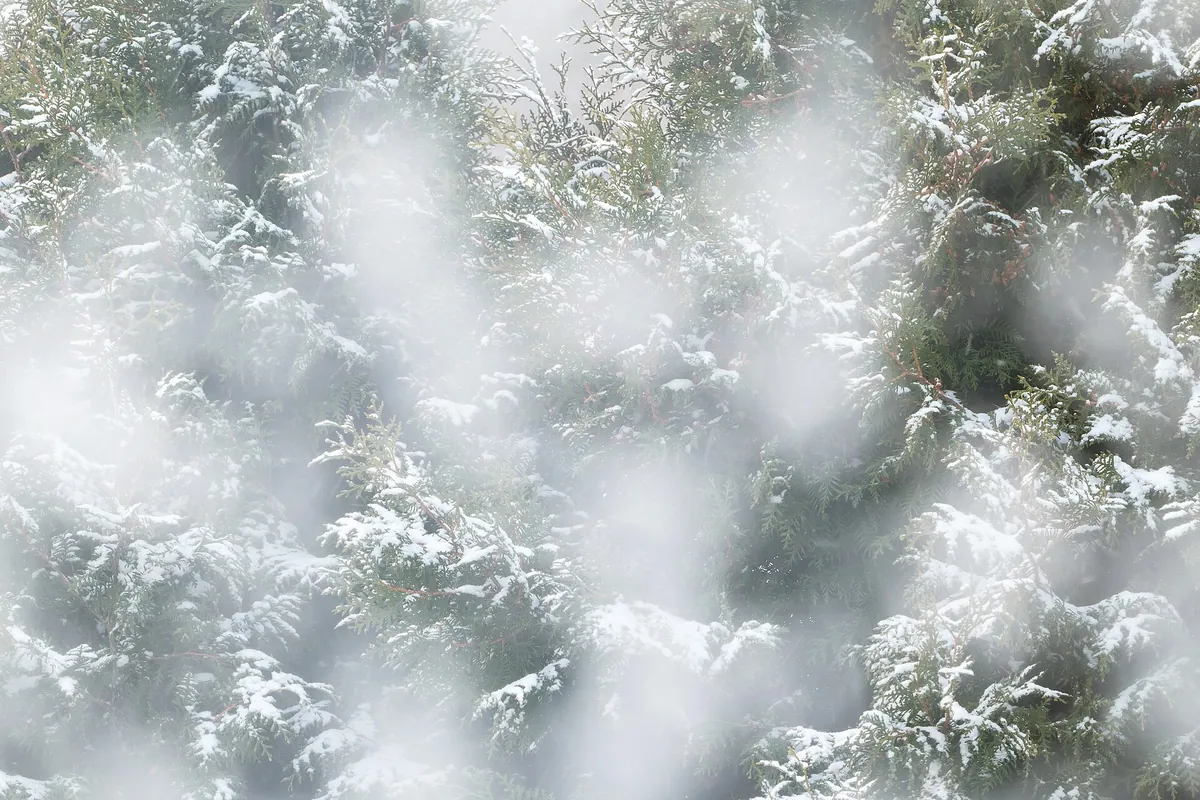
Most winter damage to shrubs comes from drying winds and sun on evergreens, heavy snow, road salt and hungry animals. Here’s how to prevent each, in the order the extension sources put first: water, mulch, screen, then fence.
What winter burn is, and which shrubs get it
- Evergreens “lose considerable amounts of moisture through their needles or leaves during winter... once the ground freezes, plant roots can no longer absorb water.” The result is “desiccation injury or winter burn.” The most susceptible are “boxwoods, rhododendrons, arborvitae, and yews,” and pines, spruces and firs are also susceptible “for several years after planting” (Iowa State).
- “Yew, arborvitae, and hemlock are most susceptible, but winter browning can affect all evergreens.” “New transplants or plants with succulent, late season growth are particularly sensitive.” Damage “normally occurs on the south, southwest, and windward sides of the plant” (UMN).
- It’s common on evergreens “grown in open, unprotected locations and exposed to severe winter conditions.” “Plants with shallow or poorly-developed root systems that do not efficiently take up water (e.g., recent transplants) are more prone” (Wisconsin).
Water until the ground freezes
- “Deeply water susceptible evergreens during dry periods in the fall. Water regularly until the ground freezes in winter” (Iowa State).
- Established evergreens (in the ground more than three years): “at least one inch of water a week into mid or even late November (if the ground has not frozen) from the trunk to the dripline... if there is no rain.” “Two inches of water over that area may be needed in sandier soils.” Plants put in within the past three years “need about two inches of water per week” (Wisconsin).
- Use “a soaker or drip hose to apply water near the drip lines of plants rather than using a sprinkler” (Wisconsin, Winter Burn).
- “Decrease watering slightly in September to encourage hardening off, then water thoroughly in October until freeze-up. Watering only in late fall does not help reduce injury” (UMN).
| USDA zone | 3 | 4 | 5 | 6 | 7 | 8 | 9 |
|---|---|---|---|---|---|---|---|
| Typical first hard freeze (28°F) | Oct 1 | Oct 9 | Oct 19 | Oct 30 | Nov 7 | Nov 22 | Dec 16 |
About this table: hard freezes typically begin around these dates (NOAA NCEI 1991–2020 normals, zone medians, data/zonefreeze28.json; NCEI). Keep watering until the soil actually freezes, which is usually later. We have no data on when the ground freezes, so no date is given for it. Full table: first hard freeze dates by zone.
Mulch
Use about 3 inches of mulch, kept off the trunk. Sources differ on depth: Wisconsin says “Apply one to three inches of mulch (three inches is the maximum—more is not better!) evenly around the root zone” and “Do not pile mulch against the trunks” (Wisconsin); UMN suggests “3 to 4 inches of shredded wood mulch” for new plantings, pulled “away from the trunk about 6 inches.” UMN adds: “If the fall has been dry, water heavily before the ground freezes to reduce frost penetration.”
Burlap screens: shield, don’t wrap
- Build “a simple screen... with wooden posts, woven wire fencing, and burlap.” “Do not wrap the burlap around the plant like a blanket. Instead, set the screen at least 6 inches from the plant’s foliage.” If it goes all the way around, the wire “can double as animal protection” (Iowa State).
- “Construct a barrier of burlap or similar material on the south, southwest, and windward sides of evergreens.” If a plant has been injured on all sides, surround it “but leave the top open to allow for some air and light penetration” (UMN).
- “Do not tightly wrap individual plants with burlap as this can collect ice, trap moisture and make plants more susceptible to infection by disease-causing organisms” (Wisconsin).
- An alternative: “Prop pine boughs or Christmas tree greens against or over evergreens” (UMN).
- For next time: plant yew, hemlock and arborvitae “on north and northeast sides of buildings or in areas protected from wind and winter sun” (UMN), and boxwoods, hemlocks, rhododendrons and yews “in partial shade” (Wisconsin).
Anti-desiccant sprays: the evidence is weak
- UMN: “Anti-desiccant and anti-transpirant sprays are not effective for protecting evergreen foliage.”
- Wisconsin: they have “been shown to have limited benefit.” They “degrade rapidly, require reapplication after each significant rain or snow event, and may not be effective.” A second Wisconsin article says they “should be avoided.”
- Iowa State is the outlier: “Applications of an anti-desiccant to susceptible evergreens may also be helpful.”
Most of these extension sources say the sprays aren’t a reliable fix, so water, mulch and screens come first.
Heavy snow and ice
- “Gently shake the snow from their branches or carefully brush off the snow with a broom using an upward motion.” “Don’t throw heavy, wet snow onto small trees or shrubs when clearing driveways.” To protect “arborvitae and other multi-stemmed evergreens, wrap the plants with twine or rope in the fall” (Iowa State).
- Upright evergreens “such as arborvitae and juniper” are among the most susceptible. Tie leaders “with strips of carpet, strong cloth or nylon stockings,” and “Remove these wrappings in spring to prevent girdling” (UMN).
Deicing salt
Salt “can cause or aggravate winter injury and dieback of trees and shrubs through salt runoff from roads and salt spray.” Don’t plant “where salty runoff collects or close to streets where salt spray is prevalent.” “Burlap barriers may protect some plants from salt spray.” “Apply the minimum amount of salt needed and only where needed” (UMN).
Rabbits and deer
- Rabbits: “chicken wire or hardware cloth fencing around vulnerable plants” is “the most effective way.” The fence must be tall enough that rabbits can’t reach over “after heavy snow”: “In most cases, a fence that stands 24 to 36 inches tall should be sufficient.” “Pin the fencing to the soil with U-shaped anchor pins.” Shrubs often hit include “burning bush (aka winged euonymus), flowering quince, barberry, roses, and raspberries.” Repellents “need to be reapplied after heavy rain or snow” (Iowa State). Burning bush and barberry are invasive or regulated in parts of the US, so they’re listed here only as rabbit targets (see shrubs to skip).
- Deer “often feed on the foliage on the lower branches of arborvitae, pines, and other evergreens.” “Exclusion is the most effective way to prevent deer damage.” “Tubes, wraps, wire fencing, and wire cylinders” work best “on smaller, younger plants.” Over winter, “repellents have limited success... because reapplication can be difficult in freezing temperatures” (Iowa State).
| Plant | Rutgers deer-resistance rating |
|---|---|
| Common boxwood (Buxus sempervirens) | Rarely Damaged (A) |
| Western arborvitae (Thuja plicata) | Occasionally Severely Damaged (C) |
| Bigleaf hydrangea (H. macrophylla) | Occasionally Severely Damaged (C) |
| American arborvitae (Thuja occidentalis) | Frequently Severely Damaged (D) |
| Yews (Taxus) | Frequently Severely Damaged (D) |
| Rhododendrons (Rhododendron sp.) | Frequently Severely Damaged (D) |
Ratings from Rutgers, Landscape Plants Rated by Deer Resistance. Rutgers files arborvitae under trees. It notes “no plant is deer proof.” Use the ratings to decide which plants to protect first.
Bigleaf hydrangeas in cold zones
- Flower buds form “at the tips of stems on old wood of the previous year.” “Bigleaf hydrangeas can suffer winter damage, and protection is usually required to achieve maximum blooming potential.” “Surround hydrangeas with a mesh cylinder... and fill it up with fallen leaves,” and remove it “only once the buds begin to expand in the spring” (UNH Extension).
- H. macrophylla cultivars bloom on old wood and “will lose their flower buds when exposed to USDA hardiness zone 5 temperatures and lower.” Also “Provide protection from hard frosts in April and early May” (Ohio State University Extension).
- Don’t cut back old-wood hydrangeas in fall: see when to prune flowering shrubs.
After winter: assessing damage
For arborvitae, boxwood, junipers and yews, “prune out dead, brown, damaged or dying tissue in mid-spring after new foliage is produced.” “Pines, spruces and firs typically produce new growth at branch tips in spring that will replace winter burn-damaged needles.” “If an entire evergreen is brown, recovery is unlikely” (Wisconsin). Don’t rush: see after frost damage.
Related: low-maintenance shrubs shrubs in containers first hard freeze dates
Frequently asked questions
Should I wrap my arborvitae in burlap?
Screen it rather than wrapping it tightly: set burlap on stakes at least 6 inches from the foliage (Iowa State, Wisconsin). Against heavy snow, tie the stems with twine in fall and remove it in spring (Iowa State, UMN).
How late should I water evergreens?
Until the ground freezes. Wisconsin Extension says established evergreens need at least an inch of water a week, often into mid or late November, if the ground hasn’t frozen and there’s no rain.
Do anti-desiccant sprays work?
Most of the cited extension sources say no, or of limited benefit (UMN, Wisconsin). Iowa State says they may help.
How tall should rabbit fencing be?
24 to 36 inches, and tall enough to stay above the snow (Iowa State).
Sources
- Iowa State University Extension: Protecting Trees and Shrubs in Winter; How to Protect Trees and Shrubs from Animal Damage Over Winter
- University of Minnesota Extension: Protecting trees and shrubs in winter
- University of Wisconsin–Madison Extension: Winter Burn; Keep Watering in Fall to Protect Evergreens from Winter Burn
- NOAA National Centers for Environmental Information: U.S. Climate Normals 1991–2020
- Rutgers NJAES Cooperative Extension: Landscape Plants Rated by Deer Resistance
- UNH Extension: Pruning Hydrangeas fact sheet (winter protection section)
- Ohio State University Extension: Selecting Hydrangeas for the Home Landscape, HYG-1263