
When to Bring Potted Plants Inside for Winter: Temperatures, Frost Dates by Zone and a Pest Check
Quick answer
Bring most tropical houseplants indoors once night temperatures drop into the 50s °F, well before the first frost. Bring in tender plants such as geraniums before the first fall frost. Hardy perennials and shrubs in pots can winter in an unheated garage that stays between 20 and 45°F. Hose plants off and check them for pests first, then keep them apart from your other houseplants for a few weeks.
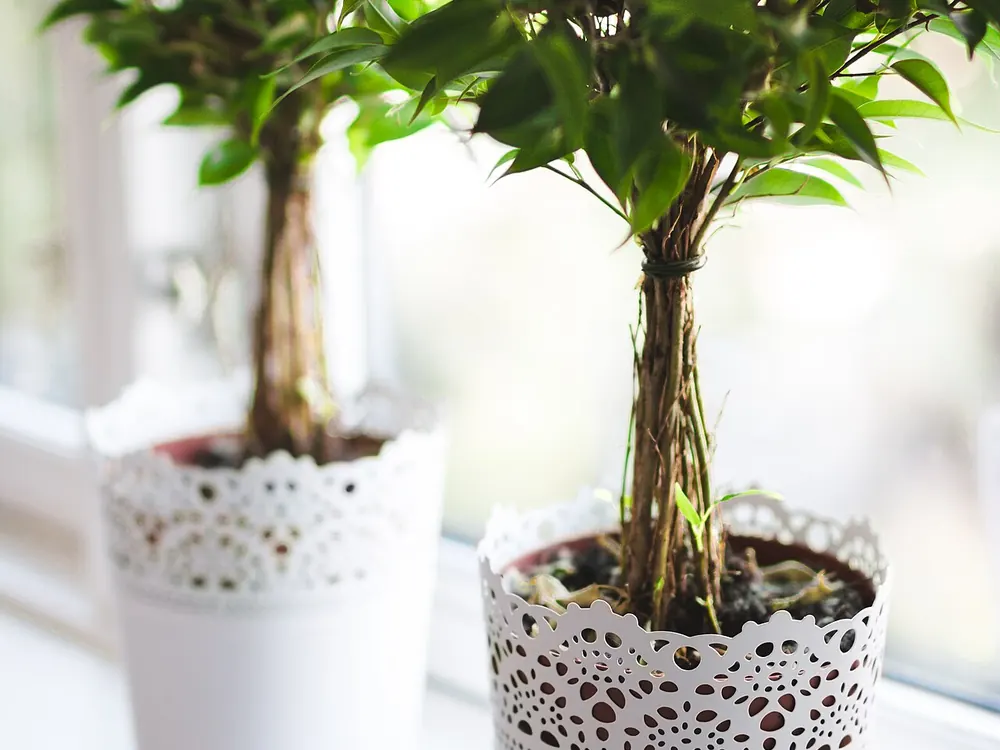
When to move potted plants indoors depends on what they are. Tropical houseplants need to come in while nights are still in the 50s; geraniums and other tender perennials before the first frost; hardy plants in pots shouldn’t come into the house at all. Here are the temperatures, your frost deadline by zone, and a pest check before anything comes inside.
The temperature rule, by plant type
| Plant type | Bring in when | What the sources say |
|---|---|---|
| Tropical houseplants summering outside (peace lily, spider plant, Boston fern and similar) | Nights fall into the 50s °F, before any frost | UMN: “Most houseplants need a warm environment and need to be brought in when temperatures fall into the 40-50s” and “In most cases, you will need to bring houseplants inside when the temperature is below 50 degrees.” Illinois: “When the thermometer starts to get below 55 °F consistently, it’s time to start bringing houseplants back indoors.” Clemson: “Temperatures of 50 °F or lower can damage many tropical plants.” WSU: bring them in “well before frosts begin, ideally when temperatures first start dropping below 50°F at night.” UVM: “As temperatures (particularly those at night) drop into the 50s.” |
| Succulents, some cacti | Can stay out a little longer | UMN: exceptions include “a few succulents and cacti that tolerate 40-degree weather.” |
| Tender perennials: geraniums (Pelargonium), fuchsias, Cymbidium orchids | Before the first fall frost, or as temperatures approach freezing | Iowa State: “Remove plants from the garden (or take cuttings) prior to the first fall frost.” WSU: “Cymbidium orchids, Pelargoniums or Fuchsias can be perfectly fine staying out until temperatures begin to approach freezing.” Wisconsin: dig in-ground geraniums “before a hard freeze.” |
| Elephant ears (Colocasia, Alocasia, Xanthosoma) that don’t form corms or tubers | Before nights drop below 45°F | Iowa State: “Overwinter these plants as houseplants in a warm, bright location. Bring them indoors before nighttime temperatures drop below 45°F.” This applies to that elephant-ear group only. |
| Fall annuals such as pansies and mums | They tolerate light frost | UMN: “fall annuals like pansies and mums that tolerate light frost.” For potted mums, see mums and frost. |
| Hardy perennials and shrubs in pots | Don’t bring them into the house; shelter them in an unheated space or bury the pot | See hardy plants in pots below. |
Your frost deadline by USDA zone
Tropical houseplants: move them in when nights reach the 50s °F, which usually comes well before the dates below. Geraniums and other tender perennials: move them in before the first fall frost (32°F) (Iowa State; Illinois Extension: “Bring houseplants indoors before the first frost”). Frost can come earlier than the median, so use the earlier date as your deadline.
| USDA zone | Earlier locations: first frost (10th percentile) | Typical first frost (median) |
|---|---|---|
| Zone 3 | Sep 7 | Sep 23 |
| Zone 4 | Sep 19 | Sep 30 |
| Zone 5 | Sep 26 | Oct 7 |
| Zone 6 | Oct 5 | Oct 19 |
| Zone 7 | Oct 17 | Oct 28 |
| Zone 8 | Oct 31 | Nov 10 |
| Zone 9 | Nov 17 | Dec 3 |
| Zone 10 | Frost occasional to rare (70% of zone 10 ZIP codes’ nearest stations record 32°F in fewer than half of years) | Where frost is regular: Dec 26 |
| Zone 11 | Frost rare | — |
About this table: For each ZIP code we use the nearest NOAA NCEI 1991–2020 U.S. Climate Normals station’s 50%-probability first-fall date for 32°F. The table shows the median across the zone’s ZIP codes and the 10th percentile (the earliest-frost tenth of locations). A median is not a safe date: in half of years frost comes earlier. Source: data/zonefrost.json, from NOAA NCEI 1991–2020 U.S. Climate Normals. The site has no data on when nights reach 50°F, so that rule stays a rule, not a date. Enter your ZIP in the planner for the dates at your nearest NOAA station.
Before you bring them in: pests, light and placement
- Rinse. Clemson: “Gently wash the leaves and stems with the hose.” Illinois: “spray them off your plants with a hose.” UVM: “a good spray to top and bottom leaf surfaces and the stem.”
- Soap if needed. Clemson says to spray “the entire plant (upper and lower surfaces of leaves), soil, and pot with an insecticidal soap,” then “Reapply insecticidal soap and take plants indoors two to three days later.” “Before using an insecticidal soap, check the label to see if the plant is listed.” Illinois lists “pyrethrin, insecticidal soaps, and neem” if spraying with water doesn’t work. Use only products labeled for houseplants, as the label directs.
- Ants in the pot: “You may need to repot the plant if ants are present in the growing media” (Illinois).
- Slugs: WSU says to check for slug eggs “around the edges of the pot and in the drain hole.”
- Quarantine. “Keep them isolated from other plants for several weeks. After 3-4 weeks, if you don’t notice any pests... it should be safe to move them closer to your other plants” (Illinois). UMN: “It is good practice to quarantine new additions or houseplants returning indoors.”
- Ease the light change. “For about a week, gradually reduce light levels by moving plants from sun to light shade to heavy shade and finally indoors” (Clemson). WSU: “a shady outdoor location for a week or two.”
- Expect some leaf drop. “The plant may develop leaf yellowing or drop as it adjusts to lower light” (Clemson). Illinois: lower light “often results in yellowing leaves and leaf drop.”
- Indoors, “allow the soil to dry slightly between watering and stop fertilizing until the spring.” Houseplants “prefer daytime temperatures to be between 65° and 75° and about 10° cooler at night” (Illinois). Sun lovers such as “citrus trees, bananas, and geraniums all want as much light as you can get for them” (WSU).
Hardy perennials and shrubs in pots: shelter them, don’t bring them inside
- Why: “Most plants’ roots are far less cold hardy than their above-ground parts” (Illinois). Iowa State: “The roots of most trees and shrubs are far less cold-hardy than their aboveground stems or trunks” (Iowa State).
- Rule of thumb for pots left outdoors: “select plants that are two zones different than your zone.” In zone 5 or 6, that means “a plant that is hardy to zone 3 or 4” (Illinois).
- Unheated garage or shed: keep temperatures “between 20 and 45°F” (Illinois). Iowa State: an attached unheated garage works “if you are confident the temperatures can stay consistently in the 20 to 45 degrees Fahrenheit temperature range.”
- Or bury the pot. The soil “can insulate the pot (and the plant roots)” (Illinois). Iowa State: “bury the container.”
- Water before winter: moist growing media “will freeze slower than dry media” (Illinois).
Geraniums: three ways to keep them
- As houseplants: dig them up before the first fall frost and pot them. Wisconsin: trim “by one-third to one-half,” keep at “60 to 65 degrees F,” away from heat vents (Wisconsin). Iowa State: prune back “by one-half to two-thirds” in March (Iowa State).
- Cuttings: “3- to 4-inch stem cuttings” in vermiculite or perlite and peat. They “should root in 6 to 8 weeks” (Iowa State). Wisconsin says “about 6 weeks.”
- Bare-root: shake off the soil and store in a paper sack or hang upside down “in a cool (45 to 55 degree Fahrenheit), dry location.” In March, “Prune back to firm, green, live stem tissue,” then pot up (Iowa State).
Related: how to protect plants from frost (and potted mums) dig and store dahlias and cannas first hard freeze dates ZIP planner
Frequently asked questions
What temperature should I bring plants inside?
For most houseplants, when nights drop below about 50 to 55°F (UMN, Illinois Extension, Clemson). Geraniums and other tender perennials can wait until just before the first frost.
Can I leave potted perennials outside?
Yes, if they are rated about two zones colder than yours (Illinois Extension). Otherwise, move them to an unheated garage that stays between 20 and 45°F, or bury the pot.
Why are my plants dropping leaves after I brought them in?
That’s the drop in light. Acclimate plants over about a week, from sun to shade to indoors, and give them your brightest window (Clemson, Illinois Extension).
Sources
- University of Minnesota Extension: Bringing houseplants in for winter
- University of Illinois Extension: Tips for moving houseplants indoors and overwinter care (Good Growing, Sep 9, 2022); Bring houseplants indoors before the first frost (Sep 23, 2020); Overwintering potted plants (Good Growing, Nov 18, 2020)
- Clemson Cooperative Extension: Moving Houseplants Indoors & Outdoors
- Washington State University Extension: Overwintering Container Plants (Dec 10, 2021)
- University of Vermont Extension: Moving Houseplants Back Indoors for Winter
- Iowa State University Extension: How to Overwinter Tender Perennials; How can I over-winter container grown trees and shrubs?; How can I over-winter my geraniums indoors?
- University of Wisconsin–Madison Extension: Overwintering Tender Geraniums
- NOAA National Centers for Environmental Information: U.S. Climate Normals 1991–2020