
How to Grow Fava Beans: Planting, Spacing, Care & Harvest
Quick answer
Sow fava beans in early spring so plants set seed before summer heat (Iowa State), or try fall sowing in mild-winter regions (UMD; OSU late September or October). They tolerate light frost but not heavy freezes (UMD). No frost-week integers are sourced, so they are not on the ZIP planner. Green pods about 80–100 days (Iowa State). Favism risk is low severity and genetic (NC State).
Fava beans at a glance


Jump to
Updated
Planting dates for your ZIP: the ZIP planting planner counts each window from your local frost dates.
Organic pests and diseases: see also organic pest control. Use any product as the label directs.
Safety: NC State rates poison severity Low for fava bean. People with a genetic predisposition to favism who ingest numerous seeds may develop hemolytic anemia; pollen exposure is also noted. Toxic principle: cyanogenic glycosides. Poison parts: flowers and fruits. (NC State Vicia faba)
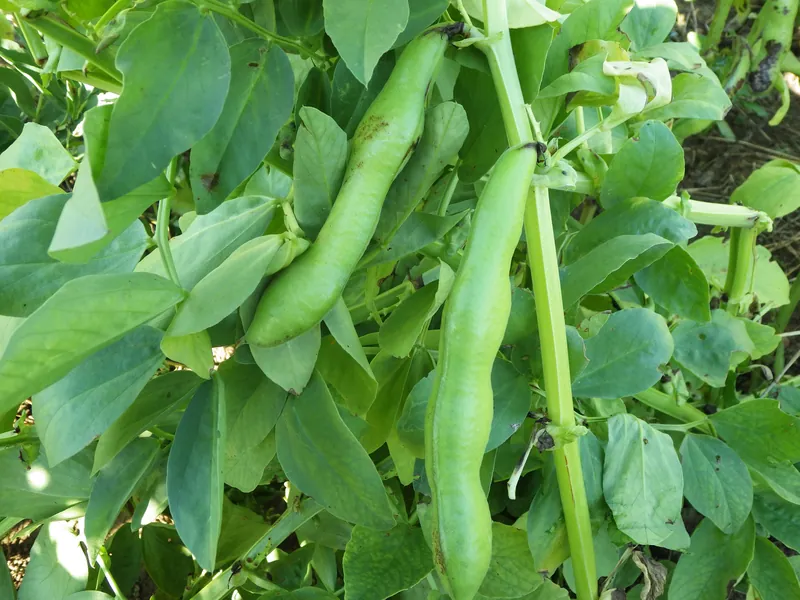
Fava / broad beans (Vicia faba) — cool-season legume. Not on the ZIP planner: extension sources give early-spring / fall calendars, not frost-week counts.

Planting timing
Iowa State: cool temperatures; when daily temperatures exceed 80°F, fewer pods form; “sow seeds in early spring so that plants grow and set seed before the onset of summer heat.” About 80–100 days to harvest. (Iowa State beans) UMD: fava is a semi-hardy annual that “can withstand light frosts, but not heavy frosts or freezing”; “sown early in spring”; some gardeners plant in fall for a spring harvest. (UMD growing beans) OSU: plant as soon as the soil can be worked in spring; in the Pacific Northwest, cold-hardy types may go in fall (late September or October). (OSU fava beans) USU says cool-season legumes including broad bean go in “several weeks before” the frost-free date — not an integer. is published here.
Depth and spacing
Iowa State (beans general): rows about 1.5 to 2 feet; seed about 1 inch deep; thin to 2 to 3 inches. OSU: 5–6 inches apart in the row; rows 24–36 inches.
Sun, soil and water
Full sun; moist loams (NC State). OSU: well-drained silt loam; lime only if a soil test shows pH below 5.6. OSU recommends waiting about 2 weeks after planting before irrigating so early excess water does not encourage root rots. Prefer compost and Rhizobium inoculant when the bed is new to legumes; we omit printed N product rates.
Care
Inoculate with Rhizobium leguminosarum when legumes are new to the site (OSU). Rotate away from crops that leave white-mold sclerotia (OSU).
Harvest
Iowa State: pick when pods are green and seeds are plump — about 80–100 days. OSU dry-seed figures are longer; for home green-shell harvest prefer the Iowa State window.
Pests and diseases
NC State notes aphids. OSU: broad bean virus and chocolate spot; delaying planting can reduce infection; white mold from crop residues; root rots if overwatered at seeding. Cultural cool-season timing, drainage, rotation, and inoculant first. Aphids: water spray or insecticidal soap as labeled (UC IPM aphids).
Related: ZIP planner · organic pest control · lima beans · beans · all grow guides
Frequently asked questions
When do I plant fava beans?
Early spring before heat (Iowa State). Mild-winter regions may sow in fall (UMD; OSU late September–October). No frost-week integers are sourced.
Are fava beans toxic?
NC State: low severity. Favism risk for genetically predisposed people who eat numerous seeds (or pollen exposure).
Why aren’t fava beans on the ZIP planner?
Extension sources give early-spring and fall calendars, not a frost-week count we can map.
More grow guides: All grow guides
Sources
- NC State Extension: NC State Vicia faba
- Iowa State University Extension: Iowa State beans
- University of Maryland Extension: UMD growing beans
- Oregon State University Extension: OSU fava beans
- University of California Agriculture and Natural Resources (UC ANR): UC IPM aphids