
Fall Lawn Weed Control: When to Spray Broadleaf Weeds Before Winter
Quick answer
Fall is the best time to spray perennial lawn weeds like dandelion, clover, wild violet and creeping Charlie, because they are moving food down to their roots and the herbicide moves with it. Spray in early to mid-fall while weeds are still green; light frosts are fine, but finish before several hard freezes. Use lawn-labeled products only, used as the label directs.
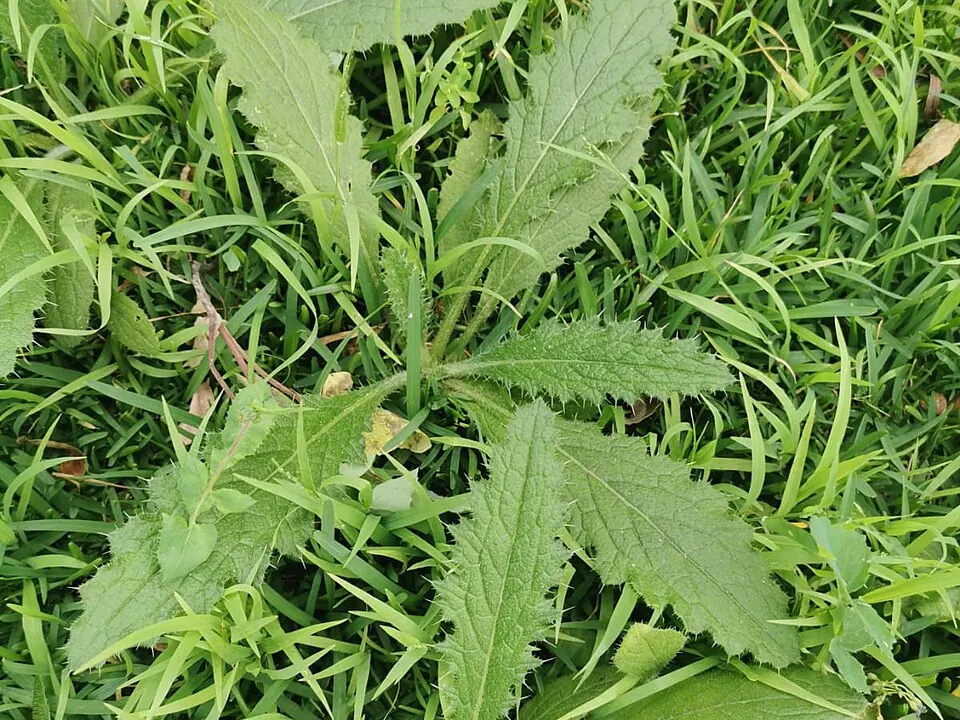
Fall is the season to treat perennial broadleaf weeds such as dandelion, clover, wild violet and creeping Charlie. Here is why fall works, how late you can spray in your zone, what warm-season lawns need instead, and a spray-day checklist.
Why fall works best
- In early fall “weeds send more of their resources to the roots to prepare for winter survival” (SDSU Extension).
- “A fall-applied herbicide will enter the plant and travel to these plant parts with the food reserves” (Colorado State Extension).
- For “perennial broadleaf weeds like dandelion, early to mid-fall is the recommended window for spraying,” and “Spring and early summer applications may not provide as good of control as fall.” In fall, cool-season lawns “readily fill in bare areas created by the weed dying” (Illinois Extension).
- Fall applications are usually safer for the lawn and nearby plants “because of lower air temperatures and fewer ornamentals are present in susceptible stages” (Nebraska Extension).
- Which weeds: perennials. “Most annuals die off quickly in fall, but perennials do not” (Illinois). Summer annuals such as spurge and purslane “die following the first hard frost in the fall” (Nebraska), so don’t spray them now.
Species guides: dandelion clover wild violet creeping Charlie
How late is too late: frosts and hard freezes
- “Light frosts prior to and following the application typically won’t have a negative impact,” but “several hard freezes can damage plant tissue, which reduces the weed’s ability to transport herbicide to the roots” (SDSU Extension).
- “Some recommend waiting to apply until after the first frost ..., but data show that applications throughout the fall are effective” (Nebraska).
- A hard freeze is when “the surface air temperature reaches 28°F or lower for an extended period of time” (National Weather Service).
- “Daily high temperatures should remain above 60˚F for several days prior to and following the application. Even if daily high temperatures are in the 50’s, the herbicide can still be effective” (SDSU).
| USDA zone | Typical first frost (32°F) | Typical first hard freeze (28°F) | Hard-freeze range across the zone |
|---|---|---|---|
| Zone 3 | Sep 23 | Oct 1 | Sep 19 to Oct 13 |
| Zone 4 | Sep 30 | Oct 9 | Sep 29 to Oct 18 |
| Zone 5 | Oct 7 | Oct 19 | Oct 5 to Oct 29 |
| Zone 6 | Oct 19 | Oct 30 | Oct 17 to Nov 6 |
| Zone 7 | Oct 28 | Nov 7 | Oct 28 to Nov 20 |
| Zone 8 | Nov 10 | Nov 22 | Nov 11 to Dec 4 |
About this table: median across each zone’s ZIP codes of the nearest NOAA NCEI 1991–2020 Climate Normals station’s 50%-probability date (32°F = frost, 28°F = hard freeze); the range runs from the 10th to the 90th percentile of ZIP codes. Source data: data/zonefrost.json and data/zonefreeze28.json, from NOAA NCEI normals. The rule is to spray before several hard freezes (SDSU). One hard freeze is a single 28°F night, so treat this date as the time to start finishing up, not a hard cutoff. Enter your ZIP in the planner for the dates at your nearest NOAA station.
Northern lawns: by mid-October, zones 3 to 5 are at or past their typical first hard freeze, so you may be at the end of the window. Plan a spring follow-up and see the species guides. Zone 9 and warm-season lawns: use the next section, not this table (in 16.7% of zone 9 ZIP codes the nearest station reaches 28°F in fewer than half of years).
Warm-season lawns in the South (bermuda, zoysia, St. Augustine, centipede)
- Clemson’s schedule for warm-season lawns: “November – January: Postemergence: Treat winter broadleaf weeds with a postemergence herbicide on mild days.” “Wild onions and garlic are best treated during November and again during February using a three-way herbicide” (Clemson HGIC 2310).
- Clemson: “do not make applications to established warm-season lawns during the spring green-up period,” with damage risk “especially in more sensitive turfgrasses, such as centipedegrass and St Augustinegrass.”
- “The risk of injury from postemergence herbicides is greater during the green-up process than when the turfgrass is fully dormant or actively growing” (UGA Extension B978).
- To prevent winter annual weeds before they sprout, see fall pre-emergent timing.
What to use (examples only)
Examples only. Use lawn-labeled products only, used as the label directs.
- Common mixes: “a general-purpose mixture comprised of two or three of the following ... 2,4-D, MCPP, and dicamba” (Colorado State). Illinois lists the same three.
- SDSU’s best active ingredients for fall control (examples): dandelion, 2,4-D; white clover, triclopyr, clopyralid, dicamba or quinclorac; creeping Charlie (ground ivy), triclopyr or topramezone; wild violet, triclopyr. SDSU: “make sure the label says that it’s approved for use on lawns or turf.”
- Triclopyr caution (SDSU): a “Brush Killer” label means “it’s likely not approved for use on lawns or turf.” Near trees, avoid the ester form and “Choose triclopyr triethylamine salt instead.”
- Trees: “Refer to the label regarding any potential hazards when used on lawns over the root zone of trees (such as with dicamba)” (Illinois).
- Weed and feed in fall: “Granular products usually have to be applied to wet foliage in order to stick to the leaf surface and be absorbed” (Nebraska).
Weed and feed on warm-season lawns: Texas A&M AgriLife does not recommend weed and feeds “as a fall/winter turfgrass management tool” for warm-season grasses, because “Putting nitrogen down promotes growth, and a quick freeze could cause damage.” The last nitrogen application “should be no later than four to six weeks before the average date of the first frost.” By our zone medians, that’s your typical first fall frost minus 4 to 6 weeks: in zone 8 (first frost Nov 10), about Sep 29 to Oct 13. Use the frost table above or your ZIP’s date.
Spray-day checklist
- Temperature: 50 to 85°F (Colorado State; Nebraska gives the same range). Illinois: “Avoid hot days (over 85 degrees F).”
- Rain: sources differ, so follow the label. Illinois: “no rain for 24 hours after application.” Colorado State: “Do not apply if rainfall will occur within twelve hours.” Nebraska: “Most herbicides are rainfast within 4 to 8 hours.” Moist soil helps: water “at least one day prior to application or wait for rain” (SDSU).
- Mowing: “Do not mow the lawn for two days before and after” (Colorado State); Illinois says “a few days.”
If you’re also seeding this fall
- Illinois: “wait 4 mowings before treating a newly seeded lawn and wait 30 days before seeding an area treated with broadleaf herbicides.” Colorado State and Nebraska: wait until new grass “has been mowed at least three times.” Sources differ (three vs. four mowings), so check the label.
- “Delay reseeding bare area caused by weed removal until after soaking rain or irrigation” (Nebraska).
- Timing for seed: is it too late to plant grass seed?
Prevention
Mowing high “(3 to 4-inch cut height)” helps the lawn compete with weeds (Illinois).
Frequently asked questions
Is it too late to spray weeds in November?
It depends on your zone. SDSU says light frosts are fine, but several hard freezes reduce how well weeds move herbicide to their roots. Check the typical first hard freeze for your zone in the table: in zones 3 to 5 it has usually passed by mid-October.
Does frost kill weeds?
Frost kills summer annuals such as spurge and purslane after the first hard frost (Nebraska Extension), but perennial weeds like dandelion survive, which is why fall is the time to treat them.
Can I use weed and feed in the fall?
On cool-season lawns, granular products usually need wet foliage to stick (Nebraska); use lawn-labeled products only, as the label directs. On warm-season lawns, Texas A&M AgriLife does not recommend weed and feed as a fall or winter tool, and the last nitrogen should go down 4 to 6 weeks before the first frost.
How long before rain should I spray?
Follow the label. Sources range from 4 to 8 hours (Nebraska) to 12 hours (Colorado State) and 24 hours (Illinois).
Sources
- South Dakota State University Extension: Perennial Weed Control in Lawns and Turf: Fall Herbicide Applications
- Colorado State University Extension: Broadleaf Weed Control in Lawns
- University of Illinois Extension: Managing weeds in lawns
- Nebraska Extension: Broadleaf Weed Control
- National Weather Service: Hard Freeze
- NOAA National Centers for Environmental Information: U.S. Climate Normals 1991–2020
- Clemson Cooperative Extension: Managing Weeds in Warm Season Lawns (HGIC 2310)
- University of Georgia Extension: Weed Control in Home Lawns (B978)
- Texas A&M AgriLife: Apply fall preemergence herbicide to avoid spring weeds (Sep 23, 2020)