
Fall Pre-Emergent: When to Apply It for Winter Weeds (and What to Do If You Missed It)
Quick answer
Fall pre-emergent stops winter annual weeds such as annual bluegrass, henbit, chickweed and lawn burweed before they sprout. Apply it as soils cool toward about 70°F, which is September or October across most of the South, and water it in. If you missed that window, a second winter application or a post-emergent spray on small weeds is the backup. Skip it on any area you plan to seed.
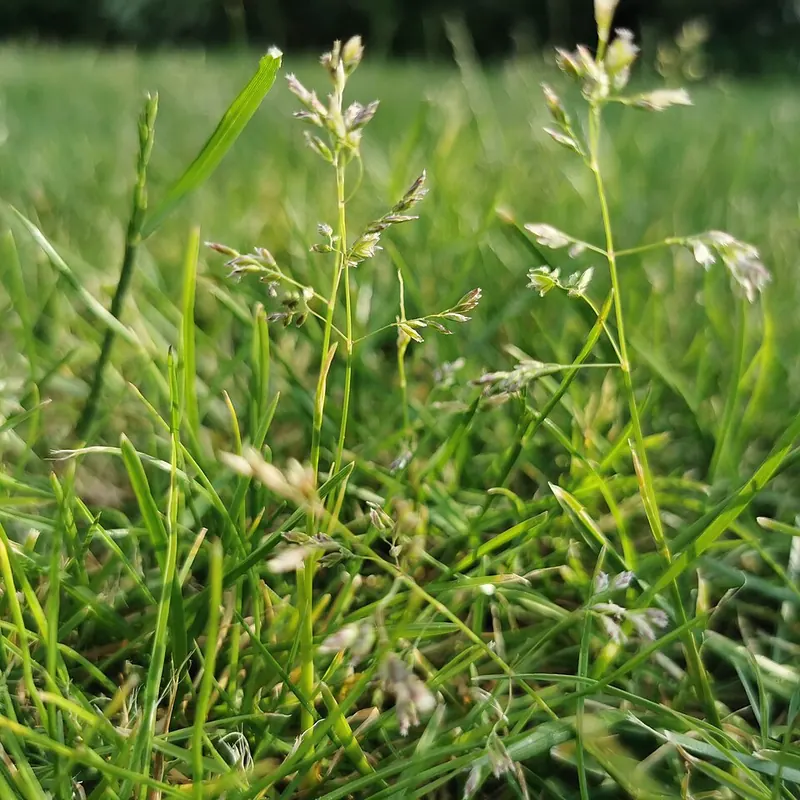
A fall pre-emergent stops winter annual weeds before they come up. Timing follows soil and night temperatures, not frost dates. Here’s which weeds it targets, when each state’s extension service says to apply it, and what to do if you missed the window.
What a pre-emergent does (and doesn’t)
Pre-emergents are designed “to control weeds by interfering with seedling emergence,” while “postemergence herbicides will control established weeds that have already germinated and emerged.” Texas A&M AgriLife recommends “two preemergence herbicide applications each year: one in the spring to target summer annual weeds and one in the fall to target winter annual weeds” (Texas A&M AgriLife Extension).
Which weeds a fall application targets
- “Fall applications primarily target annual bluegrass and winter annual broadleafs such as henbit and chickweed” (Virginia Tech).
- Fall treatments target “grassy weeds like annual bluegrass and rescuegrass, and broadleaf weeds like henbit, chickweed, Carolina geranium and lawn burweed” (Texas A&M AgriLife Today). Lawn burweed is the “stickers” weed in that article’s headline.
- For cool-season lawns: “Winter annuals like chickweed germinate in the fall, which makes a preemergent application ideal during this vulnerable moment in their lifecycle” (Illinois Extension).
Species guides: annual bluegrass henbit chickweed purple deadnettle crabgrass (spring pre-emergent)
When to apply: soil and night temperatures
Fall pre-emergent timing is based on soil or night temperature, not frost dates, so this page has no frost table.
- “Fall applications can be made when soil temperatures decrease to approximately 70°F for several days.” “Measure the soil temperature for the uppermost 1 inch of soil” (Texas A&M AgriLife). That “generally falls in September or October, depending on where you are in Texas,” and “Don’t get into the habit of relying on the same calendar date every year” (AgriLife Today).
- Why 70°F: “Annual bluegrass seed germinates in late summer/early fall once soil temperatures fall below 70° F” (UGA B1394).
- “About 80% of annual bluegrass germinates in a 60-day window from September 1 to October 30” (NC State TurfFiles).
| Where | Rule | Typical dates | Source |
|---|---|---|---|
| Texas (zones 7b-9b) | Top 1 inch of soil about 70°F for several days | September or October, by location | Texas A&M AgriLife |
| South Carolina (zones 8a-9a) | Night lows 55 to 60°F for four consecutive days | Coastal and central: Sep 15 to Oct 1; Piedmont and mountains: Sep 1 to 15 | Clemson HGIC 2310 |
| Georgia (zones 8a-9a) | “When temperatures drop to 65-70° F at night” | Not given | UGA B978 |
| North Carolina, tall fescue lawns | Apply and water in by September 1 (this blocks fall seeding) | By Sep 1 | NC State TurfFiles |
About this table: timing rules as each state’s extension service publishes them. Zone ranges are Sow & Sprout data: USDA 2023 zones for the 5th to 95th percentile of each state’s ZIP codes (data/statezones.json).
The South Carolina and Georgia thresholds differ. Clemson: “apply preemergence herbicides when nighttime lows reach 55 to 60° F for four consecutive days. On average, this is September 15 thru October 1 for the coastal and central regions and September 1 to 15 for the piedmont and mountains.” UGA: “When temperatures drop to 65-70° F at night, apply preemergence herbicides to control winter annual weeds such as annual bluegrass, henbit and common chickweed.” Follow your own state’s rule. NC State: pre-emergents “can be used in tall fescue but need to be applied and watered in by September 1.” Northern readers: no qualifying source gives cool-season calendar dates beyond these, so use the soil-temperature rule and the seeding warning below.
How to apply
- Water it in. “Watering in the preemergence herbicide immediately after application using some type of sprinkler system is recommended”; “granular preemergence products need one-quarter to one-half inch of water to dissolve properly, but always follow product label instructions” (AgriLife Today).
- Active ingredients (examples only; lawn-labeled products only, used as the label directs): UGA B1394 lists fall applications of bensulide, dithiopyr, pendimethalin and prodiamine for annual bluegrass.
- Read the label: “Pay close attention to label recommendations related to soil texture, slope, and proximity to both surface and groundwater resources” (Texas A&M AgriLife).
Don’t use it where you’ll seed
- “If you overseed your lawn in the fall, note the preemergent herbicide will affect your lawn seed as well as the weed seeds” (Illinois).
- “Fall-applied preemergence herbicides should not be used if reseeding or resodding is needed to repair areas of damaged turf within several months after herbicide applications” (UGA B1394).
- “Preemergence herbicides can injure newly established or overseeded turfgrass lawns” (Texas A&M AgriLife).
- NC State: these herbicides “will prevent any reseeding of tall fescue and other cool-season grasses”; for those lawns “the most effective strategy is to utilize cultural practices (including seeding) in fall that maximize turf growth.”
- Virginia Tech: consider the effects on “ryegrass overseeding in the fall” before applying.
- Seeding timing: is it too late to plant grass seed?
Missed the window? (late October onward)
- “A second application can be applied in winter to control later germinating plants” (UGA B1394).
- After the September–October peak, “The remainder germinates later in fall and in early spring” (NC State).
- Warm-season lawns: “November – January: Postemergence: Treat winter broadleaf weeds with a postemergence herbicide on mild days” (Clemson).
- Bermudagrass that isn’t overseeded: “there is potential for winter weed control with non-selective POST (postemergent) herbicides during winter dormancy of the bermudagrass” (Virginia Tech). Clemson’s caution: in mild winters bermudagrass “may not go completely dormant,” and glyphosate “may delay turfgrass green-up in the spots where sprayed.”
- Then plan for next fall: start checking soil temperature in late August or September.
- Spray timing and checklist: fall lawn weed control.
Frequently asked questions
Is it too late to put down pre-emergent in October or November?
For most of the fall flush, yes: NC State says about 80% of annual bluegrass germinates between September 1 and October 30. UGA says a second application in winter can control later-germinating plants, and Clemson treats winter broadleaf weeds with a post-emergent on mild days from November to January.
Does fall pre-emergent work on stickers (lawn burweed)?
Texas A&M AgriLife lists lawn burweed among the broadleaf weeds a fall treatment targets.
Can I put down pre-emergent and grass seed at the same time?
No. Pre-emergents affect grass seed too (Illinois Extension), and UGA says not to use them where you need to reseed within several months.
Fall vs. spring pre-emergent?
They target different weeds. Texas A&M AgriLife recommends both: spring for summer annuals and fall for winter annuals.
Sources
- Texas A&M AgriLife Extension: Preemergence Herbicides for Warm-Season Turfgrass Lawns
- Virginia Cooperative Extension (Virginia Tech): Maintenance Calendar for Warm-Season Turfgrasses in Virginia (SPES-669)
- Texas A&M AgriLife: Apply fall preemergence herbicide to avoid spring weeds (Sep 23, 2020)
- University of Illinois Extension: Managing weeds in lawns
- University of Georgia Extension: Annual Bluegrass Control in Residential Turfgrass (B1394); Weed Control in Home Lawns (B978)
- NC State Extension TurfFiles: Annual Bluegrass (Poa annua) Spring Invasion
- Clemson Cooperative Extension: Managing Weeds in Warm Season Lawns (HGIC 2310)