
Hairy Bittercress: How to Identify It and Get Rid of It
Quick answer
Hairy bittercress (Cardamine hirsuta) is a small, usually winter-annual mustard with a rosette of rounded leaflets, tiny white four-petaled flowers and upright seed pods. Pull or hoe young plants in fall or early spring, before they flower and scatter seed. Keep lawns dense and garden beds mulched to reduce new seedlings (Maryland, Cornell and NC State Extension).
Jump to
- Hairy bittercress identification: leaves, flowers and seed pods
- Why hairy bittercress keeps coming back
- How to get rid of hairy bittercress naturally
- Hairy bittercress weed killers in lawns
- When to control it: seasonal timing
- Is hairy bittercress edible?
- More winter-annual weed guides
- Frequently asked questions
Updated
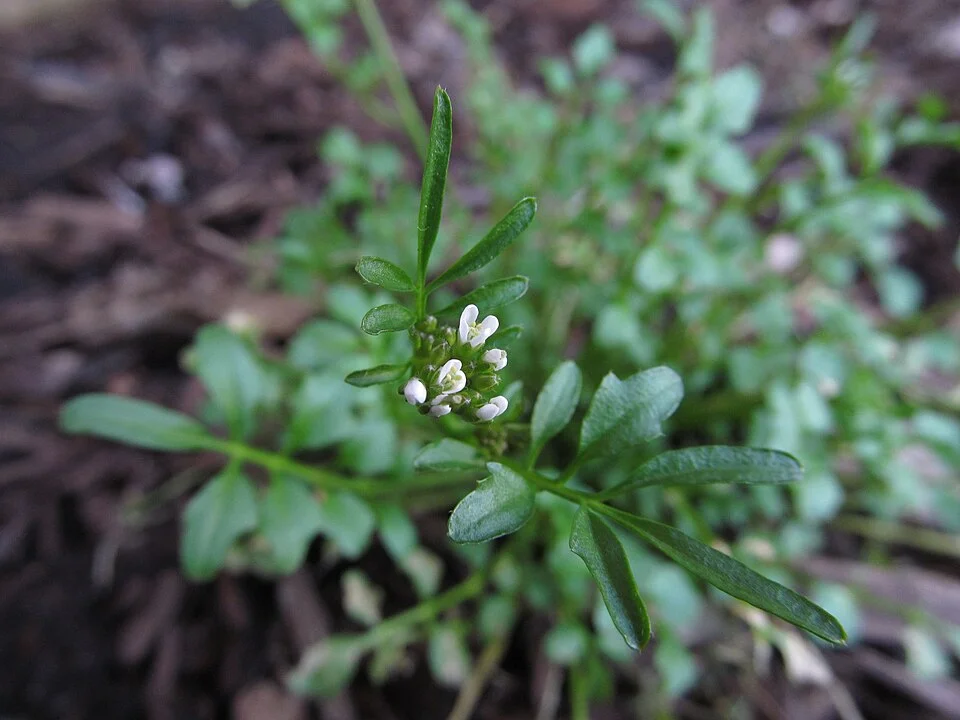

A small weed can become a seed problem before the lawn has fully woken up in spring. Hairy bittercress grows in lawns, beds and nursery pots, and its ripe pods spring open when disturbed. The useful time to act is while the plants are still small, not after a patch is covered in pods (Cornell Weed Identification; UF/IFAS EP511).
Jump to: Identification Seeds and spread Control without chemicals Lawn weed killers Seasonal timing Edibility
Hairy bittercress identification: leaves, flowers and seed pods
Look at the whole plant, not just one white flower. Maryland and Cornell describe these features:
- Low rosette. The leaves cluster near ground level. Mature leaves have 1 to 3 pairs of smaller leaflets and a larger leaflet at the end (University of Maryland Extension; Cornell Weed Identification).
- Rounded leaflets. They are round to kidney-shaped, with shallow teeth or light lobes. Upper leaves are fewer than those at the base (Cornell Weed Identification).
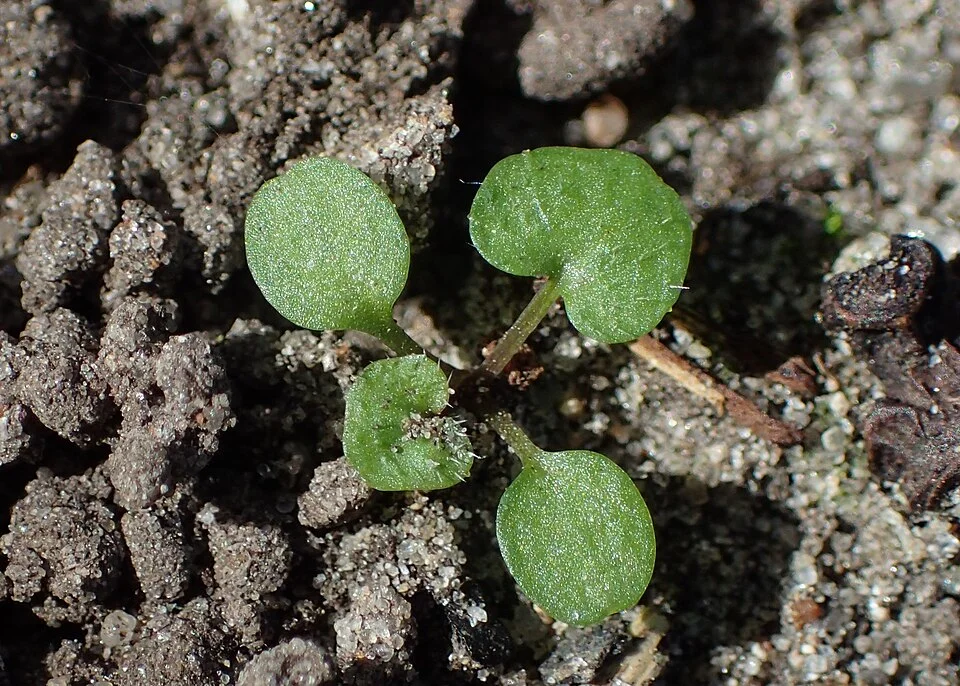
- Young seedlings. The first two true leaves are kidney- to heart-shaped; later leaves divide into pairs of leaflets with a larger end leaflet (Cornell Weed Identification).
- Small white flowers. Four petals form a cross in clusters at the tops of stems (University of Maryland Extension).
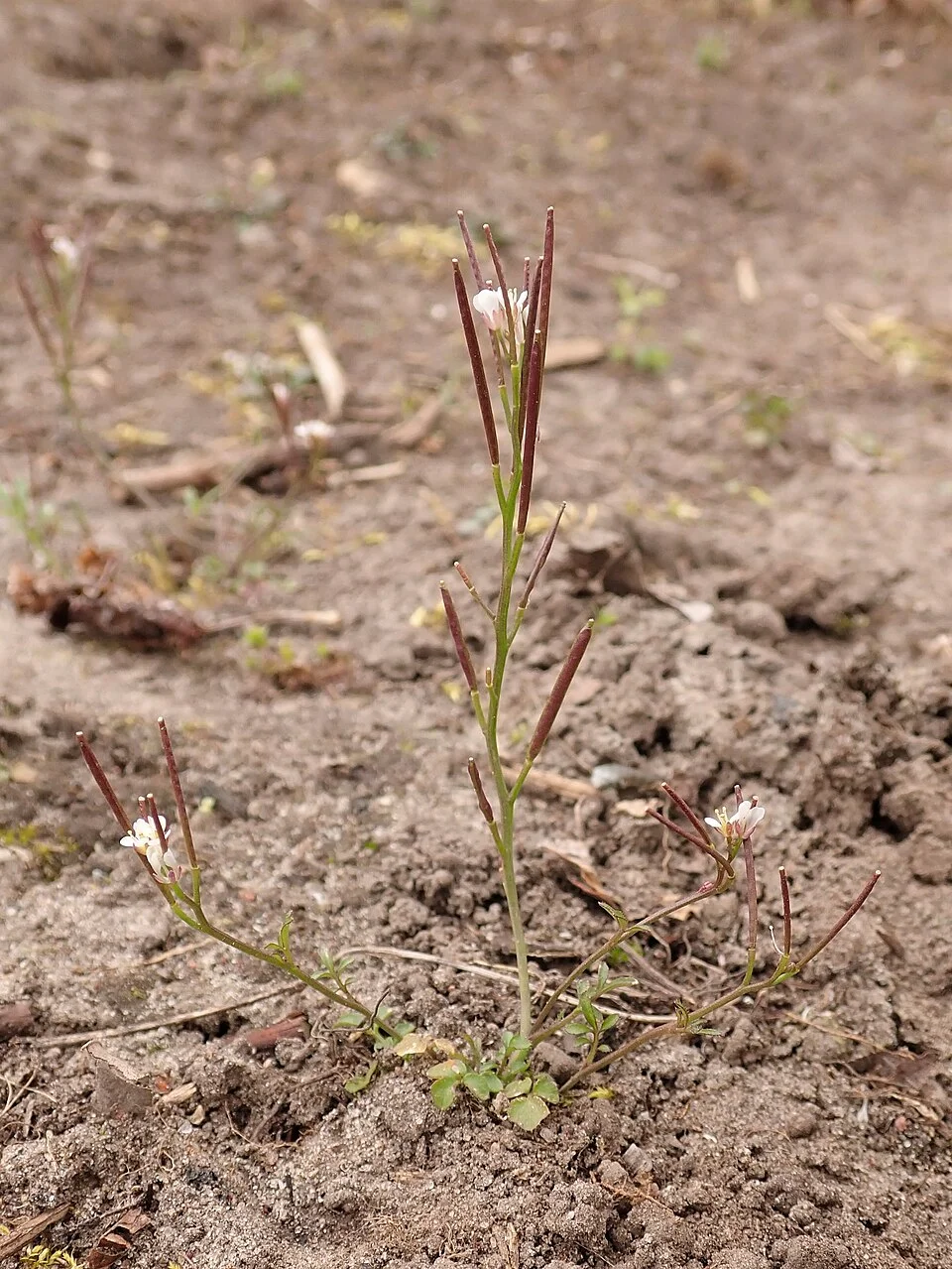
- Upright pods. Narrow seed pods stand around the flowers. NC State describes pods 3/4 to 1 inch long and branched stems 3 to 10 inches tall (NC State Plant Toolbox).
- Shallow roots. The roots are fibrous, not a deep taproot (Cornell Weed Identification).
Identification sources: University of Maryland Extension, Cornell Weed Identification and NC State Plant Toolbox. Cornell notes that basal leaves may or may not have hairs, so hairiness alone is not a reliable check.


Why hairy bittercress keeps coming back
Mature pods pop open and scatter seeds (University of Maryland Extension). A plant left to seed can therefore spread beyond the spot where it grew. The next crop may not all appear at once: UF/IFAS reports that seeds can germinate quickly without a dormancy requirement, or remain viable in soil or potting mix for several years when conditions are unsuitable (UF/IFAS EP511).
Seeds are also sticky when wet. In nursery settings they can travel on containers, shoes and clothing. Check newly purchased plants and their potting mix before planting them out; UF/IFAS identifies propagation houses and nursery containers as common starting points for infestations (UF/IFAS EP511).
Thin turf and poorly mulched beds leave room for it to establish (NC State Plant Toolbox). Maryland lists shade and mowing a lawn too short as conditions that favor it (University of Maryland Extension).
How to get rid of hairy bittercress naturally
- Pull the rosette while it is young. Use your hand or a weeding tool. Moist soil makes pulling easier, and this approach works best at the start of an infestation (University of Maryland Extension). Cornell recommends hand removal or cultivation while plants are young, in early fall or early spring before seed set (Cornell Weed Identification).
- Remove pulled plants from the area. UF/IFAS warns that they can continue dispersing seeds after they are pulled. Weed before flowering, because hand contact can scatter mature seeds (UF/IFAS EP511).
- Catch flower stalks before pods form. Maryland recommends removing flowering plants immediately or cutting or mowing the flower stalks. NC State says frequent early-spring mowing removes flowers before seeds develop (University of Maryland Extension; NC State Plant Toolbox).
- Mulch beds after weeding. Hand weeding and adequate mulch help prevent establishment (NC State Plant Toolbox). See preventing weeds in flower beds for mulch choices and depth.
- Make the lawn more competitive. Choose adapted grass and mow, fertilize and water properly to maintain dense turf. This is the lasting defense against new seedlings, not just a way to hide the current weeds (NC State Plant Toolbox; University of Maryland Extension).
Hairy bittercress weed killers in lawns
Hand removal is practical for a small patch. If you choose a herbicide, match the product to your lawn grass, the weed and the application site, and follow its label. These active ingredients are examples from Extension guidance, not application rates.
For plants already growing
Maryland lists liquid, selective broadleaf lawn herbicides containing one or more of 2,4-D, MCPP (mecoprop), dicamba or triclopyr. Its guidance is to spot-treat actively growing weeds in spring before seed set (University of Maryland Extension). Rutgers explains why waiting can be disappointing: winter annuals including hairy bittercress are easier to control in fall and harder at maturity in spring (Rutgers FS385). For more seasonal guidance, see fall lawn weed control.
Protect trees and shrubs. Maryland cautions: “Do not spray herbicides containing dicamba over the root zone of trees and shrubs.” Read the label for precautions (University of Maryland Extension). Rutgers also warns against treating newly seeded turf; follow the product’s establishment and mowing restrictions (Rutgers FS385).
To prevent the next crop
A pre-emergent applied in late summer or early fall can help prevent hairy bittercress from germinating. Maryland warns that you will not be able to sow grass seed at the same time (University of Maryland Extension). Plan around that conflict rather than applying a preventer and then overseeding. See when to apply fall pre-emergent.
When to control it: seasonal timing
NC State describes fall or winter germination, a vegetative plant through cold weather, and resumed growth, flowering and seed production in spring (NC State Plant Toolbox). Use the plant’s stage as well as the season:
| Season or stage | What to do |
|---|---|
| Fall: small rosettes | Hand weed while plants are young. Rutgers identifies fall as the easier herbicide-control window for these winter annuals. |
| Cold weather | Watch for low rosettes rather than waiting for tall flower stems. Growth may slow in cold conditions. |
| Early spring, before seed | Pull young plants or remove flower stalks before pods mature. |
| Mature seed pods | Handle carefully and remove plants from the area; pods can scatter seed when touched. |
Timing from NC State Plant Toolbox, Cornell Weed Identification, University of Maryland Extension, Rutgers FS385 and UF/IFAS EP511. These are seasonal and growth-stage guides, not frost-date deadlines. In Florida, UF/IFAS reports that bittercress can persist year-round in moist, shaded places.
Is hairy bittercress edible?
NC State Plant Toolbox lists hairy bittercress leaves and flowers as edible, with a mild peppery taste (NC State Plant Toolbox). That is not an identification test: do not eat an unknown plant or a weed from a treated lawn. Confirm the identification and the site’s treatment history before considering any wild plant as food.
More winter-annual weed guides
Chickweed Henbit Purple deadnettle Fall lawn weed control Fall pre-emergent Prevent weeds in flower beds Weed identification guide
Frequently asked questions
What does hairy bittercress look like?
Look for a low rosette of rounded to kidney-shaped leaflets, with a larger leaflet at the end, tiny white four-petaled flowers and slender upright seed pods. Cornell and Maryland describe these identification features.
Why does hairy bittercress keep coming back?
Its mature pods pop open and scatter seeds. UF/IFAS reports that seeds may germinate quickly or remain viable in soil and potting mix for several years, so removing the current plants does not remove all the seeds.
When is the best time to get rid of hairy bittercress?
Remove young plants in early fall or early spring before seed set, according to Cornell. Rutgers says winter annuals including hairy bittercress are easier to control with lawn broadleaf herbicides in fall than at maturity in spring.
How do I get rid of hairy bittercress naturally?
Pull or hoe small plants before flowering and remove them from the area. Maryland says moist soil makes pulling easier. NC State recommends keeping turf dense and beds mulched, and mowing early-spring flower stalks before seeds develop.
What kills hairy bittercress in a lawn?
For established weeds, Maryland lists selective broadleaf lawn herbicides containing one or more of 2,4-D, MCPP, dicamba or triclopyr. Use only a product labeled for your grass and site and follow its directions. Do not spray dicamba over tree or shrub root zones.
Is hairy bittercress edible?
NC State Plant Toolbox lists the leaves and flowers as edible, with a mild peppery flavor. Never use edibility as a way to identify an unknown weed, and do not eat weeds from treated lawns.
Sources
- Cornell University: Hairy Bittercress
- UF/IFAS Extension: Biology and Management of Hairy Bittercress in Ornamental Crop Production
- University of Maryland Extension: Hairy Bittercress
- NC State Extension: Cardamine hirsuta
- Rutgers Cooperative Extension: Broadleaf Weed Control in Home Lawns (FS385)
Organic options Growing without synthetic sprays? See our organic gardening guides: pest control and fertilizer.