
How to Prevent Weeds in Flower Beds: Fall Cleanup, Mulch, Fabric and Pre-Emergents
Quick answer
Stop weeds in flower beds before they sprout. This fall, pull or hoe winter annuals such as chickweed and henbit while they’re small, then cover bare soil with mulch, kept off plant crowns and stems. Use about 1 to 2 inches around annual flowers and small perennials (one source says 2 to 3 inches for perennial borders) and 3 to 4 inches of coarse mulch in shrub beds. Fill beds densely so plants shade the soil. Save landscape fabric for permanent shrub plantings, and use a pre-emergent only in transplanted (not seeded) beds, with a product labeled for ornamental beds, used as the label directs.
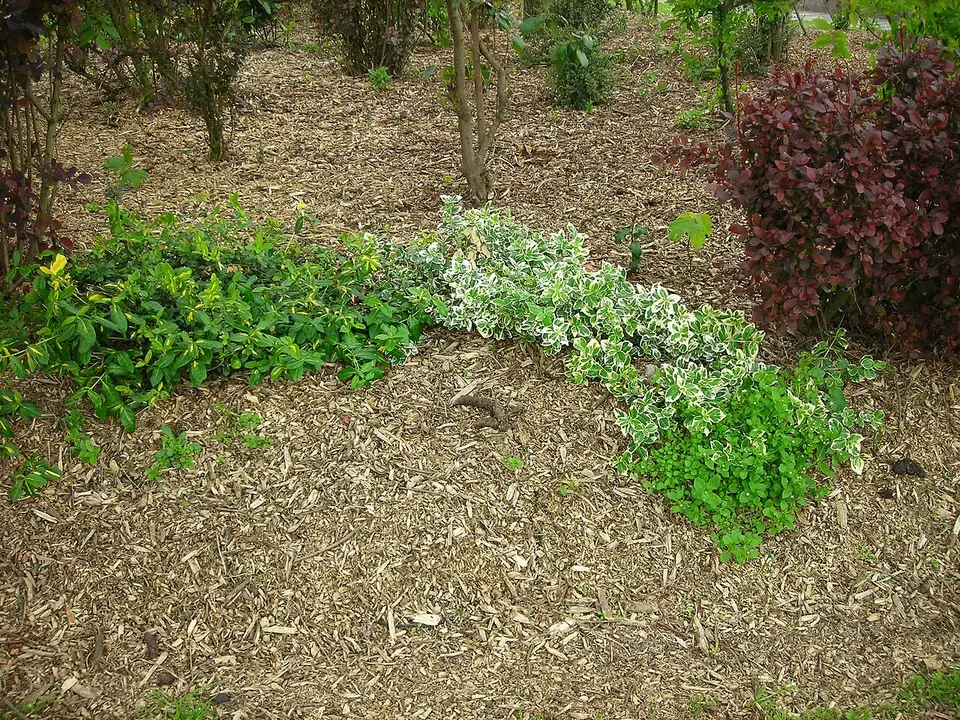
The easiest weeds to control in a flower bed are the ones that never sprout. Most of the work happens in fall: pull the winter weeds coming up now, then cover bare soil with the right mulch at the right depth. Here’s what university extension services recommend for mulch, landscape fabric, cardboard, pre-emergents and flame weeders, and where each one fits.
Jump to: Fall timing Pulling Best mulch Mulch depth Landscape fabric Cardboard Pre-emergent Flame weeding
Why fall matters: winter weeds sprout now
- “Winter annual weeds germinate in late summer and early fall, overwinter as small dormant but green plants, then flower and produce seed in spring or summer.” Common ones in flower beds are “annual bluegrass, annual sowthistle, common chickweed, hairy bittercress, and henbit” (NC State).
- Purple deadnettle is “a winter annual meaning that it germinates in the fall, survives the winter as a plant, then flowers, develops seeds, and then dies when temperatures rise in late spring and early summer.” It “mainly occurs in turf and soils that are disturbed during the fall when it germinates” (Purdue).
- The fall mulching rule: “In the fall, apply mulch before the winter annual weed seeds start germinating (usually when soil temperatures are below 50 degrees, measured using a soil temperature thermometer).” And first: “Remove any weeds and debris before applying any mulch” (Virginia Cooperative Extension).
- Perennials: “Apply mulch in the fall before leaves and stems die or are cut back” (Virginia Cooperative Extension). For what to cut and what to leave standing, see which perennials to cut back in fall.
Timing follows soil temperature and germination, not frost dates. The 50°F figure above is Virginia Cooperative Extension’s fall rule for mulching beds. The 70°F figure on our fall pre-emergent page is a lawn rule from Texas A&M AgriLife, aimed at annual bluegrass. Weed-blocking mulch is also different from winter-protection mulch: “Winter mulches are applied in mid-to-late fall, when the soil has cooled but before it freezes” (Virginia Cooperative Extension). For that, see how to protect shrubs in winter.
Species guides for the fall sprouters: chickweed henbit purple deadnettle annual bluegrass
Pull or hoe weeds before they set seed
- “Frequent removal of weeds when they are small and have not yet set seed will rapidly reduce the number of annual weeds over time” (UC IPM). NC State says the same: “Remove weeds when they are young, before they go to seed.”
- In perennial beds, weed management means “removing weeds when they appear and preventing them from getting large, flowering, or setting seed” (Iowa State).
- Hoe shallow. “Cultivation can damage ornamentals with shallow roots. When cultivating, avoid deep tilling, as this brings buried weed seeds to the soil surface where they are more likely to germinate” (UC IPM).
- Bag what you pull. “Some weeds could complete seed development after being removed from the soil, and the seeds may germinate and continue to be a problem” (Clemson HGIC 2337).
- Perennial weeds need a different plan. “Perennial weeds are often spread by cultivation and should be controlled or removed by other methods” (UC IPM). See bindweed · nutsedge · creeping Charlie · oxalis
Best mulch for weed control in flower beds
- “Mulching is the key to controlling weeds,” and “Mulches prevent weed seed germination by blocking sunlight” (UC IPM). UF/IFAS adds: “In most cases, mulching at a proper depth is more effective and provides much longer term control than a single application of a preemergence herbicide” (UF/IFAS).
- Pick a coarse mulch. “For best weed control, use a coarse-textured mulch, with pieces of about 1/4 to 3/4 inch in size, with a low water-holding capacity.” But “Larger mulch pieces (greater than 1 1/2 inches) do not provide good weed control unless applied very thickly (often 6 inches or deeper)” (UC IPM).
- Compost isn’t a weed barrier. “Fine-textured and nutrient-dense materials such as composts are not suitable for weed control and may actually increase weed growth” (UF/IFAS).
- Top it up. “If the mulch is too decomposed, it becomes a means of weed propagation rather than a means of prevention” (UC IPM).
- Watch free municipal mulch. It is “usually containing weed seed, tree seed, and vegetative parts of weeds” and “should only be used where beds can be surveyed frequently” (Clemson HGIC 2337).
- Rock mulch: “removal of weeds in rock mulches by hand weeding or hoeing is very difficult” (UC IPM). In bedding plants, “Inorganic mulches are not recommended” (NC State).
- Fall pansy beds: “Pine straw mulch reduces the growth and quality of pansies”; use “a fine organic mulch then edge the bed with pine straw” (NC State).
- Mulch won’t stop established perennial weeds. “Perennial weeds such as field bindweed and nutsedges often have sufficient root reserves to enable them to penetrate even thick layers of mulches” (UC IPM). Dig them out or kill them before mulching. “Otherwise, the mulch will promote healthy weeds just like it promotes healthy desirable plants” (Virginia Cooperative Extension).
How deep to mulch a flower bed
| Bed type | Depth | Source |
|---|---|---|
| Annual and perennial flowers | 1 to 2 inches | Nebraska Extension; Virginia Cooperative Extension (“smaller annual and perennial plants”) |
| Bedding plants (annual color) | About 1 to 2 inches, organic | NC State |
| Perennial beds and borders | 2 to 3 inches | Iowa State |
| Landscape beds, organic mulch | 2 to 3 inches | UF/IFAS |
| Landscape beds, organic mulch | 2 to 4 inches, by particle size, mulch type and weed pressure | Clemson HGIC 2337 |
| Landscape beds, medium mulch (3/4-inch pieces) | 3 to 4 inches | UC IPM |
| Woody landscape beds | About 4 inches organic, about 3 inches inorganic | NC State |
| Fine-textured mulch | About 2 inches (UC IPM); 1 to 2 inches (Virginia Cooperative Extension) | UC IPM; Virginia Cooperative Extension |
| Upper limit | “greater than 4 inches may injure plants” (UC IPM); “do not apply or let mulch build up to a depth greater than 4 inches” (Virginia Cooperative Extension) | UC IPM; Virginia Cooperative Extension |
About this table: mulch depths as each extension source publishes them. Sources differ, so each is shown with its source rather than averaged.
Virginia Cooperative Extension: “For smaller annual and perennial plants, apply a 1- to 2-inch layer extending 3 to 12 inches out from the plant’s crown.” UC IPM: “Applying mulches at depths of greater than 4 inches may injure plants by keeping the soil too wet and limiting oxygen to the plant’s roots.”
Keep mulch off crowns and stems
- “Never apply mulch over the crown of the plant.” For trees and shrubs: “Never pile mulch directly against the trunk or stems” (Virginia Cooperative Extension). In spring, leave a gap by “mulching out at least 1 inch from the crown of the plants.”
- “Never apply mulch against the bark of trees or shrubs, or over the crowns of annuals and perennials” (Nebraska Extension).
- “Do not place mulch directly against plant crowns or tree bases. Mulch placed directly in contact with stems or tree trunks may retain excess moisture around the base of the plant that can favor the development of diseases like crown rot” (UConn).
- Too deep causes trouble too: “Disease incidence, such as root or stem rot, may increase when such thick mulches are maintained” (UC IPM).
Should you use landscape fabric in flower beds?
Sometimes, under plantings that stay put. Not in beds you replant every year.
- Pros: “Placing a landscape fabric under mulch results in greater weed control than mulch used alone,” and fabric becomes “cost-effective if the planting is to remain in place for 4 or more years.” Geotextiles “are porous and allow water and air to pass through them,” unlike black plastic, which “is not the preferred long-term weed control method in landscape beds” (UC IPM).
- Not in annual beds: “Geotextiles should not be used where the area is to be replanted periodically, such as in annual flower beds or in areas where the fabric would inhibit the rooting and spread of ground covers” (UC IPM). Clemson agrees: “Geotextile fabrics are not very useful in annual flower beds because of the frequent replanting, but they may be beneficial in some perennial beds” (Clemson HGIC 2337).
- Cons: fabric “can potentially damage ornamentals if they root into the fabric. When weeds inevitably begin growing on top of or through the fabric, they will be more difficult to hand pull” (UF/IFAS). “Decomposition of organic mulches creates a humus layer which allows weed germination”; “The long-term solution is to remove the mulch and replace with fresh material” (NC State). And “yellow nutsedge can grow through most geotextiles” (UC IPM).
- If you use it: “Weeds will grow through any gap in the landscape fabric, so it is important to overlap pieces of fabric and tack them down tightly.” Then “Apply a shallow mulch layer (about 1 inch deep) to thoroughly cover the fabric and prevent UV light from breaking it down (photodegradation)” (UC IPM). NC State suggests about 2 inches of organic mulch over a geotextile.
Cardboard or newspaper under mulch (sheet mulching)
- “Sheet mulching uses a layer of cardboard, newspaper, or heavy paper placed on the soil as a barrier to smother existing weeds and seeds in the soil” (Oregon State).
- “Lay 6 to 8 sheets of newspaper or 1 to 2 layers of cardboard.” “Thicker is not better, as newspaper and cardboard can inhibit water and air movement into the soil.” “Avoid using waxed cardboard and glossy paper, such as magazines. Remove packing tape and staples from boxes.” Cover it with “an organic mulch such as compost, shredded bark, or leaf mold” (Iowa State).
- Start in fall. “It will take several months to completely kill the plants beneath the paper, so starting the process in the fall for spring planting is a good timeline” (Iowa State).
- Use cardboard “of the plain-brown corrugated variety, not shiny, glossy, or printed,” and “The cardboard should be well-soaked with water before application” (Oregon State).
- Use it on new beds and bare areas, not around crowns. Iowa State’s method is for turning lawn into a new bed, and Oregon State cautions that “Cardboard creates an interface that limits the flow of water and air into the soil.” Between established plants, keep it to the open soil and away from crowns and stems.
Plant densely so plants shade out weeds
- “Weeds occupy open spaces. Designing the color bed to utilize all the bed space will increase competition and reduce the sunlight reaching the soil surface which will decrease the weed population.” “A dense plant canopy will deter weed growth” (NC State).
- “Establish new plantings as quickly as possible to cover bare areas and shade out weeds.” “Woody mature ground covers should exclude most weeds; however, weed encroachment during establishment is likely” (UC IPM).
- Don’t lay landscape fabric where you want groundcovers to spread (see above).
Pre-emergent for flower beds: when it makes sense
Use products labeled for ornamental beds only, used as the label directs.
- You may not need one. “Generally, home gardeners should not need to apply herbicides to existing landscapes. Hand-weeding and mulching should provide sufficient control” (UC IPM).
- It won’t kill weeds you can already see. “Since preemergence herbicides will not control emerged weeds, they should be applied before weeds germinate or all existing weeds must be killed prior to herbicide application” (NC State). Pre-emergents “are not effective in controlling large seeded annual weeds such as morning glory or established perennial weeds” (Clemson HGIC).
- Never where you’ll sow seeds. “Don’t use them in areas where you plan to grow plants from seed. Preemergence herbicides affect many germinating seeds, not just those of weeds” (University of Nevada, Reno Extension).
- Transplanted beds only. “With annual flower beds, preemergence herbicides should be applied after transplanting to weed-free soil.” “Granular formulations of herbicides are generally safer to bedding plants than spray formulations” (NC State).
- Timing: “In general, late summer to early fall applications of preemergence herbicides are used to control winter annuals, while late winter to early spring applications are used to control summer annuals and seedlings of perennial weeds” (UC IPM). Clemson: apply “1 to 2 weeks before anticipated weed emergence.”
- Mulch first. “It is generally best to mulch the bed before herbicide application” (NC State). “It is usually better to apply the herbicides on the top of an organic mulched bed to prevent weed seed from becoming established in the mulch” (Clemson HGIC).
- Water it in, then leave the soil alone. UF/IFAS: “Most products typically need to be watered in with 0.25 inches or more of rainfall or irrigation soon after application,” and “Disturbing the soil surface following an herbicide application will reduce herbicide efficacy” (UF/IFAS). The University of Nevada, Reno says “at least one-half inch of water” is generally needed. Sources differ, so follow the label.
- Active ingredients (examples only; products labeled for ornamental beds only, used as the label directs): NC State’s table of pre-emergents “commonly used in landscape beds” lists prodiamine, pendimethalin, napropamide, isoxaben + trifluralin, oryzalin, s-metolachlor, and trifluralin or dithiopyr. UC IPM adds oxadiazon, flumioxazin and indaziflam and notes “Isoxaben is used for control of annual broadleaf weeds only.” Plant safety varies: NC State calls oryzalin “Injurious to many bedding plants.”
- For lawns, timing is different: see fall pre-emergent for lawns.
Flame weeding: where it works and where it doesn’t
- “Flame weeding is the use of intense heat, usually produced by a propane torch or other fuel-burning device, to kill weeds.” “The goal is not to ignite the weeds on fire” (Iowa State).
- “Do not burn the weed to the ground; usually 2 to 5 seconds of exposure is enough to kill plant cells.” “Flaming and heating are more effective on broadleaf weeds than grasses” (UC IPM).
- Small weeds only. “Flame weeding is most effective when weeds are less than 3 inches tall” (Cornell).
- Where it fits: flamers are “generally only effective for very small weeds and in specific types of sites such as sidewalk joints, along fence lines, and adjacent to edging materials” (UC IPM). Iowa State says it’s effective “in areas where desirable plants are not nearby, such as in the cracks of driveways and patios.”
- Not in mulched beds. “Avoid flame weeding near buildings or flammable materials like plastic, mulch, dry plants or plant material” (UVM Extension). UC IPM: “Be careful not to flame dried out vegetation, dry wood chips, and other flammable materials, or near buildings. Don’t get the flame near desired plants.”
- It can’t tell weeds from flowers. “Flaming does not distinguish between a weed and desired plant” (Cornell), and “care must be taken not to damage landscape plants or the operator” (Clemson HGIC 2337).
- Safety: “do not flame weed on windy days. Never use torches around dry grasses or other materials that could easily ignite” (Iowa State). “Keep a bucket of water nearby whenever you flame weed, just in case” (UVM). “Check with your local fire department to see if flame weeding is legal in your area,” and “Do not flame weed poisonous plants, such as poison ivy, poison oak, or poison sumac” (Cornell). See poison ivy.
More weed guides
Fall pre-emergent Fall lawn weed control Chickweed Henbit Purple deadnettle Bindweed Nutsedge Creeping Charlie Oxalis Cutting back perennials in fall Protecting shrubs in winter
Frequently asked questions
What’s the best way to keep weeds out of flower beds?
Pull weeds while they’re small, before they set seed, then cover bare soil with mulch at the right depth. UF/IFAS says mulching at a proper depth is more effective and gives much longer control than a single application of a pre-emergent herbicide.
How do I prevent weeds in flower beds naturally?
Hand-pull or hoe shallowly while weeds are young, cover bare soil with a coarse organic mulch, smother bare or new areas with cardboard or newspaper under mulch, and plant densely so plants shade the soil (UC IPM, NC State, Iowa State). UC IPM says home gardeners generally shouldn’t need herbicides in existing landscapes: hand-weeding and mulching should provide sufficient control.
When should I mulch flower beds in fall?
Before winter annual weeds start sprouting. Virginia Cooperative Extension says to apply mulch in fall before the winter annual weed seeds start germinating, usually when soil temperatures are below 50 degrees, measured with a soil thermometer. Pull existing weeds and clear debris first.
What’s the best mulch for weeds?
A coarse mulch with pieces about 1/4 to 3/4 inch in size and low water-holding capacity (UC IPM). Compost alone isn’t a weed barrier: UF/IFAS says fine-textured, nutrient-dense materials such as composts are not suitable for weed control and may increase weed growth.
Should I put landscape fabric under mulch in a flower bed?
Not in annual beds you replant. UC IPM says geotextiles should not be used where the area is replanted periodically, such as annual flower beds, and Clemson says they may be beneficial in some perennial beds. UC IPM says fabric becomes cost-effective if the planting stays in place for 4 or more years.
Does cardboard under mulch stop weeds?
It smothers existing weeds and seeds in the soil (Oregon State). Iowa State says to lay 6 to 8 sheets of newspaper or 1 to 2 layers of cardboard, cover it with organic mulch, and start in fall for spring planting, because it takes several months to kill the plants underneath.
Can I use pre-emergent in a flower bed?
Only in beds of transplants, never where you’ll sow seeds, because pre-emergents affect many germinating seeds, not just weeds (University of Nevada, Reno Extension). NC State says to apply it after transplanting to weed-free soil. Use products labeled for ornamental beds only, used as the label directs.
Is a flame weeder (flame thrower for weeds) safe in a flower bed?
Not in mulched beds. UVM Extension says to avoid flame weeding near flammable materials like plastic, mulch and dry plants. It works best on weeds under 3 inches tall (Cornell) in places like driveway and patio cracks, away from desirable plants (Iowa State). Check with your local fire department to see if flame weeding is legal in your area (Cornell).
Sources
- NC State Extension: Weed Management in Annual Color Beds; Landscape Weed Management, Lecture 4: Preemergence Weed Control in Landscape Beds
- Purdue University: Purple Deadnettle
- Virginia Cooperative Extension (Virginia Tech): Mulching: Purpose, Benefits, and Essential Information (SPES-661P)
- University of California Agriculture and Natural Resources (UC ANR): UC IPM Pest Notes: Weed Management in Landscapes
- Iowa State University Extension: How to Maintain Perennial Beds and Borders; How to Kill Grass to Create a New Garden Bed; How to Utilize Flame Weeding for Weed Control
- Clemson Cooperative Extension: Weed Control in Landscapes: Non-Chemical Measures (HGIC 2337); Weed Control in Landscapes: Herbicides
- UF/IFAS Extension: Improving Weed Control in Landscape Planting Beds (EP523)
- Nebraska Extension: Mulches for the Landscape (EC1274)
- UConn Home & Garden Education Center: Mulch Basics
- Oregon State University Extension: Sheet mulching and lasagna composting with cardboard (EM 9559)
- University of Nevada, Reno Extension: Using Preemergence Herbicides for Weed Control in the Home Landscape (FS-11-67)
- Cornell University CALS: Thermal Weeding (Turfgrass and Landscape Weed ID)
- University of Vermont Extension: Flame Weeding