
How to Grow Beets: Planting, Spacing, Care & Harvest
Quick answer
Sow beets several weeks before the last spring frost, through summer, and up until about 6 weeks before the first killing frost (UMD). Cover seed about 1/2 inch, thin to about 3 inches, and harvest roots at 1 to 3 inches across, about 50 to 60 days from seeding.
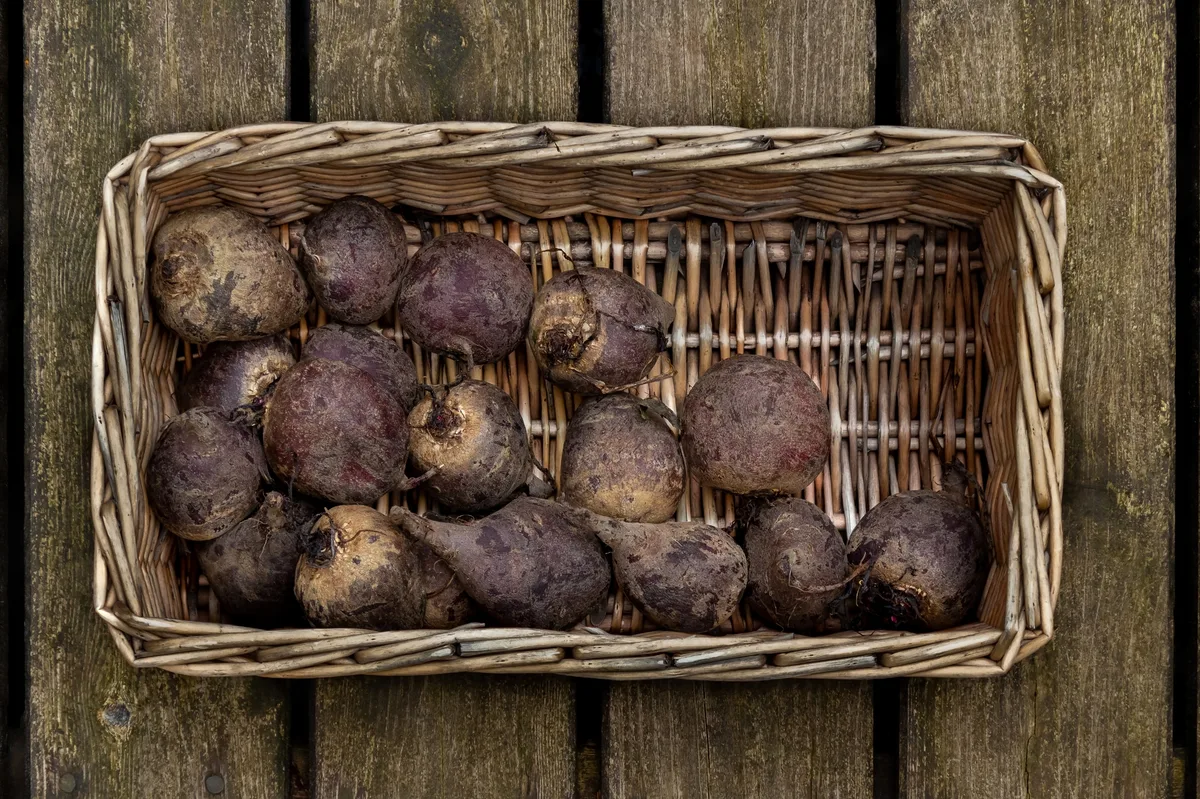

Beets at a glance


Weeks relative to last frost (LF). Colored weeks show when our ZIP planner schedules each step.
Jump to
Updated
Planting dates for your ZIP: the ZIP planting planner counts each window from your local frost dates.
Organic pests and diseases: see also organic pest control. Use any product as the label directs.
Planting timing
UMD: semi-hardy; direct seed early spring and late summer. “Sow beets several weeks before the last spring frost, throughout the summer, and up until 6 weeks before the first killing frost in the fall.” Germination soil 45° to 85°F. Soak seed 24 hours in warm water to aid germination (UMD Extension). Planner rules: last frost −2 to 0 weeks in spring; fall sowing about first frost −6 weeks.
Depth and spacing
UMD: wide rows/beds; seeds 2 inches apart in all directions; cover with ½ inch fine soil or 1 inch sandy soil; final spacing 3 inches in all directions. Thin when plants are about 2 inches tall (seed ball has multiple embryos unless monogerm seed). Delay final thinning until baby beets are usable. Each “seed” is a fruit with several embryos — expect clusters.
Sun, soil and water
UMD: tolerates partial shade; grows with 4–6 hours direct light/day. Uniform moisture; water deeply in dry spells. Competes poorly with weeds when small — hand-weed, mulch, shallow cultivation only. Fertility from organic matter before seeding — do not print boron/borax rates or synthetic NPK; soil-test if sandy soils may be short of boron (UC IPM beet).
Harvest and storage
Days to maturity: UMD expect germination 10–15 days and harvest within 50–60 days from seeding (aligned with Clemson planning citation). Pull when roots are 1 to 3 inches diameter. Storage: best at 32°F and about 95% RH; refrigerator in a vented plastic bag (UMD). Thinnings usable in salads.
Pests and diseases (organic)
Leafminers: same beet/spinach leafminer complex — blotch mines; remove egged/mined leaves; rotate; row cover; weed lamb’s quarters/pigweed/chickweed; organic spinosad at egg-lay timing per label (UMD Extension). Damage matters more when greens are eaten than for roots-only.
Other invertebrates: aphids, flea beetles, cutworms, snails/slugs — cultural starting points: even growth, row cover on seedlings, handpick/traps for slugs; aphid soap/oil per label (UC IPM).
Cercospora leaf spot: tan–brown spots with reddish-purple borders; rotate 3 years; clean debris; mulch; water at base; remove infected leaves (UMD Extension).
Related: how to grow spinach · organic pest control · ZIP planner
Frequently asked questions
When is the last chance to sow beets for fall?
UMD: up to 6 weeks before the first killing frost (matches plants.json first frost −6 weeks).
Why do so many seedlings come from one seed?
Beet “seed” is a multi-embryo fruit — thin to about 3 inches (UMD).
How do I manage leafminers on beet greens?
Remove first mined leaves, rotate, row cover, control weed hosts; spinosad at egg laying per label (UMD).
More grow guides: Carrots · Strawberries · Shallots · Raspberries · Spinach · Sweet Corn · Dill · Bok Choy · Brussels Sprouts · Collards · All grow guides
Sources
- University of Maryland Extension: UMD Extension; UMD Extension; UMD Extension
- University of California Agriculture and Natural Resources (UC ANR): UC IPM beet