
How to Grow Strawberries: Planting, Spacing, Care & Harvest
Quick answer
In cold-winter regions, plant dormant strawberries in early spring and potted plants after frost risk is past (UMN). In Florida, plant in fall windows by region (UF/IFAS). Set the mid-crown at the soil line, give at least six hours of sun, and about one inch of water a week.

Strawberries at a glance


Weeks relative to last frost (LF). Colored weeks show when our ZIP planner schedules each step.
Jump to
Updated
Planting dates for your ZIP: the ZIP planting planner counts each window from your local frost dates.
Organic pests and diseases: see also organic pest control. Use any product as the label directs.
Planting by region
UMN: plant dormant transplants in April-May; plant potted transplants in May-June “after the risk of frost is past.” (UMN Extension) USU: bare-root dormant plants in early spring for matted-row June-bearers; “there is no need to wait until after the risk of spring frost has passed” for dormant stock (Utah State Extension). Florida (UF/IFAS): “Plant yours in early fall to enjoy tasty berries in the spring.” Windows: North Florida Sept 15-Oct 15; Central Sept 25-Oct 25; South Florida Oct 1 until the first of December (UF/IFAS). Sources center on spring inland and fall in Florida — label each by region. Cover blossoms when frost is predicted after flowering begins (UMN; USU).
Crown depth and spacing
UMN: set dormant crowns so the center of the crown is at the soil line — roots buried, growth points visible. USU: “Only the roots and the base of the crown should be covered with soil, leaving as much of the crown above ground as possible.” Matted row (UMN/USU): plants 18 to 24 inches apart, rows 3 to 4 feet apart. USU annual hill: 12 to 15 inches in staggered rows. UF/IFAS: transplants “10 to 18 inches apart.” Present the system with its source.
Sun, soil and water
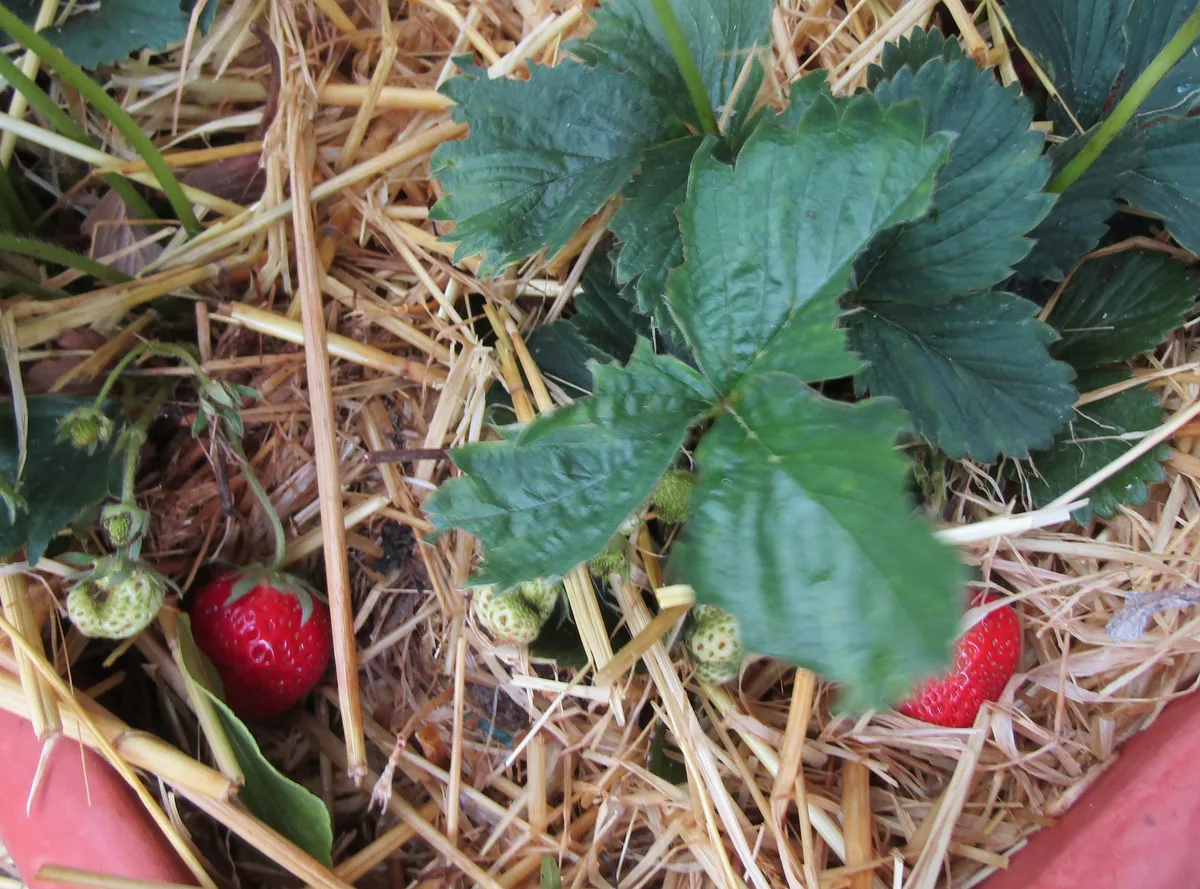
UMN: “at least six hours of direct sunlight each day”; ten or more is ideal. USU: at least eight hours. Well-drained soil; avoid sites recently in tomatoes, peppers, potatoes, eggplant or okra (Verticillium; USU). Water: UMN “equivalent of 1 inch of rainwater per week”; USU up to about two inches in hot dry weather with drip or soaker preferred. Winter mulch (UMN): straw 4 to 6 inches after plants are dormant and temperatures stay below 40°F; crowns may be killed near 15°F without protection.
Care
Pinch flowers on new June-bearing plantings for the first few weeks (UMN) / first-season blossoms for matted-row establishment (USU). Renovate June-bearers within two weeks after harvest and before August 1 (UMN): mow or cut foliage, thin, rake debris, then feed with compost or an organic nitrogen source such as blood meal — no synthetic rates. Types (habits only): June-bearing, everbearing, day-neutral.
Harvest
UMN: June-bearing fruit about four weeks after bloom; pick when berries are fully red; harvest daily once coloring starts. UF/IFAS: first berries about 90-110 days after planting; pick when at least three-fourths of the surface is red; berries do not sweeten after picking.
Pests and diseases (organic)
Common insects (UMN): tarnished plant bug, strawberry bud weevil, slugs, flower thrips, spotted wing drosophila on soft fruit. Cultural: remove leaf litter, renovate after harvest, pick ripe fruit often, remove overripe and fallen fruit. Slugs: inspect and use iron phosphate baits if needed, follow the label (UC IPM snails and slugs). Birds: netting (UF/IFAS).
Gray mold: worst in prolonged cool wet bloom weather. Cultural: full sun, narrow beds (12-18 inches), renovate and rake old leaves, drip/soaker water, straw mulch, harvest often (UMN). UMN notes no effective home-gardener fungicides for black root rot or leather rot — drainage, rotation every 3-4 years, clean nursery plants.
Related: protect plants from frost · organic pest control · ZIP planner · blackberries
Frequently asked questions
When do I plant strawberries?
Spring after frost risk for potted plants in cold-winter regions (UMN); early spring for dormant bare-root (UMN/USU). In Florida, plant in the fall windows above (UF/IFAS).
How deep do crowns go?
Mid-crown at the soil line — roots buried, growing points exposed (UMN; USU).
Should I pick the flowers the first year?
Yes for new June-bearing plantings: pinch early blooms so plants establish (UMN; USU matted-row first season).
How do I reduce gray mold without relying on sprays?
Sun, airflow, narrow beds, renovation, drip irrigation, straw mulch, and frequent harvest of clean fruit (UMN).
More grow guides: Carrots · Shallots · Raspberries · Spinach · Sweet Corn · Beets · Dill · Bok Choy · Brussels Sprouts · Collards · All grow guides
Sources
- University of Minnesota Extension: UMN Extension
- Utah State University Extension: Utah State Extension
- UF/IFAS Extension: Strawberries
- University of California Agriculture and Natural Resources (UC ANR): UC IPM snails and slugs