
How to Grow Brussels Sprouts: Planting, Spacing, Care & Harvest
Quick answer
Grow Brussels sprouts for cool fall maturity. UMD sets 4–6 week transplants out 90–100 days before the first frost (add about 20 days if direct seeding). Space about 18 inches (UMN) or 18–24 inches in-row (UMD). Top the stalk once bottom sprouts start sizing; harvest firm green sprouts about 1–1½ inches after frost for best flavor.

Brussels sprouts at a glance


Weeks relative to last frost (LF). Colored weeks show when our ZIP planner schedules each step.
Jump to
Updated
Planting dates for your ZIP: the ZIP planting planner counts each window from your local frost dates.
Organic pests and diseases: see also organic pest control. Use any product as the label directs.
Cool fall finish. Hot dry maturity makes bitter or loose sprouts (UMD; UMN). Shared brassica pests: organic cabbage and cabbage-family companions.

Planting timing
Fall crop is the quality path. UMD: “They are grown for fall harvest because cool weather during maturity is essential for good flavor and quality.” Set out 4–6 week transplants 90–100 days before the first frost; “Add 20 days if direct seeding.” (UMD Extension) UMN (Minnesota framing): “Brussels sprouts are a fall crop in Minnesota.” “Sow seeds in June, indoors or directly in the garden.” Plants “can stay in the garden as long as temperatures remain above 20 degrees Fahrenheit.” (UMN Extension) Spring option (UNH): start seed 4–6 weeks; set out 2–4 weeks before last frost (UNH). Purdue lists them among hardy cool-season crops and for mid-summer transplant for fall (Purdue HO-186). Present spring UNH and fall UMD/UMN paths separately.
Depth and spacing
UMD: 18–24 inches in-row × 30–36 inches between rows; plants reach about 2–3 feet. UMN: transplants 18 inches apart at pot depth; seed indoors or direct ¼–½ inch deep; direct-sow three seeds every 18 inches, thin to one.
Sun, soil and water
UMD: full sun at least 6 hours/day; prefers 8–10. High nutrient need from organic matter; side-dress 2–4 weeks after planting or when plants are 12 inches high — soil test; no synthetic product rates here. UMN: well-drained yet moisture-retentive soil, pH 6–7; about 1 inch water/week; uneven moisture → loose, bitter sprouts. Row cover early for wind/insects (UMN). Rotate off cole crops at least four years (UMN).
Care and topping
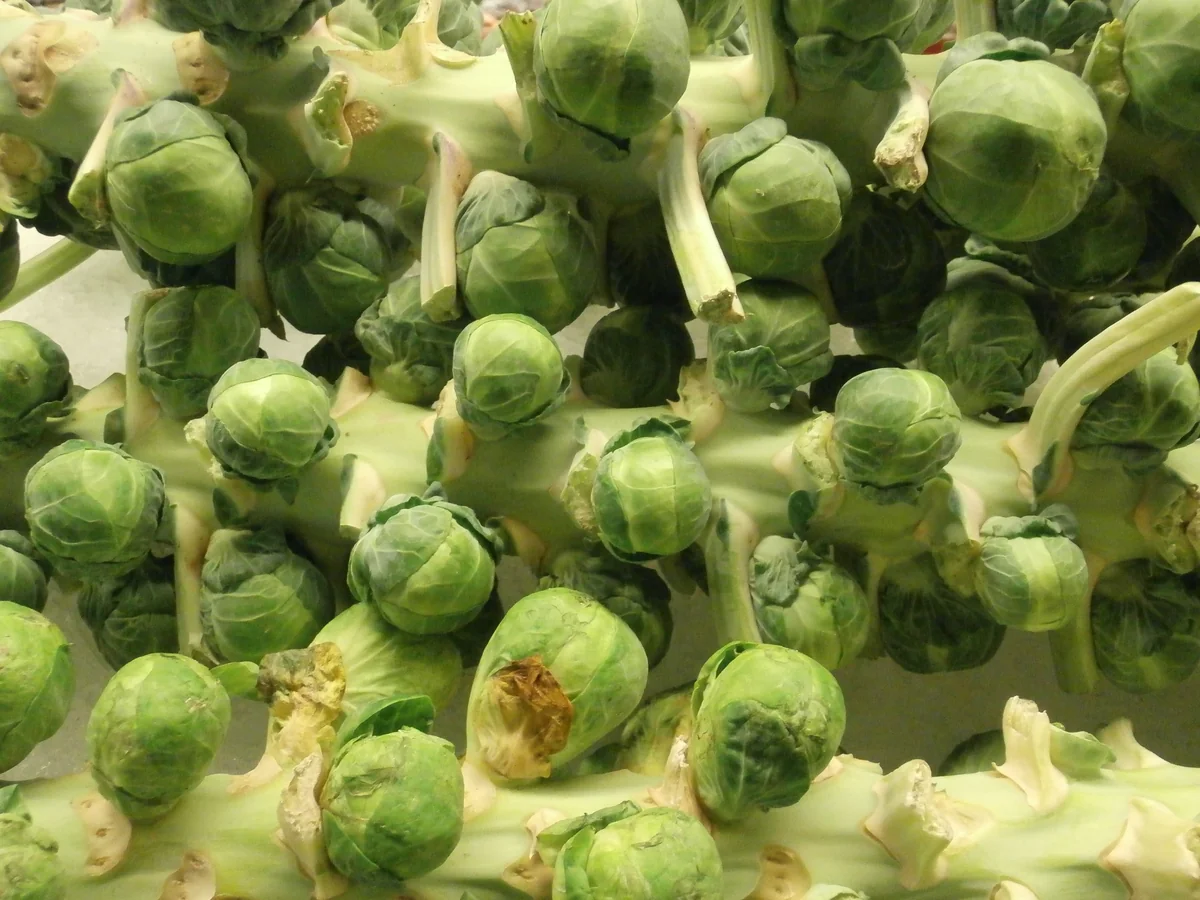
Sprouts form in leaf axils up the stalk. UMD: “Top the plants when bottom sprouts are 1/2 in. in diameter. The lowest leaves can be removed to hasten sprout development.” UMN: when lowest sprouts are about an inch across, cut 1–2 inches off the top so upper sprouts enlarge. Hot dry maturity → bitterness or failure to form compact sprouts.
Harvest and storage
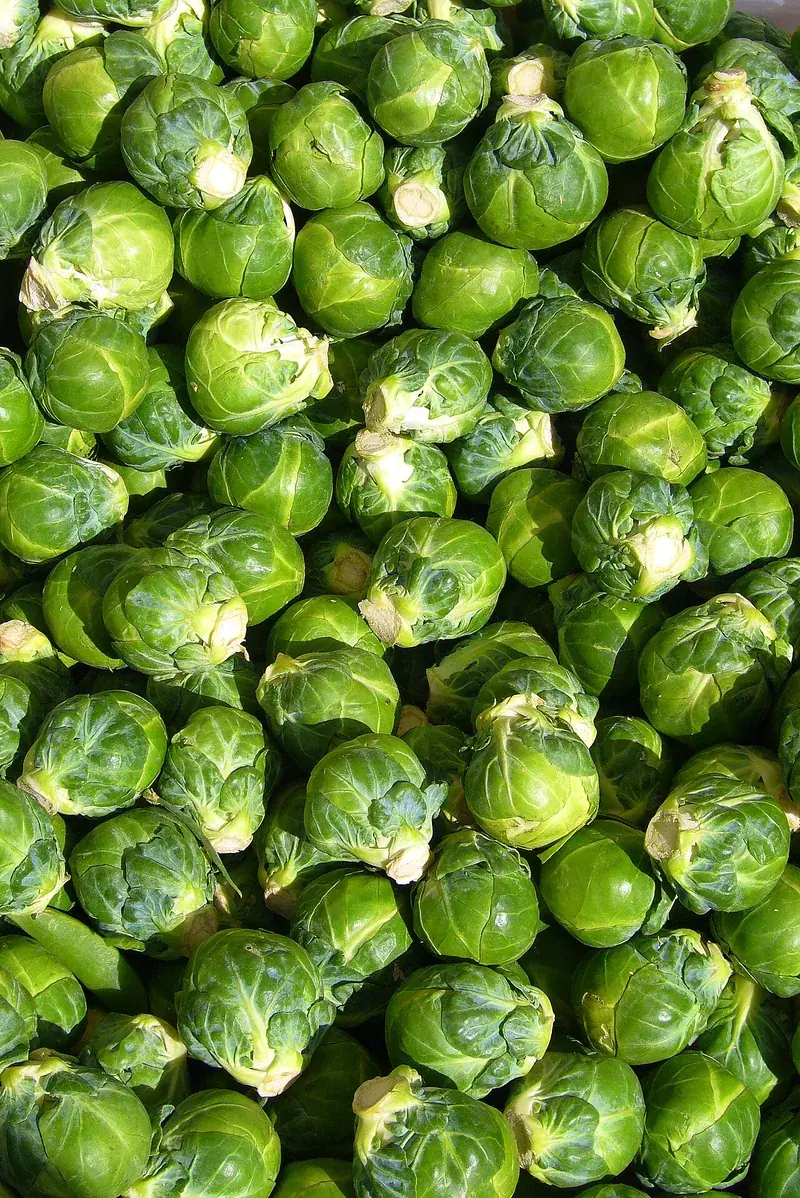
Days: UMD 80–100 from transplant. Harvest when sprouts are hard, compact, deep green, about 1–1½ inches; best after frosty weather; twist/snap from the stalk; lowest mature first; harvest before leaves yellow. Yield about 4–6 lbs per 10-foot row (UMD). Storage: 32°F, moist ~95% RH; fridge best flavor 1–2 days, keep 3–5 weeks (UMD); UMN fridge in bags up to two weeks, or hold stalks upright in a cool cellar after mid-twenties weather.
Pests and diseases (organic)
Cole caterpillars (imported cabbageworm, cabbage looper, diamondback moth): destroy residue; remove brassica weeds; handpick; floating row covers; Btk, spinosad, neem, or pyrethrins among lower-risk options — follow the label while caterpillars are small (UMN). Harlequin bug: clean debris; crush eggs/nymphs/adults; row cover; insecticidal soap or neem on nymphs — follow the label (UMD). Also flea beetles, cabbage maggots, aphids in sprouts, Swede midge (UMN) — prefer row cover early, rotation, sanitation. Diseases: Alternaria, black rot, black leg, clubroot — 4-year rotation off cole crops and sanitation (UMN). See organic cabbage and organic kale.
Related: ZIP planner · cabbage-family companions · organic cabbage · organic kale · organic pest control
Frequently asked questions
When do I plant Brussels sprouts?
For quality sprouts, aim for cool fall maturity: UMD sets 4–6 week transplants out 90–100 days before first frost (add ~20 days if direct seeding). Cold-winter gardens often sow/transplant mid-summer (UMN June example). UNH also allows spring set-out 2–4 weeks before last frost after 4–6 weeks indoors.
How far apart?
About 18 inches in the row (UMN); UMD allows 18–24 inches in-row and 30–36 inches between rows.
When do I harvest?
When sprouts are firm, green, about 1–1½ inches; after frost for best flavor (UMD). Lowest sprouts first; topping once bottom sprouts start sizing helps upper buds catch up.
More grow guides: Carrots · Strawberries · Shallots · Raspberries · Spinach · Sweet Corn · Beets · Dill · Bok Choy · Collards · All grow guides
Sources
- University of Maryland Extension: UMD Extension; Harlequin bug vegetables
- University of Minnesota Extension: UMN Extension; Caterpillars cole crops
- UNH Extension: When to Plant Your Vegetable Garden
- Purdue University: Purdue HO-186