
How to Grow Leeks: Planting, Spacing, Care & Harvest
Quick answer
NDSU: start indoors about 10 weeks before last frost and transplant about 2 weeks before. UMD: fairly hardy and can be planted several weeks before last frost. Space about Five inches (UMD) or 2 to 6 inches (UMN). Hill or deep-plant for a longer white shaft.

Leek at a glance


Weeks relative to last frost (LF). Colored weeks show when our ZIP planner schedules each step.
Jump to
Updated
Planting dates for your ZIP: the ZIP planting planner counts each window from your local frost dates.
Organic pests and diseases: see also organic pest control. Use any product as the label directs.
Allium: rotate with other onions, garlic and shallots. See also shallots, garlic, and when to plant onions.

Planting timing
UMD: hardy (withstands heavy frosts). “Leeks are fairly hardy and can be planted several weeks prior to the last frost date.” Start seeds indoors for early spring transplants or later in summer for a fall crop. Harden off before planting out. (UMD Extension) NDSU time chart: sow 10 weeks before last frost; transplant 2 weeks before last frost. (NDSU H1139) Planner uses start indoors −10 and transplant −2 to match that NDSU chart. UMN: long season about 120 to 150 days (some cultivars ~90 — no names). Start indoors late February or March (MN); transplants no more than 10 to 15 weeks old; set out when daytime temps at least 45°F. (UMN Extension) Frost at harvest: UMN frost-tolerant; can delay harvest past first frosts; some types tolerate down to about 20°F with mulch.
Depth and spacing
UMD: “Five inches apart, either in narrow rows or equidistantly in wide rows or beds.” Blanch by transplanting into loose soil: make holes 5 to 6 inches deep with a 1–1¼-inch dowel; drop transplant in; water so soil washes in; hill soil later for a longer blanched stem. UMN: plant two to six inches apart, rows 12 to 36 inches. Close spacing two to four inches OK if leaves grow into the aisle. Furrow method: set at bottom of a six-inch deep furrow and fill as plants grow; or hill compost/soil around plants set at normal grade. Sources differ (UMD fixed 5 inches vs UMN 2–6 inches), so we show both. Trim roots of transplants to about one inch if needed (UMN).
Sun, soil and water
Sun: UMD full sun ≥6 hours (prefers 8–10). UMN minimum eight hours bright sun. Soil: UMN well-drained, pH 6.0 to 7.0, high organic matter; compost/well-rotted manure; no fresh manure; no “Weed and Feed.” Water: UMD regular watering; shallow roots — drought cuts yield. UMN plentiful water; about one inch rain/week; water soil not leaves; “Too much water can lead to fungal diseases.” Mulch: UMD essential for weeds and moisture; heavy straw/leaves in fall for winter digs. UMN three to four inches organic mulch; shallow cultivate — fibrous shallow roots.
Care
Blanching optional for milder/tender shanks (UMD; UMN). Types: UMD “summer leek” harvested same season vs “overwintering leek” harvested next spring — no cultivar names. Fertilizer: UMD light to medium need; side-dress in June as needed. Soil test (UMN). NC State: full sun, well-drained; onion maggots, thrips, slugs; rust/mildew/leaf spot occasional; rot in wet soil. (NC State)
Harvest and storage
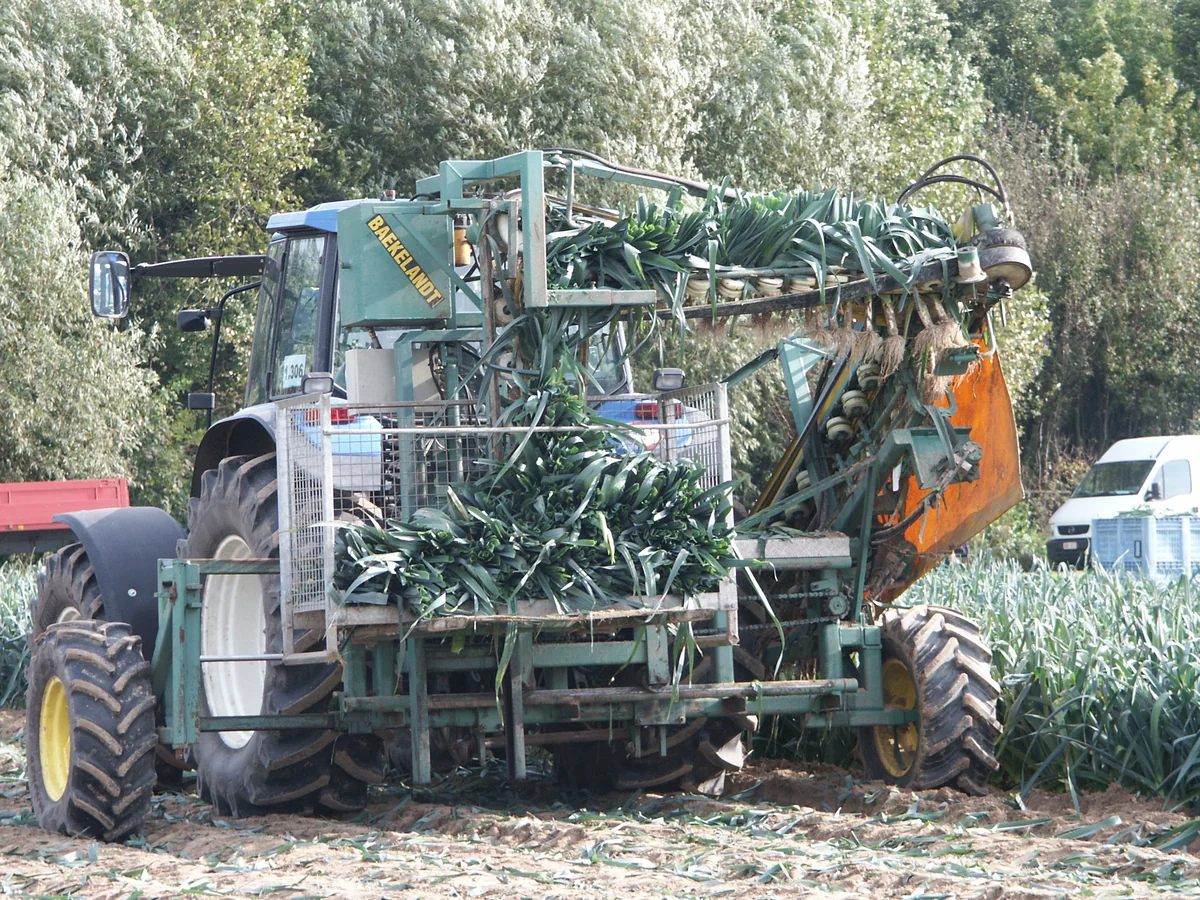
Days: UMD 70–120 depending on cultivar; may harvest as early as ~60 days (green-onion size) but generally 100–120 to mature; ready about 1 inch diameter. UMN quality shaft firm white >3 inches long; width often >1 inch (smaller types ½–¾ inch); bulbing at base undesirable. Method: dig or pull (UMD; UMN); large roots make digging easier. Clean thoroughly — soil between leaves (UMN: slice lengthwise and rinse). Yield (UMD): five or more pounds per 10-foot row. Storage: UMD best overwintered in garden under mulch; refrigerator 7 to 10 days.
Pests and diseases (organic)
Onion maggot: UMN: onion maggot bores stems → yellow wilt. Root-maggots guide: row covers by early–mid May egg lay; do not cover ground where onions grew last year (traps emerging adults); rotate; no spring animal/green manure that attracts flies. (UMN root maggots)
Allium leafminer: UMD: white spots in a straight line on leaves; cover Alliums with row cover/netting in February before adults emerge; keep covered through spring flight; cover fall plantings in September; delay spring plant to mid-May or delay fall plant ~2 weeks to miss flights; remove debris. Organic options neem or spinosad after white dots appear (follow label; add surfactant on waxy leaves). (UMD leafminers)
Diseases: UMN cultural practices; excess water → fungal disease risk. NC State: rot in overly moist poorly drained soils.
Related: how to grow shallots · how to grow garlic · when to plant onions · organic pest control · ZIP planner
Frequently asked questions
When do I transplant leeks?
Several weeks before last frost (UMD); NDSU chart 2 weeks before last frost. Start seed about 10 weeks before last frost (NDSU chart).
Do I have to hill them?
No, but hilling or deep planting lengthens the white shaft (UMD; UMN).
How do I stop onion maggot / allium leafminer without a spray?
Row cover timed before egg-laying, rotate off previous allium ground, and sanitation (UMN; UMD).
More grow guides: Asparagus · Peas · Cauliflower · Rhubarb · Parsley · Swiss chard · Radishes · Eggplant · Arugula · Cilantro · All grow guides
Sources
- University of Maryland Extension: UMD Extension; UMD leafminers
- North Dakota State University Extension: NDSU H1139
- University of Minnesota Extension: UMN Extension; UMN root maggots
- NC State Extension: Allium ampeloprasum