
When to Plant Onions: Fall or Spring? Timing by Region
Quick answer
It depends on where you garden. In the South, onions are planted in fall or winter for a late-spring harvest, and short-day types are the ones that bulb there. In the North, onions go in early in spring, as soon as the soil can be worked, using long-day types. Matching the onion’s day-length type to your region matters as much as the date.
Jump to
- Short-day vs. long-day onions: day length decides the type
- Can you plant onions in the fall like garlic?
- When to plant onions by region
- When to plant onions in Utah
- Onion sets, transplants or seed
- How deep and how far apart to plant onions
- Why fall-planted onions bolt (and how to avoid it)
- When onions are ready to harvest
- More guides
- Frequently asked questions
Updated
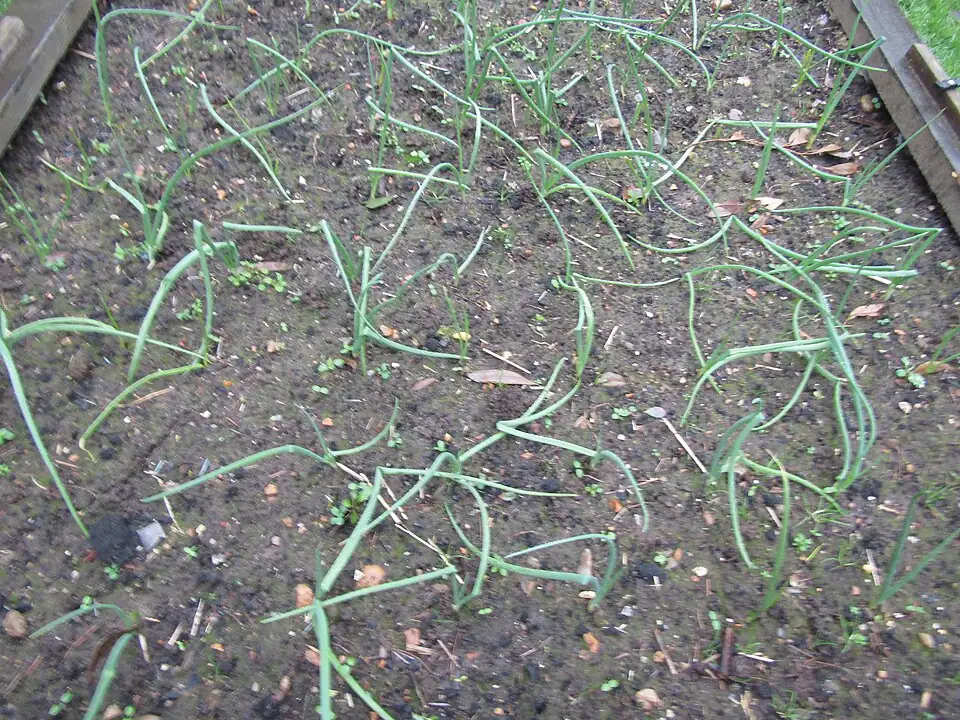

Onions can go in the ground in fall or in spring. Which one is right depends on where you garden and on the onion’s day-length type. Here’s how short-day, intermediate-day and long-day onions differ, whether you can plant onions in the fall like garlic, the planting windows extension services publish for each region, and how deep to plant onion sets.
Jump to: Short-day vs. long-day Planting onions in fall Timing by region Utah Sets, transplants or seed Depth and spacing Bolting Harvest
Short-day vs. long-day onions: day length decides the type
Illinois Extension: “Onions start bulb formation when the day length is of the proper duration and different varieties of onions require different day lengths to initiate bulbing.” Most varieties are long-day types (for northern latitudes) or short-day types (for southern latitudes), and “onion varieties that are grown in the South are not adaptable to the North and vice versa.”
- Short-day onions “bulb at approximately 10–12 hours of daylength” (NC State Extension). Clemson says they suit all of South Carolina.
- Intermediate-day onions “bulb at approximately 12–14 hours of daylength” (NC State). In South Carolina, Clemson says “Intermediate day onions may be grown in the Upstate.”
- Long-day onions “bulb at 14–16 hours of daylength” (NC State). Clemson: “Long day onions cannot be successfully grown in the South.” Illinois says they “may not get the bulbing signal in the Deep South and so should be avoided there.”
- Short-day onions in the North. Illinois: “Short-day varieties may perform acceptably in the North if the plants can be set out very early in the season.” University of Minnesota Extension says sweet or mild onions are short-day types and, grown in Minnesota, “they will generally develop small bulbs.” Its storage onions “generally are long-day types that require 14 or more hours of daylight to form bulbs.”
The type is about day length, not planting date. NC State: “Regardless of when they are planted, onions will not form bulbs until daylength reaches the cultivar’s critical threshold.” The hour ranges vary a little by source: Texas A&M AgriLife lists short-day as 11 to 12 hours, intermediate as 12 to 13, and long-day as 14 to 16, and Clemson says short-day types set bulbs with about 12 hours of daylight.
Can you plant onions in the fall like garlic?
In the South, yes. Fall is the main season there. In the North, onions usually go in early in spring, and overwintering them takes specific varieties, late-summer timing and protection.
- South Carolina: onions “are usually planted in the fall in South Carolina for late spring harvest.” (Clemson Extension)
- Florida: short-day onions “must be started in the fall (late September to mid-December) so that bulbing is induced by the short days of winter.” (UF/IFAS) Another UF/IFAS page says “In Florida, onions should be planted from September through December.”
- Mississippi: Mississippi State Extension says to sort sets into two sizes. Small sets (smaller than a dime) “planted in fall, may survive the winter to make bulb onions.” “Large sets planted in spring or fall generally flower”, so use them as green onions.
- Minnesota and Illinois: “Plant onions early in spring.” (UMN) Illinois says onions “can be planted as soon as the garden can be tilled in the spring, usually late March or early April in prime regions for producing onions.”
- Utah: “Onion seeds can also be planted in mid to late August for over wintering.” “Overwintered onions (special varieties) should be mulched late in the year to minimize winter damage.” (Utah State University Extension)
- New Hampshire: UNH Extension research found that “Fall-planted onions can survive well in low tunnels to produce very early spring bulbed onions.” Varieties “varied greatly in terms of sensitivity to bolting”, and “Planting early increased the chances of bolting in general”.
In northern areas, planting ordinary onion sets in fall the way you plant garlic is not the standard extension advice. The overwintering methods above use particular varieties, late-summer planting, and mulch or low tunnels. For garlic itself, see when to plant garlic.
When to plant onions by region
| Region (source) | Fall or winter planting | Spring planting |
|---|---|---|
| South Carolina Piedmont (Clemson) | Sets Sept 15 to Oct 15; plants Sept 15 to Oct 15 | Sets Feb 15 to Mar 30 |
| South Carolina coast (Clemson) | Sets Sept 15 to Nov 15; plants Oct 1 to Nov 15; seed Sept 15 to Oct 30 | Sets Feb 1 to Mar 15 |
| North Carolina (NC State, commercial growers) | Seed about Sept 10 to Oct 15; transplants late December through February | Seed about Jan 15 to Feb 25 |
| North Florida (UF/IFAS) | Seed mid-Sept to mid-Nov; transplants Nov to Jan | Not listed |
| Central and South Florida (UF/IFAS) | Seed in October; transplants Dec to Jan | Not listed |
| Texas (AgriLife) | Seed October through December | Transplants January to February; Lubbock calendar: transplants Jan 25 to Mar 4 |
| Utah, Wasatch Front (USU) | Overwintering: seed mid to late August (special varieties). USU’s fall-harvest table: Aug 1 to 10 | Hardy group, Mar 1 to Apr 15; transplants or sets in April |
| Minnesota (UMN) | Not listed | Seed and sets as soon as the soil is workable; transplants in May (UMN’s planting-dates list says mid-April for seeds, transplants and sets) |
| Illinois (Illinois Extension) | Not listed | As soon as the garden can be tilled, usually late March or early April |
About this table: Planting windows as each source states them: Clemson Extension, NC State Extension (its commercial production guide), UF/IFAS CV299, Texas A&M AgriLife and its Lubbock planting calendar, Utah State University Extension and its Wasatch Front planting dates, University of Minnesota Extension and its planting-dates list, and Illinois Extension. Check your state extension office for local dates.
Clemson’s two transplant dates. Clemson’s table lists onion plants in fall (above), but the same fact sheet also says to “Set out transplants from late December through February.” and that “Onions grown from transplants should be planted in the early spring for best results.” We show both as published.
Onions and your last frost date. Onions are among the first crops planted in spring. Utah State University Extension puts onion seed in its hardy group, planted “as soon as the soil dries out in the spring.” Its next group goes in “a week or two after 'A' group or about 2 weeks before average last spring frost.” So onions go in before your last frost date. Look up your last frost date or enter your ZIP in the planner. Regional state calendars: North Carolina, Georgia, Texas, Utah, Ohio, Pennsylvania, Michigan.
When to plant onions in Utah
Plant in spring, as soon as the soil dries out. On the Wasatch Front, USU’s hardy group, which includes onions, has an “Average Planting Date: March 1 - April 15” (USU Extension). For early production, “use transplants or sets and plant these out in April.” If you plan to store the onions, USU says to plant transplants or sets “in late April.” For overwintering, seed goes in from mid to late August (see above), and “Overwintered onions generally mature in June or July.” USU notes that “Vegetable planting dates for the Washington County area are different than most of the rest of Utah.” For local dates, see USU’s Utah planting dates and the Utah planting calendar.
Onion sets, transplants or seed
- Three ways to start. Onions “are grown either from seed, sets (tiny immature bulbs), or transplants.” (Clemson Extension)
- Transplants for big bulbs. Illinois says transplanting “is the method of growing that most regularly produces large, dry, attractive onions for slicing”.
- Sets: choose small ones. Clemson: “Onions grown from sets do not make the best bulbs, and are rather costly. Avoid sets more than an inch in diameter, as they are likely to bolt.”
- Northern buyers, check the type. UMN: “Most of the sets available in Minnesota are of the short-day type.”
- Sets are the quick route in Florida. UF/IFAS: “You can grow onions from seed, but it’s quicker and easier to plant “sets.””
How deep and how far apart to plant onions
| Source | Depth | Spacing |
|---|---|---|
| Clemson (South Carolina) | Sets 1½ in.; seed ½ in. (½ to ¾ in. in its seed section); transplants 1 to 1½ in. | 3 in. for bulb onions; transplants 3 to 4 in.; rows 1 to 2 ft |
| Texas A&M AgriLife | Sets or transplants ¾ in., never more than 1 in.; seed ¼ in. | Sets and transplants 3 in.; seed 1 in., thinned to 2 to 3 in. |
| Illinois Extension | Small sets 1 in.; transplants 1 to 1½ in. | Sets 2 to 4 in.; transplants 4 to 5 in.; rows 12 to 18 in. |
| Utah State | Seed ¼ to ½ in. | Seeds, sets or transplants 3 to 4 in.; rows 8 to 16 in. |
| UF/IFAS (Florida) | Sets about 1 in. | 4 to 6 in.; a foot between rows |
About this table: Depth and spacing per source: Clemson Extension, Texas A&M AgriLife, Illinois Extension, Utah State University Extension and UF/IFAS. The sources differ, but the pattern is shallow (about 1 inch or less for most) with 2 to 6 inches between bulb onions.
AgriLife: “Do not transplant onions more than 1 inch deep.” For green onions, Illinois plants the larger sets “1½ inches deep and close enough to touch one another”.
Why fall-planted onions bolt (and how to avoid it)
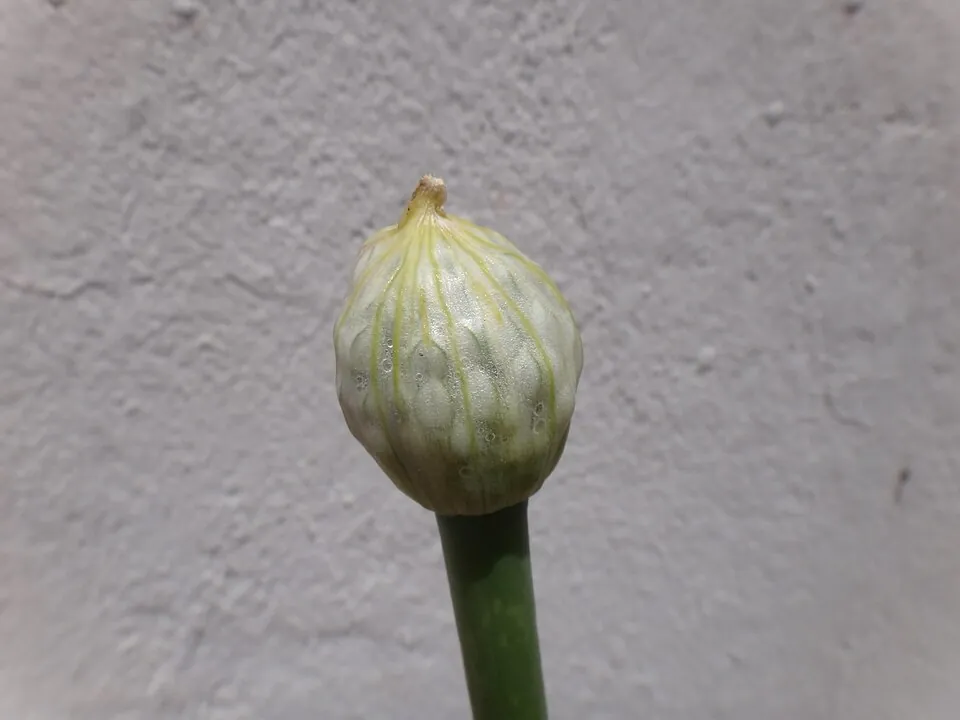

Clemson: “Onions will bolt (produce a flower stalk) if exposed to a prolonged cold period following a favorable growing period. This results in small bulbs with large necks which are hard to cure and generally unusable. The larger the plants are at the time of exposure to the cold period the higher the rate of bolting.”
- Use small sets and transplants. “Select onion sets of an inch or less and transplants about 6 inches high and about half the thickness of a lead pencil.” (Clemson)
- Plant on time. Clemson: “Plant at the correct time for your area.” NC State says “planting too early in the fall can increase the risk of bolting”, and that “When onions are planted within recommended windows, bolting is uncommon unless plants are exposed to prolonged or extreme cold conditions.”
- Go easy on fall fertilizer. Clemson: “Avoid high fertilizer rates applied in the fall.”
- Pull bolted plants. Illinois says to remove plants that have formed flower stalks and use them right away, because “They do not produce good bulbs for dry storage.”
When onions are ready to harvest
- Texas: “Onions seeded in October/December or transplanted in January/February should produce bulbs in May/July.” (Texas A&M AgriLife)
- Florida: “Your onions should be ready to harvest in four to five months, typically when one-quarter of the green tops have fallen over.” (UF/IFAS)
- Utah, overwintered onions: June or July (USU).
- Signs they’re ready: UMN: “Harvest onions when about half the tops are falling over and dry.” Clemson says to harvest when about three-fourths of the tops have fallen over and to “Thoroughly air-dry bulbs in a shaded area before storage.”
Onion pests and diseases (organic)
Clemson: “Diseases are seldom a problem of onions in the home garden. Good cultural practices will help prevent disease. Never plant onions in the same area more often than once every four years. Plant in well-drained soil or raised beds. To avoid storage diseases, be sure onions are well-cured before storing.” “The most damaging insect pests of onions are the onion maggot… and onion thrips…” (Clemson HGIC)
Onion maggot: Prevention is best. Avoid overfertilization with manure; cover seedbeds with protective cloth; plant transplants when possible (UC IPM).
Onion thrips: “Thrips are the most common insect pest of onion.” Overhead irrigation and rainfall suppress numbers (UC IPM). Compost, mulches, or a stiff water spray help (USU). Labeled products only per the label. UMass: silver lines and tip dieback; scout between leaf blades (UMass Extension).
Aphids: strong water spray; insecticidal soap or oil; follow the label (UC IPM).
Diseases: four-year rotation, well-drained or raised beds, cure thoroughly before storage (Clemson). Purple blotch: avoid long wet foliage (UC IPM). Shared pests also on shallots.
More guides
When to plant garlic How to grow garlic What vegetables to plant in fall Frost dates Planting calendar by ZIP Planting tips
Scallions / green onions (section)
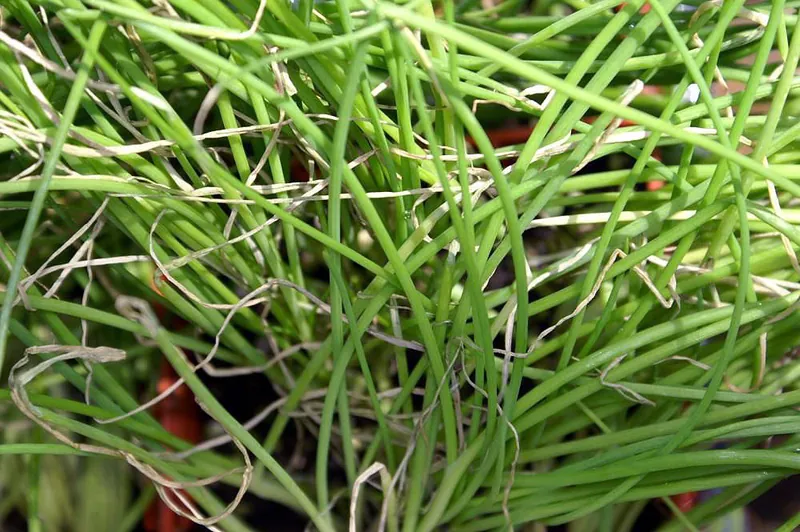

Not a separate thin page — scallions / green onions stay on the onions timing guide.
Spring / fall cues from HO-186: Purdue lists onion in its hardy group for spring planting and lists green onion among crops for a fall planting window of at least 4–8 weeks ahead of the first fall frost. (Purdue HO-186-W) For the ZIP planner, map spring green onions with the hardy onion group (about −6 to −4 from last frost) and fall green onions at about −8 to −4 from first frost.
UMD: plant onions in early spring from sets, transplants, or seed “for bulb onions and for green or bunching onions.” Thin to about 2 inches for green onions; rows 12–24 inches; green onions can grow with about 5 hours of sun a day. Use thinnings as green onions. (UMD onions) Missouri lists green onion about 25–35 days for quick greens.
Prefer cultural controls from onion pages (allium leafminer, bolting from planting too early, white rot): do not plant too early; rotate; drainage.
Frequently asked questions
Can you plant onions in the fall like garlic?
In the South, yes: fall is the main season. Clemson Extension says onions are usually planted in fall in South Carolina for a late-spring harvest, and UF/IFAS says Florida’s short-day onions must be started in fall (late September to mid-December). In the North, onions are usually planted early in spring. Overwintering there uses specific varieties, late-summer timing and protection: Utah State University Extension says onion seed can be planted in mid to late August for overwintering, with special varieties mulched late in the year, and UNH research found fall-planted onions survived well in low tunnels.
When do you plant onions in Utah?
In spring, as soon as the soil dries out. Utah State University Extension puts onions in its hardy group, with an average planting date of March 1 to April 15 on the Wasatch Front, and says to plant transplants or sets in April for early production. For overwintered onions, seed goes in from mid to late August, and those onions generally mature in June or July. Washington County has different planting dates.
What is the difference between short-day and long-day onions?
The day length that starts bulbing. NC State Extension says short-day onions bulb at about 10 to 12 hours of daylength, intermediate-day onions at about 12 to 14 hours, and long-day onions at 14 to 16 hours (Texas A&M AgriLife gives slightly different ranges). Short-day types suit the South and long-day types suit the North. Illinois Extension says long-day types may not get the bulbing signal in the Deep South.
How deep do you plant onion sets?
About an inch for most sources. Illinois Extension plants small sets 1 inch deep for bulb onions, Texas A&M AgriLife says ¾ inch and never more than 1 inch, UF/IFAS says about an inch, and Clemson Extension says 1½ inches. Spacing for bulb onions runs from 2 to 6 inches apart, depending on the source.
Why did my onions bolt?
Onions bolt, or send up a flower stalk, after a long cold spell that follows good growing weather, and the larger the plant when the cold arrives, the more likely it is to bolt (Clemson Extension). Large sets, planting too early in fall and high fall fertilizer raise the risk. Clemson suggests sets an inch or less across and transplants about 6 inches tall and half the thickness of a pencil. Bolted onions make small bulbs with thick necks that are hard to cure.
Sources
- University of Illinois Extension: Onion
- NC State Extension: Bulb Onions
- University of Minnesota Extension: Growing onions in home gardens; Planting the vegetable garden
- Texas A&M AgriLife Extension: Onions; Vegetable Planting Calendar, Lubbock (PDF)
- Clemson Cooperative Extension: Onion, Leek, Shallot & Garlic
- UF/IFAS Extension: Five Fall Vegetables for the Home Garden; Onion, Leek, and Chive Production (Florida Vegetable Handbook, Ch. 12, CV299); Onions and Shallots
- Mississippi State University Extension: Onions
- Utah State University Extension: How to Grow Onions in Your Garden; Suggested Vegetable Planting Dates for the Wasatch Front; Suggested Vegetable Planting Dates for Utah
- UNH Extension: Research Report: Overwintering Onions, 2014–2015
- Clemson Cooperative Extension: Onion, Leek, Shallot & Garlic
- University of California Agriculture and Natural Resources (UC ANR): UC IPM: Onion maggot; UC IPM: Thrips; UC IPM: Purple blotch; UC IPM: Aphids
- Utah State University Extension: Shallots in the garden
- UMass Extension: Onion thrips
- Purdue Extension: HO-186-W
- University of Maryland Extension: Onions