
Winter Cover Crops by Zone: What to Plant and When
Quick answer
Sow winter cover crops about 30 days before your first fall frost (UMass Extension rule). Find your zone’s “sow by” date in the zone table below. In Maryland that means mid-August to mid-October (University of Maryland Extension). Oats are the easiest first choice because they die over winter; winter rye is the hardiest and can go in the latest, into early November in Pennsylvania (Penn State). Add crimson clover or hairy vetch for nitrogen. Cut or turn them under before they set seed, at least two to three weeks before planting (Penn State).
Jump to
- What a winter cover crop does for garden soil
- Best winter cover crops for a vegetable garden
- When to plant cover crops in zone 5–9
- Cover crop planting dates by region
- Missed the window? What to do instead
- How to plant a cover crop in a garden bed or raised bed
- Cover crops for raised beds
- When to terminate winter rye
- More guides
- Frequently asked questions
Updated
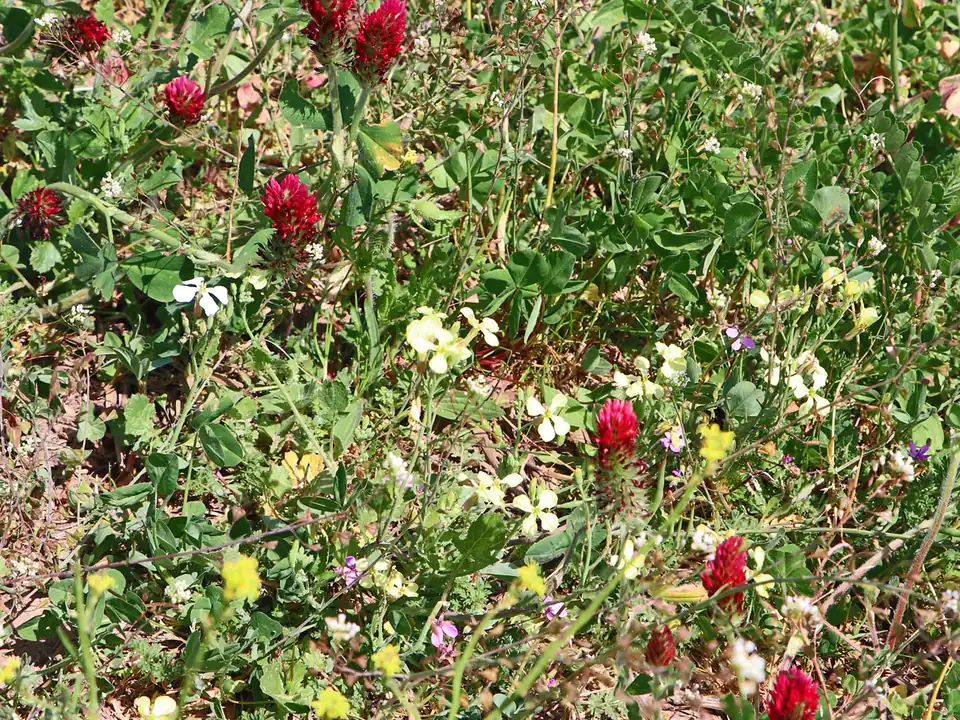

Winter cover crops are grains, grasses, brassicas and legumes you sow in a garden bed in late summer or fall and turn under in spring. This guide covers which winter cover crop to pick for a vegetable garden or raised beds, how much seed to sow, when to plant cover crops by zone, what to do if you missed the window, and how to end them in spring, all from university extension guides.
Jump to: Why plant one Best cover crops for gardens When to plant by zone Regional dates Missed the window? How to sow Ending it in spring
What a winter cover crop does for garden soil
- Protects bare soil. Penn State Extension says cover crops reduce compaction, capture excess nutrients and prevent erosion, and add organic matter when they are turned under. University of Maryland Extension adds that they feed the soil microbes that build good soil texture and drainage.
- Legumes add nitrogen. “Legume roots partner with special bacteria that convert nitrogen in the air into a plant-usable form.” Clovers and vetches are the common garden legumes.
- Grains hold on to leftover nutrients. UNH Extension calls rye, oats and tillage radish “scavengers”: they take up nutrients that would otherwise leach away and release them when you end the crop in spring.
- Rye can hold back small seeds. UNH says small grains, especially winter rye, contain natural chemicals that can stop other seeds from germinating. That helps with weeds, but it can affect the vegetables you sow next, too.

Best winter cover crops for a vegetable garden
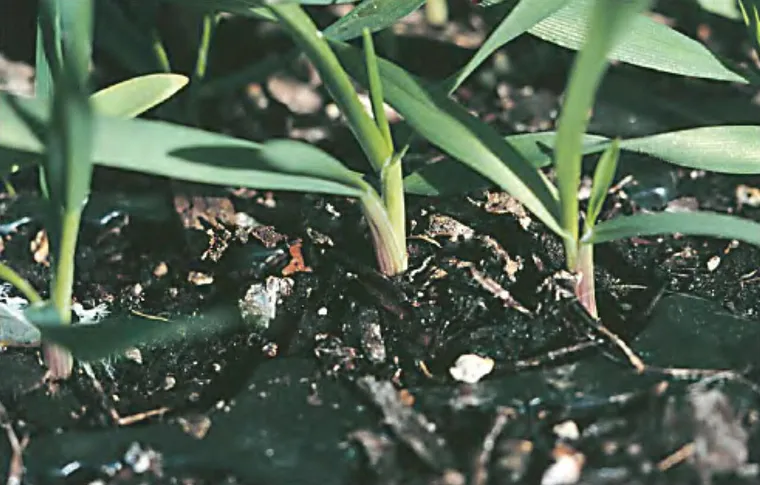
The grains (rye, wheat, barley, oats) grow fast and make the most roots. The legumes (crimson clover, hairy vetch) add nitrogen. University of Maryland Extension suggests oats for your first try: “Oats are killed by the first hard freeze, leaving a brown decomposing mat in spring.” That makes them the easiest to plant through in spring.
| Cover crop | Type | Seed per 100 sq ft | Survives winter? | Notes (University of Maryland Extension) |
|---|---|---|---|---|
| Winter rye (Secale cereale) | Grain | 3 to 4 oz | Yes, very hardy | Massive root system breaks up dense clay; can be planted the latest in fall |
| Winter wheat (Triticum aestivum) | Grain | 3 to 4 oz | Yes | Deep roots; easier to manage and end in spring than rye or barley |
| Barley (Hordeum vulgare) | Grain | 3 to 4 oz | Less hardy than rye | Tolerates drought |
| Oats (Avena sativa) | Grain | 3 to 4 oz | No, killed by the first hard freeze | Tolerates acidic soil; UMD’s pick for a first cover crop |
| Crimson clover (Trifolium incarnatum) | Legume | 1 to 2 oz | Sometimes (cold hardy to 0°F, Purdue) | Showy spring blooms |
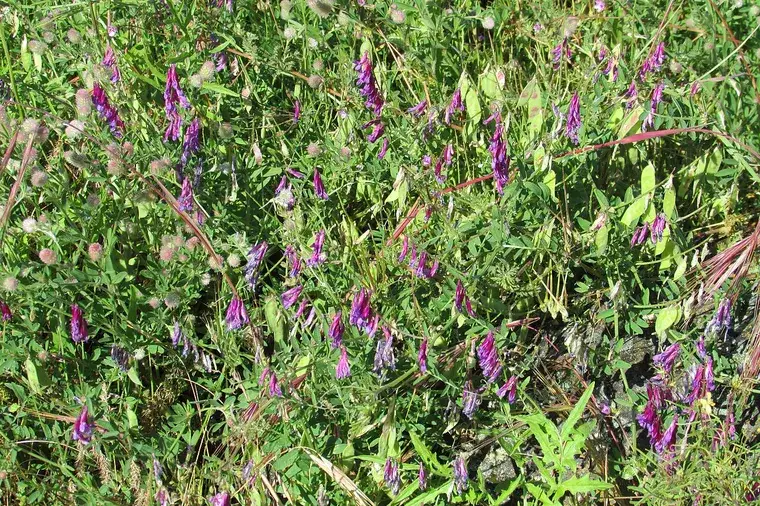
| Hairy vetch (Vicia villosa) | Legume | 3 to 4 oz | Yes, very hardy | Slow to establish; can become weedy, so turn it under at bloom before it sets seed |
| Forage (daikon) radish (Raphanus sativus) | Brassica | 1 to 2 oz | Usually winter-kills | Wide, deep taproots break up clay; watch for harlequin bug |
About this table: Seed amounts are ounces for a 100-square-foot bed planted with one crop, from the selection chart in University of Maryland Extension. Winter hardiness for crimson clover is from Purdue Extension; UNH calls it “Marginally winter hardy in many NH locations”.
- Mixing two crops. UMD says to combine a legume and a non-legume when you can, using about 60% of the single-crop amount of each. Purdue instead cuts each crop by its share of the mix, so a 50:50 rye and vetch mix gets half the rate of each.
- Winter rye is not annual ryegrass. Cereal rye is a grain. Annual ryegrass is a different plant that UMass Extension says usually dies over winter but “may survive and continue growing in spring” after a mild one, and must be tilled under before it sets seed heads.
- Austrian winter pea is another legume option; Purdue rates it cold hardy to 10°F.

When to plant cover crops in zone 5–9
UMass Extension: “As a general rule, cover crops should be planted about 30 days before the first expected frost date.” Winter rye and winter wheat can go in a little closer to that date, because much of their growth happens in early spring. Penn State Extension says winter rye “will still germinate as low as 35°F”, which is why it is the usual late choice.
| USDA zone | Median first fall frost (earlier to later locations) | Sow most cover crops by | Where things stand in early November |
|---|---|---|---|
| Zone 3 | Sep 23 (Sep 7 – Oct 1) | about Aug 24 | Past for this year; plan for late August next year |
| Zone 4 | Sep 30 (Sep 19 – Oct 7) | about Aug 31 | Past for this year |
| Zone 5 | Oct 7 (Sep 26 – Oct 18) | about Sep 7 | Past for this year |
| Zone 6 | Oct 19 (Oct 5 – Oct 28) | about Sep 19 | Past for most crops; winter rye can go in as late as early November (Penn State Extension, written for Pennsylvania) |
| Zone 7 | Oct 28 (Oct 17 – Nov 8) | about Sep 28 | Late for most crops; Penn State lists winter rye until November |
| Zone 8 | Nov 10 (Oct 31 – Nov 20) | about Oct 11 | Winter rye still fits: USDA ARS gives late September to late November for the Southeast |
| Zone 9 | Dec 3 (Nov 17 – Dec 26) | about Nov 3 | Still open in Florida: winter rye Oct. 15 to Nov. 15; crimson clover, hairy vetch and black oats Oct. 1 to Nov. 15 (UF/IFAS) |
| Zone 10 | Dec 26 (Dec 13 – Jan 9); frost is rare at 70% of zone 10 ZIP codes’ nearest stations | about Nov 26 | Frost is rare in much of zone 10; UF/IFAS says winter cover crops may not be ideal in South Florida |
About this table: For each ZIP code we use the nearest NOAA NCEI 1991–2020 U.S. Climate Normals station’s 50%-probability first-fall date for 32°F (half of years frost earlier). We show the median across the zone’s ZIP codes, with the 10th–90th percentile range, from data/zonefrost.json, built from NOAA NCEI 1991–2020 U.S. Climate Normals. The “sow by” date is our arithmetic: the median minus 30 days, per the UMass rule above. It is not a date any extension service publishes. Enter your ZIP in the planner for the dates at your nearest NOAA station.
Zone 11 is frost-free; summer cover crops such as cowpeas fit better there (UF/IFAS).
Cover crop planting dates by region
- Maryland: a two-month window from mid-August to no later than mid-October, ideally Aug. 15 to Oct. 1, so plants grow before the first hard frost and short days stop them (University of Maryland Extension).
- Pennsylvania: “Plant oats until September, wheat until October, and winter rye until November”; annual ryegrass August through October; brassicas such as tillage radish in August; clovers in August or September (Penn State Extension).
- New Hampshire: winter rye as late as early October in southern parts of the state; hairy vetch and clovers no later than Sept. 15 (UNH Extension).
- North Carolina: crimson clover Aug. 10 to Sept. 15 in the mountains and Aug. 25 to Oct. 1 in the piedmont; in the coastal plain, Sept. 1 to 30 is preferred and Oct. 30 is the latest. Planting from late October to November in the piedmont and mountains raises the risk of winter kill (NC State Extension).
- Southeast: cereal rye planting date “Late September to late November” (USDA ARS).
- Florida: crimson clover, hairy vetch and black oats Oct. 1 to Nov. 15; winter rye Oct. 15 to Nov. 15. “Because of South Florida's climate, winter cover crops may not be ideal choices for cultivation.” (UF/IFAS).
- Central Texas: for November beds, Texas A&M AgriLife Extension (Travis County) lists cereal rye, hairy vetch, fava beans, clover or Austrian winter peas.
- California’s Central Valley: “September through October is the optimal time to plant most winter cover crops in Yolo County.” Fava beans and ryegrass can go in as late as early December (UC Master Gardeners of Yolo County).
Missed the window? What to do instead
Seed sown too late can’t make enough growth to cover the soil or grow roots strong enough to survive winter (UNH Extension). In that case, University of Maryland Extension says: “If you have not planted a cover crop, keep vegetable garden beds covered with autumn leaves or mulch to minimize the risk of soil erosion, nutrient runoff, and weed germination.” See what to do with fall leaves for using them as mulch, and use the zone table above to plan next year’s sowing date.
How to plant a cover crop in a garden bed or raised bed
- Clear and loosen. Remove spent plants, weeds and summer mulch, loosen the soil with a garden fork and rake it smooth. Where vegetables are still producing, pull back the mulch and rake between them (UMD). You don’t need a rototiller; scratch the surface with a rake or hoe (UNH).
- Broadcast the seed by hand or with a hand-held spreader, preferably before a rain. Mixing the seed with soil or compost makes it easier to spread evenly (UMD).
- Rake it in and press it down. Rake the seed lightly into the surface, then walk on it or firm the soil so the seed touches soil (UMD; UNH).
- Water it in with a hose set to a fine mist (Penn State). Small seed such as clover can be covered with a little compost to hold moisture (UC Master Gardeners of Yolo County).
- Inoculate legumes. Coat clover, vetch or pea seed with the matching Rhizobia inoculant just before sowing (UMD; UC Yolo).
Cover crops for raised beds
Raised beds: UNH says cover crops “can work with small gardens or a few raised beds”. Erosion is less of a problem in raised beds than in in-ground gardens, especially on slopes.
When to terminate winter rye
- Before it goes to seed. UMD: cover crops are mowed, flattened or turned into the soil before going to seed, usually in late April or early May in Maryland. Cut them down with a mower, string trimmer or spade, smother them with a tarp, or mow and then tarp.
- Leave time before planting. UMD allows about 2 weeks for the cut plants to break down (oats and usually radish don’t need it). Penn State Extension says “turn under at least two to three weeks before planting the garden”.
- Winter rye takes planning. Penn State turns it under at 10 to 12 inches tall, or mows it first. UMass says rye takes about two weeks to decompose and briefly ties up soil nitrogen while it does. UNH says rye “May be difficult to terminate if left to grow after late May”.
- Hairy vetch reseeds itself readily and can become a weed (UNH), so cut it at bloom.
- Legumes give the most nitrogen at flowering; in California’s Yolo County that is usually mid-March through April (UC Master Gardeners of Yolo County).
- Rotate families. Tillage radish is a brassica, so UNH says not to follow broccoli, cabbage or cauliflower with it. Penn State notes that clovers and other legumes draw deer.
For feeding the soil after the cover crop, see organic fertilizer basics.
More guides
What to do with fall leaves What vegetables to plant in fall and winter November garden tasks by zone Frost dates by ZIP ZIP planner Planting tips
Frequently asked questions
When should I plant a winter cover crop?
About 30 days before your first expected fall frost, per UMass Extension; winter rye and winter wheat can go in a little later. In Maryland that means mid-August to mid-October, ideally Aug. 15 to Oct. 1 (University of Maryland Extension). Penn State says winter rye can be planted as late as early November because it germinates as low as 35°F.
What is the best winter cover crop for a vegetable garden?
University of Maryland Extension suggests oats for a first try, because they die in the first hard freeze and leave a mat you can plant through in spring. Winter rye is the hardiest and can be sown the latest. For nitrogen, add a legume such as crimson clover or hairy vetch; UMD suggests mixing a legume and a grain at about 60% of each crop’s single rate.
When to plant cover crops in zone 6 or zone 7?
By our NOAA-based count, about Sept. 19 in zone 6 and Sept. 28 in zone 7, which is the median first frost minus 30 days per UMass Extension. By early November most crops are too late there, but Penn State says winter rye can still go in as late as early November and lists winter rye until November.
Can you plant cover crops in raised beds?
Yes. UNH Extension says cover crops can work with small gardens or a few raised beds. Sow by broadcasting the seed, rake it in lightly and firm the soil. Oats are the easiest choice for beds you want to plant early in spring, since they die over winter (University of Maryland Extension).
How much winter rye seed do I need for a garden?
University of Maryland Extension gives 3 to 4 ounces per 100 square feet for a bed of winter rye alone. Crimson clover and forage radish need only 1 to 2 ounces per 100 square feet.
When should I cut or turn under winter rye?
Before it sets seed, and at least two to three weeks before you plant (Penn State Extension). Penn State turns it under when it is 10 to 12 inches tall, or mows it first. UMass says rye takes about two weeks to decompose, and UNH warns it may be hard to end if left to grow after late May.
Is it too late to plant a cover crop in November?
In zones 3 to 6, usually yes: seed sown too late can’t grow enough to cover the soil or survive winter (UNH Extension). Cover the beds with leaves or mulch instead (University of Maryland Extension). In the South it is not too late: Florida lists winter rye through Nov. 15 (UF/IFAS) and USDA ARS gives late September to late November for cereal rye in the Southeast.
Sources
- Penn State Extension: Tips for Planting Cover Crops in Home Gardens
- University of Maryland Extension: Cover Crops for Gardens; November Gardening Tips and Tasks
- UNH Extension: Cover Cropping for the Home Garden
- Purdue University Plant and Pest Diagnostic Lab: Cover Crops in the Home Garden (HO-324)
- UMass Extension: Cover Crops (fact sheet, PDF)
- USDA Agricultural Research Service: Cover Crops for the Southeast: Cereal Rye (FS04i)
- UF/IFAS Extension: Cover Crops (Solutions for Your Life)
- NOAA National Centers for Environmental Information: U.S. Climate Normals 1991–2020
- NC State Extension: Winter Annual Cover Crops
- Texas A&M AgriLife Extension: November Gardening Checklist for Austin and Central Texas
- University of California Agriculture and Natural Resources (UC ANR): Winter Cover Crops for the Home Garden (PDF)