
What to Do With Fall Leaves: Leave Them, Mulch Them or Make Leaf Mold
Quick answer
Leave healthy leaves in perennial and shrub beds over winter, mow them into the lawn when they cover the grass, and rake out leaves from diseased plants and from the vegetable garden. Extra leaves can be shredded for mulch or piled to make leaf mold.
Jump to
Updated
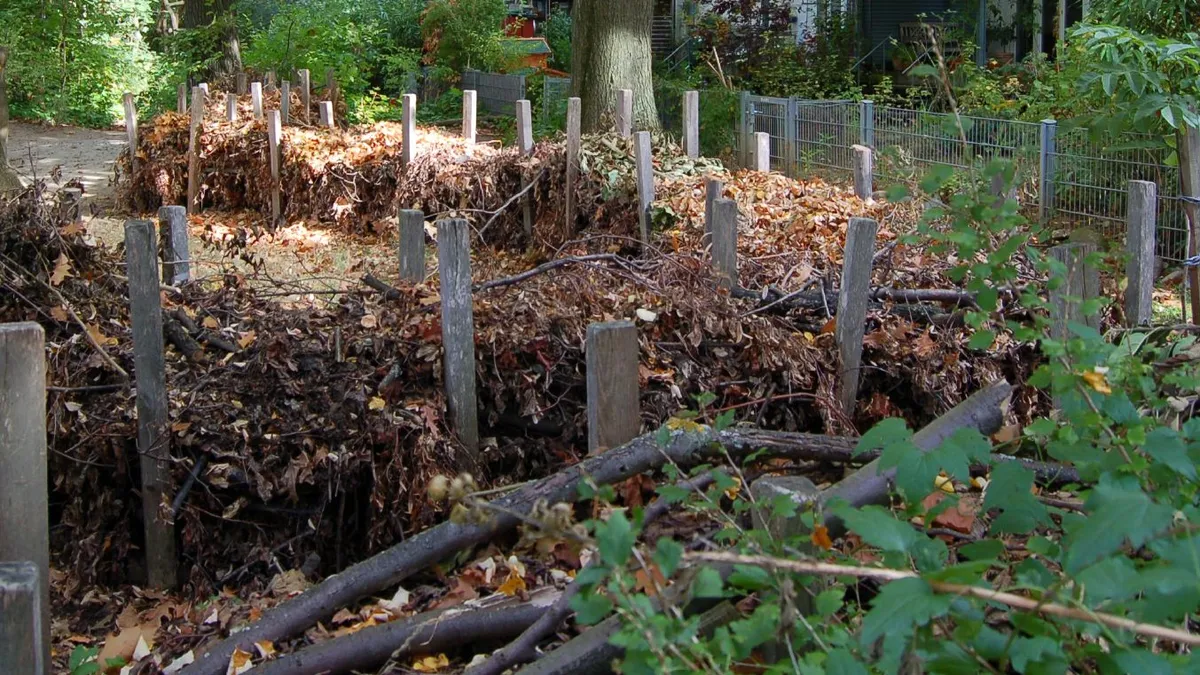

Fallen leaves don’t have to go to the curb. Most of them can stay where they land in flower and shrub beds, be shredded into the lawn with a mower, or be piled up to make leaf mold. A few, from diseased plants and from the vegetable garden, should be raked out. Here’s which leaves go where, when to start, and how to turn the extras into free mulch.
Jump to: Leave the leaves in beds When to start Leaves on the lawn Shredded leaf mulch How to make leaf mold Leaves to throw out
Leave the leaves in perennial and shrub beds
Iowa State Extension: “Leaves in garden beds can be left over winter to provide protection for plant root systems and overwinter insects and wildlife.” Its rule of thumb: “Overall, the goal for fall cleanup is to leave behind as much as we can to overwinter.” The exceptions it names are “particularly in the vegetable garden and lawns” (see lawns and leaves to throw out below).
Leaving leaves, stems and seed heads in place and removing them in early spring, rather than in fall, “also helps provide food and protection to native pollinators, beneficial insects, and wildlife, such as birds.” Just don’t bury your plants: “Be sure not to layer leaves too thick as they can smother the crowns of perennials if too deep.” (Iowa State Extension)
For which stems and seed heads to keep standing, see which perennials to cut back in fall (and which to leave).
When to start: after frost kills the tops
Iowa State: “When the leaves start to fall and frost kills back garden plants, cleanup (or lack thereof) can begin.” (Iowa State Extension) So the first fall frost is your starting signal. In zones 3 to 7 the typical first frost has already passed by early November, zone 8 usually reaches it around Nov 10, and in zone 9 and warmer it is still ahead. Enter your ZIP in the planner for the dates at your nearest NOAA station.
| USDA zone | ZIP codes | Typical first fall frost, median (10th–90th pct) |
|---|---|---|
| Zone 3 | 223 | Sep 23 (Sep 7 – Oct 1) |
| Zone 4 | 1,950 | Sep 30 (Sep 19 – Oct 7) |
| Zone 5 | 4,869 | Oct 7 (Sep 26 – Oct 18) |
| Zone 6 | 9,140 | Oct 19 (Oct 5 – Oct 28) |
| Zone 7 | 7,068 | Oct 28 (Oct 17 – Nov 8) |
| Zone 8 | 5,253 | Nov 10 (Oct 31 – Nov 20) |
| Zone 9 | 3,241 | Dec 3 (Nov 17 – Dec 26) |
| Zone 10 | 1,265 | Frost occasional to rare (70% of zone 10 ZIP codes’ nearest stations record 32°F in fewer than half of years). Where frost is regular: Dec 26 |
| n/a | Frost rare; no frost date |
About this table: For each ZIP code we use the nearest NOAA NCEI 1991–2020 U.S. Climate Normals station’s 50%-probability 32°F first-fall-frost date (half of years frost earlier). Median across the zone’s ZIP codes, with the 10th–90th percentile range. Source: data/zonefrost.json, from NOAA NCEI 1991–2020 U.S. Climate Normals. These are frost dates, not leaf-drop dates.
Leaves on the lawn: mulch them with the mower, or rake them
Don’t leave a thick blanket of leaves on grass. Iowa State says the leaf layer can block light, “causing areas of the lawn to die back and leaving behind patchy, unsightly areas of dead grass that are more prone to weeds.”
- Mulch leaves with a lawn mower instead of raking. “The leaves must be chopped into pieces small enough to fall down between the blades of grass. When finished, very little leaf debris should be visible.” “Mowing is best done when the layer of leaves is thin and dry, so it's recommended to mow often throughout the fall. If the leaf layer is thick, mow over an area more than once.” (Iowa State Extension)
- It doesn’t hurt the lawn. Penn State: “Research conducted at Michigan State University found no negative effects of mulching leaf litter into the turf.” The grass improved, “with fewer broadleaf weeds”, and the leaves “had no effect on the soil pH, whether oak or maple leaves were used.” (Penn State Extension)
- Where little or no grass shows, collect the leaves by raking, blowing or the mower’s bag, then compost them, send them to a composting facility, or move them to beds as winter mulch (Iowa State Extension).
How deep is too deep over winter? Our when to stop mowing your lawn in fall guide has Wisconsin’s 2-inch and 4-inch rule for shredded leaves on the lawn.
Shredded leaves as mulch for beds, trees and shrubs
Penn State: “Shredded leaves can also be applied as a 2 to 4-inch-thick layer of mulch around trees and shrubs or on perennial beds.” Because they are shredded, they “tend to mat down less than whole leaves”, and watering the mulch after you spread it helps it stay in place. “The leaf mulch will help to moderate soil temperatures, retain soil moisture, and keep down weeds.” (Penn State Extension)
Mulching tender plants for winter protection has its own timing. See how to protect shrubs in winter and the winter mulch notes in our perennial cut-back guide.
For trunk wraps and rabbit guards, see how to protect young trees in winter.
How to make leaf mold
“Essentially decayed leaves, leaf mold is similar to compost”. Although it “is not high in nutrients”, Penn State calls it “an excellent soil amendment that improves the structure of the soil, increases soil water retention”, and “unlike compost or manure, leaf mold is mostly weed-free.” (Penn State Extension)
- The simple way: “form a pile of leaves, pack them down, water them, and wait a couple of years.” A wood or wire bin, “3 to 6 feet in diameter and at least 3 feet in height”, helps keep the leaves contained. A large plastic bag works too: moisten the leaves, then close it loosely (“allow some airflow”) and let it sit (Penn State Extension).
- To make leaf mold faster, shred the leaves first. UF/IFAS: “the decay process will be quicker if the leaves are chopped with a lawn mower or weed whacker.” Penn State says shredding, turning the pile occasionally, adding water occasionally or covering it with a tarp can speed things up “from years to 6 to 12 months”.
- How long it takes: “Leaf mold takes anywhere from six months to two years to finish, depending on leaf type, moisture, and ambient temperature.” (UF/IFAS Extension Leon County)
- When it’s ready: it looks like compost, “dark and crumbly, with no large clumps of leaves.” “Incorporate it into the top 4 to 8 inches of soil”, or spread a thin layer on top as mulch (UF/IFAS).
- Its limits: leaf mold “doesn’t kill weed seeds or suppress plant diseases.” (UF/IFAS)
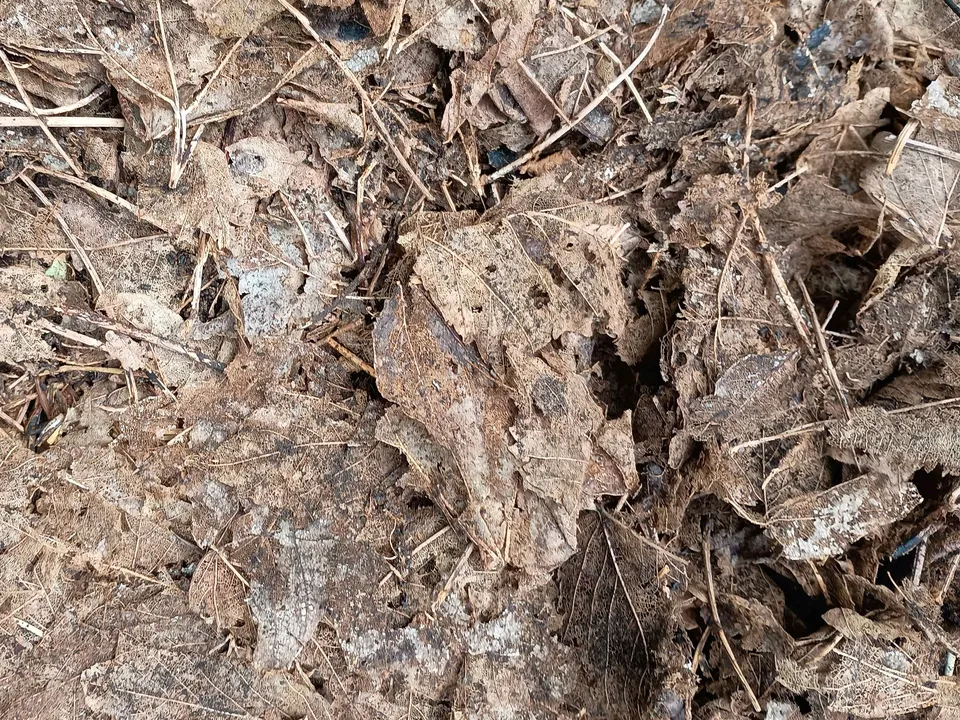

Leaves to rake up and throw out
- The vegetable garden. Iowa State says good fall cleanup there means “removing all leaves, stems, fruit, and other plant parts after the first frost”, because most vegetable crops have disease or pest problems that overwinter on plant debris. Compost it only if your pile heats up to “at least 140°F”: “Most home compost piles do not reach this temperature, but most municipal composting facilities do.”
- Under fruit trees. “Rake and discard fallen leaves that may harbor pathogens, like apple scab spores.” Pick up dropped fruit too, to reduce overwintering insects such as codling moth and apple maggot (Iowa State).
- Diseased shrubs and perennials. Leave what you can, “but clean up leaves from diseased shrubs, such as lilac with leaf spot.” Iowa State also says the debris of bee balm and phlox with heavy powdery mildew, and of iris with borers, is best removed and destroyed. Don’t put it in the home compost: “Most home compost piles do not get hot enough to kill pathogens, insect larvae, or weed seeds.” (Iowa State Extension)
- Leaves from a diseased tree don’t belong in the leaf mold pile either. UF/IFAS says they “could carry fungal pathogens like verticillium wilt” into the garden; maple, redbud, weigela and magnolia are common hosts, and peppers, tomatoes, potatoes and eggplants are particularly susceptible (UF/IFAS Extension Leon County).
More guides
Winter cover crops by zone Cut back perennials in fall When to stop mowing your lawn Protect shrubs in winter First hard freeze dates November garden tasks by zone ZIP planner
Frequently asked questions
Should I leave leaves on my garden beds over winter?
Yes, in perennial and shrub beds. Iowa State Extension says leaves in garden beds can be left over winter to protect plant roots and to shelter overwintering insects and wildlife, and its goal for fall cleanup is to leave behind as much as you can. Don’t pile them so deep that they smother the crowns of perennials.
Is it better to rake leaves or leave them?
It depends where they are. Leave healthy leaves in flower and shrub beds (Iowa State). On the lawn, mow them in while the layer is thin, and rake or bag them where they hide the grass, because a thick layer can kill patches of lawn (Iowa State). Rake out leaves from diseased plants, fruit trees and the vegetable garden.
Can I mulch leaves with a lawn mower instead of raking?
Yes. Iowa State says to chop the leaves small enough to fall between the grass blades, so very little leaf debris is visible, and to mow often while the layer is thin and dry. Penn State cites Michigan State University research that found no negative effects of mulching leaves into the turf and no change in soil pH from oak or maple leaves.
How long does leaf mold take?
UF/IFAS Extension says six months to two years, depending on the type of leaf, moisture and temperature. Penn State says a simple pile takes a couple of years, and shredding the leaves, turning the pile and keeping it moist can cut that to 6 to 12 months. It’s ready when it’s dark and crumbly with no large clumps of leaves.
Is leaf mold the same as compost?
Not quite. Penn State says leaf mold is essentially decayed leaves and similar to compost, but not high in nutrients; it is an excellent soil amendment and is mostly weed-free. UF/IFAS adds that it’s slower to make than hot compost and doesn’t kill weed seeds or suppress plant diseases.
Should I clean up leaves in the vegetable garden?
Yes, the crop debris. Iowa State lists the vegetable garden as an exception to leaving leaves: remove all leaves, stems, fruit and other plant parts after the first frost, because most vegetable crops have disease or pest problems that overwinter on the debris. Compost it only in a pile that reaches at least 140°F; most home piles don’t, but most municipal composting facilities do.
Sources
- Iowa State University Extension: Managing Fallen Leaves and Fall Cleanup
- NOAA National Centers for Environmental Information: U.S. Climate Normals 1991–2020
- Penn State Extension: Leaves Are Treasure, Not Trash
- UF/IFAS Extension: All These Leaves: Turning Fall’s Bounty into Leaf Mold for Your Garden