
When to Stop Mowing Your Lawn in Fall
Quick answer
Keep mowing until the grass stops growing. For cool-season lawns, Iowa State says that’s when daytime highs stay consistently below about 50°F. Keep the grass at 2.5 to 3 inches, and don’t scalp it on the last mow. Warm-season lawns are done once they go dormant after the first frost.
Jump to
Updated
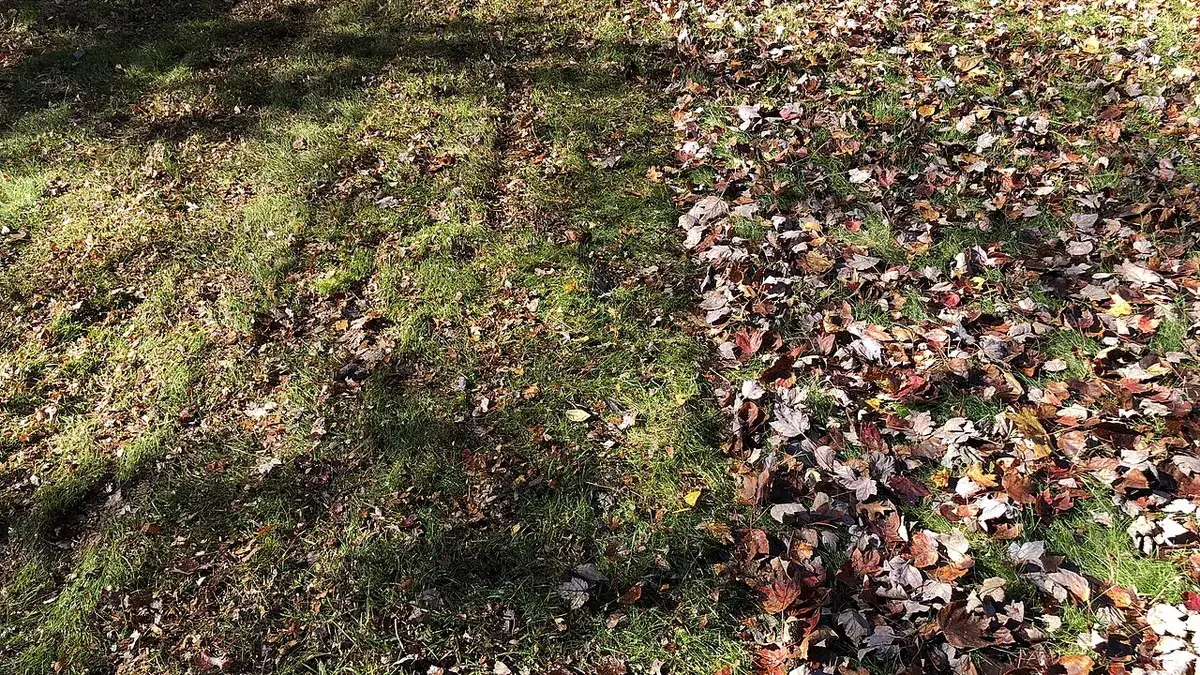

There’s no calendar date for the last mow. Extension services agree on one rule: keep mowing as long as the grass keeps growing. Iowa State says “Continue to mow the lawn until the grass stops growing in the fall”, and Wisconsin calls mowing until the lawn stops growing “the most important lawn care practice for the balance of fall” (Iowa State; Wisconsin Horticulture).
At a glance
| Cool-season lawns | Warm-season lawns | |
|---|---|---|
| Grasses | Kentucky bluegrass, fescues, ryegrass | Bermudagrass, zoysia, centipede, St. Augustine |
| Last mow | When growth stops: daytime highs consistently below 50°F (Iowa State) | When the lawn goes dormant after the first frost (Mississippi State) |
| Fall height | 2.5 to 3 inches (Iowa State; UMN Turfgrass Science) | Bermudagrass, centipede, zoysia: 1 to 2 inches (UGA). St. Augustine: raise to 3 inches (Mississippi State) |
| After the last mow | Keep leaves from piling up on the grass | Mowing dormant turf is generally not necessary (LSU AgCenter) |
The rule: mow until the grass stops growing
For cool-season lawns, Iowa State says growth “stops growing when daytime high temperatures are consistently below 50 degrees Fahrenheit” (Iowa State). So watch the forecast, not the calendar: once daytime highs stay below about 50°F and the lawn no longer needs a trim, you’ve made your last mow. When that happens depends on where you live and on the year. Check frost dates for your ZIP to see when your cold season usually arrives.
Every mow, all fall Follow the one-third rule: “never remove more than ⅓ of the total leaf area at any one time” (Iowa State).
How high to mow in fall
Iowa State suggests lowering cool-season grass in mid- to late September “from 3.0 to 3.5 inches to 2.5 to 3 inches” (Iowa State). UMN’s turfgrass team says “If the standard mowing height for your lawn is 2.5 to 3 inches, we suggest to keep it at that”, and if it’s taller, to bring it down to 3 inches before winter (UMN Turfgrass Science). Wisconsin’s general advice is “Keep the lawn mowed between 2½–3½ inches tall” (Wisconsin Horticulture), UMN’s year-round advice is to “maintain a height of 3 inches or higher” (UMN Extension), and Penn State says “Most lawns should be mowed at 2 inches or above and on a regular basis as long as the grass is growing.” (Penn State Extension).
The last mow: don’t scalp it
Wisconsin says “If you want to set the mower a little shorter than normal that is okay, but the final mowing does not need to be excessively short” (Wisconsin Horticulture). If you do lower the height, UMN’s turf team says to “mow several times at this height, not just the final mow” (UMN Turfgrass Science). Don’t leave it too long either: Wisconsin says “Lawns going into winter excessively tall are prime candidates for snow mold disease development and damage from voles” (Wisconsin Horticulture).
- Keep mowing while the grass is still growing.
- Cut no more than one-third of the blade each time.
- Lower the height a little at most, over several mows.
- Don’t leave the lawn long going into winter.
- Shred or remove leaves so they don’t pile up on the grass.
Lawn looking brown, white or ragged right after you mow? See why your lawn looks bad after mowing.
Mulch or bag the last mow?
Mulching is the default. UMN suggests you “Mulch tree leaves to return nutrients to your soil”, and if you then see more leaves than lawn, “collect the tree leaves with the next mowing(s)” (UMN Extension). Bagging the last mow is fine too: “You can use a bagging attachment on the last mow of the year to help remove any excess organic matter and leaf litter” (UMN Turfgrass Science). Wisconsin says “a two-inch cover of mulched (shredded) leaves is reasonable” over winter, but “accumulated leaves of a four-inch depth are highly likely to lead to winter damage” (Wisconsin Horticulture).
Mid-Atlantic timing (examples, not a calendar rule)
Keep the Iowa State 50°F cue as the rule. Regional calendars only show when mowing often continues in a mild year:
In Maryland, University of Maryland Extension’s lawn calendar says cool-season lawns may still need mowing in mild weather from late October into mid-November, and that the final mow of the season “may be in late November”. For that last cut, UMD says mowing “½ inch shorter than usual” (tall-fescue calendar: “1/2 - 1 inch shorter than the usual height”) can improve air circulation and discourage snow mold (University of Maryland Extension; University of Maryland Extension).
In Delaware, University of Delaware turf BMPs say cool-season mowing typically begins late March to early April and “mowing will not typically be required after approximately November 15th” (University of Delaware Extension). That is an average, not a hard stop—pair it with the 50°F rule above.
Warm-season lawns
Bermudagrass, zoysia, centipede and St. Augustine stop when they go dormant. Mississippi State says “Grass will continue growing, however, until the first frost marks the beginning of dormancy” (Mississippi State). For dormant warm-season turf, LSU says “Mowing while turfgrass is dormant is generally not necessary” (LSU AgCenter), and Nebraska’s warm-season calendar lists “Mowing is not necessary” for late fall (Nebraska Extension). We found no extension temperature cue for warm-season grass, so go by growth. Heights: UGA says “The recommended mowing height for bermudagrass, centipedegrass, and zoysiagrass is 1-2 inches”, and Mississippi State says to “Raise mowing height to 3 inches on St. Augustinegrass to promote winter hardiness” (UGA Extension; Mississippi State).
Thin spots? See whether it’s too late to plant grass seed, including dormant seeding.
Leaves piling up on the lawn? See what to do with fall leaves, including mowing them into the lawn.
Fall weeds still growing? See fall lawn weed control. For the rest of the month, see November garden tasks by zone.
Frequently asked questions
Should the last mow of the season be short?
Only a little shorter, if at all. Wisconsin Extension says setting the mower a little shorter than normal is okay, but the final mowing does not need to be excessively short. If you lower the height, UMN Turfgrass Science says to mow several times at that height, not just the final mow.
Should I mulch or bag the last mow?
Either works. Mulching leaves returns nutrients to the soil (UMN Extension), and bagging the last mow can remove excess leaf litter (UMN Turfgrass Science). Wisconsin says about 2 inches of shredded leaves is fine over winter, but 4 inches is likely to damage the lawn, so bag or remove leaves when they cover the grass.
When do I stop mowing warm-season grass?
When it goes dormant. Mississippi State says warm-season grass keeps growing until the first frost marks the beginning of dormancy, and LSU AgCenter says mowing dormant turfgrass is generally not necessary.
When to stop mowing lawn in PA?
There’s no set date; go by growth. Penn State Extension says: “Most lawns should be mowed at 2 inches or above and on a regular basis as long as the grass is growing.” For when growth stops, Iowa State Extension says cool-season grass stops growing when daytime highs are consistently below 50°F.
When should I stop mowing my lawn in the fall?
There’s no calendar date—stop when growth stops. For cool-season lawns, Iowa State says that’s when daytime highs stay consistently below about 50°F; keep height at 2.5–3 inches. Warm-season lawns stop once they go dormant after the first frost (Mississippi State; LSU AgCenter). In Maryland, UMD says the final mow may be in late November in mild weather (often ½ inch shorter than usual); in Delaware, UD turf BMPs say mowing typically is not required after about November 15.
Sources
- Iowa State University Extension: When can i stop mowing lawn fall; Late summer and fall lawn care
- University of Wisconsin–Madison Extension: Fall Lawn Care and Winter Prep; Wisconsin Horticulture; Wisconsin Horticulture
- University of Minnesota Turfgrass Science: Q and A: Fall Lawncare
- University of Minnesota Extension: UMN Extension; UMN Extension
- Penn State Extension: Lawn management through the seasons
- University of Maryland Extension: Lawn maintenance calendar; Lawn maintenance calendar maryland tall fescue home lawns
- University of Delaware Cooperative Extension: University of Delaware Extension
- Mississippi State University Extension: Fall lawn guide
- LSU AgCenter: The One-Third Mowing Rule
- Nebraska Extension: Warm season lawn calendar
- University of Georgia Extension: UGA Extension
Got your results back? Our soil test translator explains each number on a university lab soil test report in plain English.