
Why Your Lawn Looks Bad After Mowing (and How to Fix It)
Quick answer
Brown, gray or whitish tips right after mowing usually mean a dull blade tore the grass instead of cutting it (UC IPM; UW–Madison Extension). A brown, stemmy look means it was cut too short, or scalped (K-State). Clumps come from mowing wet grass, and damaged footprints or tracks from walking or mowing on frosted grass. Sharpen the blade, cut no more than one-third of the leaf at a time, and mow dry, unfrosted grass.
Jump to
- At a glance: what your lawn is telling you
- Brown, white or gray tips after mowing: a dull mower blade
- Brown, stemmy or dead-looking after mowing: scalping
- Clumps and a ragged cut: mowing wet grass
- Uneven, striped or leaning grass after mowing
- Footprints and tracks in fall: don’t mow frosted grass
- How to fix a lawn that looks bad after mowing
- More guides
- Frequently asked questions
Updated
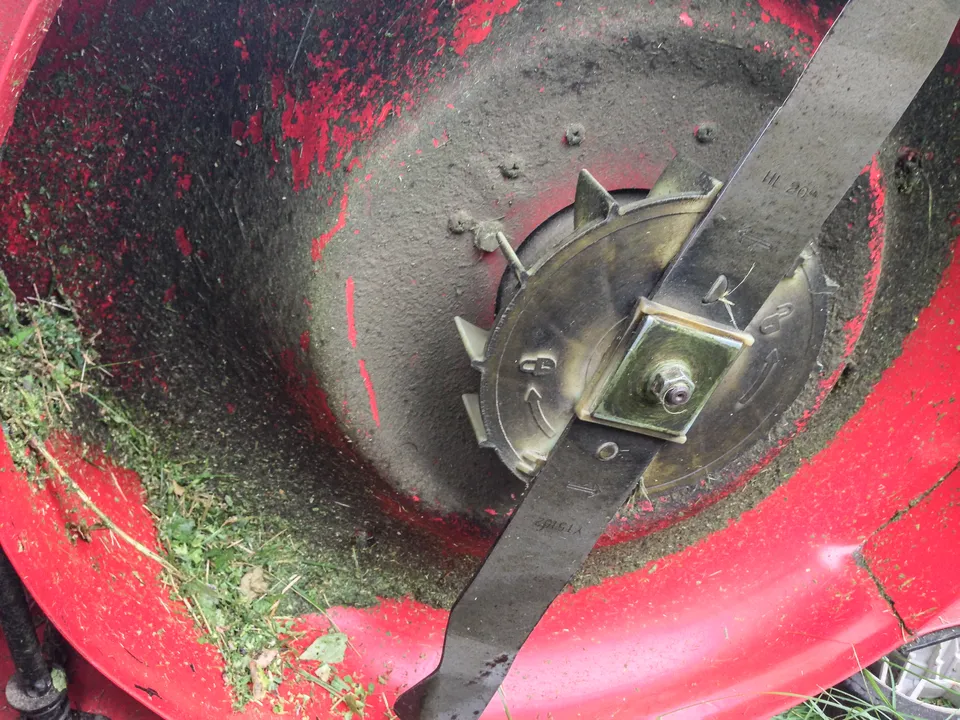

A lawn that looks worse right after you mow usually points to the mower or the timing, not the grass itself. Brown, white or gray tips, brown stubble, clumps, stripes and footprints each point to a different cause. Here is how to tell them apart and fix each one, from university extension turf guides.
Jump to: At a glance Dull blade Scalping Wet grass Uneven or striped Frosted grass How to fix it
At a glance: what your lawn is telling you
| What you see after mowing | Likely cause | Fix |
|---|---|---|
| Lawn turns a little gray soon after mowing; torn tips then yellow or brown | Dull blade (UC IPM) | Sharpen mower blades as needed (UC IPM) |
| Brownish to whitish cast across the lawn | Frayed tips from a dull blade (UW–Madison) | Inspect the cut tips after mowing; sharpen (UC IPM) |
| Brown, stemmy look; yellow or brown patches | Scalping: too much leaf cut at once (K-State, UC IPM) | Cut no more than one-third of the leaf at a time (UMN); raise the height, then lower it gradually (K-State, Arkansas) |
| Scalped high spots or bumps | Uneven ground (UC IPM) | Alternate mowing patterns (UMN) |
| Clumps of clippings | Mowing wet grass (UW–Madison) | Delay mowing when grass is wet (UMN) |
| Ripples or grass leaning one way | Same mowing direction every time (UC IPM) | Vary the direction each time (UC IPM) |
| Uneven cut | Unbalanced blade (Illinois Extension) | Keep the blade balanced (Illinois Extension) |
| Footprints or tracks that show up as damage | Walking or mowing on frosted grass (K-State, Nebraska Extension) | Wait until the frost is gone (K-State) |
About this table: Each row is summarized from the extension source named in it; the sections below quote each one and link to it.
Brown, white or gray tips after mowing: a dull mower blade
This is the most common reason a lawn looks bad right after mowing. UW–Madison Extension: “Dull mower blades tear the grass rather than cut it. The frayed tips of torn leaves dry out quickly, giving the lawn a brownish to whitish appearance.” UC IPM describes the timing: “Lawns injured by dull mower blades turn somewhat gray soon after they are mowed. Leaf tips are torn or shredded and eventually turn yellow to brown in color and die.”
- Why grass looks white after mowing. Purdue Extension shows “A lawn with a whitish cast resulting from mowing with a dull blade”, and Virginia Tech quotes its turf specialist: “A lawn cut with dull blades will have a brownish-white cast where the torn grass tips have died”.
- Why grass looks brown after cutting. University of Minnesota Extension: “A dull rotary lawn mower blade frays the ends of grass blades and results in brown tips, which are unsightly and increase the plants’ susceptibility to certain plant diseases.”
- More than looks. Illinois Extension: “Dull blades bludgeon, rip, and tear grass blades leaving ragged wounds that are more difficult to heal.” UW–Madison adds that “The turf loses more water from the frayed leaf tips and becomes more susceptible to diseases and environmental stresses.” Cornell Turfgrass Program says dull blades also “increase fuel use by up to 20%”.
- Check it. UC IPM: “Inspect leaf blades regularly after mowing. Sharpen mower blades as needed.” Look closely at a few cut blades: shredded, ragged tips mean the blade needs work.
- Safety first. Before you take a blade off, Illinois Extension says to “disconnect the spark plug or for electric mowers remove the battery”.
How often to sharpen: sources differ. Cornell Turfgrass Program recommends “sharpening mower blades at least once a season or when you see ragged brown grass blade tips.” Virginia Tech’s turf specialist recommends “at least three times per growing season”, and Purdue Extension says blades “may need sharpening four to six times a year.” UW–Madison, by contrast, says “Depending on the amount and roughness of use, mower blades need to be sharpened every 1–3 years.” The shared rule: sharpen whenever the cut tips look ragged.
Brown, stemmy or dead-looking after mowing: scalping
If the lawn looks brown and stubbly rather than frayed, it was probably cut too short. K-State Turf: “Scalping is the term used to describe the brown, stemmy, appearance of the turfgrass canopy when too much of the leaf blade is removed during any single mowing.” UC IPM: “Scalping occurs when turf is mowed so short that the stem tissue is exposed. Damaged turf turns yellow or brown.”
- Common causes. K-State lists “equipment malfunction, dull mower blades, blades not turning properly, or waiting too long between successive mowings.” UC IPM adds “Mowing on uneven surfaces can also cause scalping, especially on hills or where the mower wheels drop into a low spot.” and “Thick thatch layers or extremely weedy turf can also contribute to scalping.”
- The one-third rule. University of Minnesota Extension: “Remove no more than 1/3 of the leaf tissue when you mow”. For example, “To maintain a 3-inch lawn, mow before the grass reaches 4.5 inches tall.”
- Bermudagrass browning after mowing. University of Arkansas Extension: “Some species like bermudagrass are more prone to scalping than zoysiagrass or tall fescue.”
- Grass got too tall? K-State says to “resist the temptation to cut everything back to the original mowing height all at once”. “Start with the mower as high as it can be set then mow every few days allowing for some re-growth.”
Fall mowing height and the last mow of the year are covered in when to stop mowing your lawn in fall.
Clumps and a ragged cut: mowing wet grass
UW–Madison Extension: “Cutting wet turf causes the clippings to form clumps on the lawn”. University of Minnesota Extension says simply: “Delay mowing when grass is wet.” UC IPM adds that “Mowing the lawn soon after it has been watered will cause the grass to stick to the mower blades and clog the mower.”
Sometimes the rain doesn’t stop. Purdue Turf says “it is better to mow when wet rather than waiting until the grass is dry but grown to 8 inches tall.” Its pointers for mowing wet grass:
- “Set the mower as high as possible”
- “Remove mulching attachments in favor of side-discharge”
- “Mow so the grass is discharged onto the already mown area”
- Mowing twice in the same day “dramatically helps to break up the clippings.”
Uneven, striped or leaning grass after mowing
- Mowing direction. UC IPM: “Grass tends to grow in the direction it is mowed. To prevent your lawn from appearing to lean one way or the other, vary your mowing direction each time you mow.” Varying it also helps “prevent a washboard effect”. UMN: “Alternating mowing patterns will prevent continuous scalping and soil compaction.”
- An unbalanced blade. Illinois Extension: “An unbalanced blade can create a slight wobble that causes strain on a mower and may result in an uneven cut.”
- Bumps and low spots. Uneven ground causes scalping on its own, especially on hills or where the mower wheels drop into a low spot (UC IPM, above). Varying the direction keeps the mower from hitting the same spots the same way every time.
Footprints and tracks in fall: don’t mow frosted grass
On cold fall mornings, wait. K-State Turf says “Walking, driving, rolling, mowing or whatever you are gonna do on turfgrass while there is frost out can be very damaging”, because the ice crystals “act like knives and cut into the turfgrass leaves”. Its advice: “wait until the frost is gone before you drive, walk or whatever you plan on doing in your yard this fall.”
Nebraska Extension: “If you walk on frozen turf, you may notice footprints through the lawn when the lawn starts to green back up in the spring. This can even occur on cold mornings when there is frost on the turf.” Late in the season the damage lingers, because “during the winter the turf is dormant and cannot recover from the damage until the spring.”
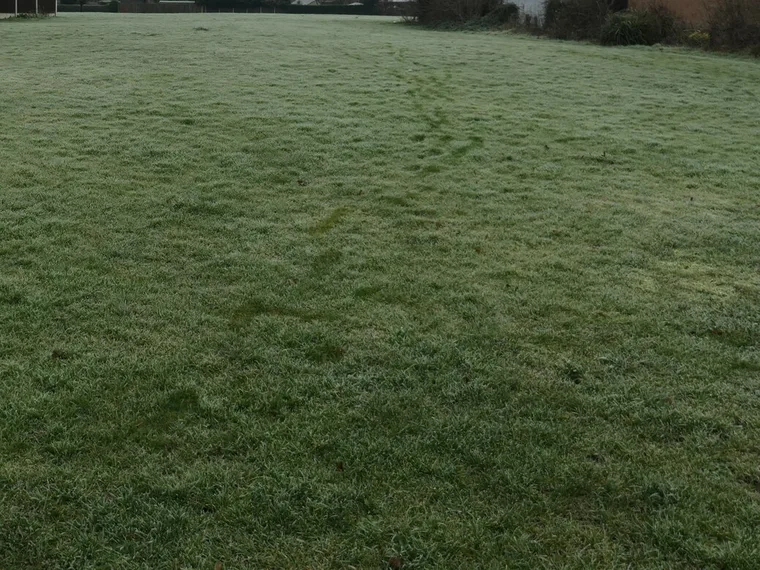

Frost mornings usually begin around your first fall frost. Typical dates by zone:
| USDA zone | Earliest 10% of ZIP codes | Typical first fall frost (32°F), median | Latest 10% of ZIP codes |
|---|---|---|---|
| Zone 3 | Sep 7 | Sep 23 | Oct 1 |
| Zone 4 | Sep 19 | Sep 30 | Oct 7 |
| Zone 5 | Sep 26 | Oct 7 | Oct 18 |
| Zone 6 | Oct 5 | Oct 19 | Oct 28 |
| Zone 7 | Oct 17 | Oct 28 | Nov 8 |
| Zone 8 | Oct 31 | Nov 10 | Nov 20 |
| Zone 9 | Nov 17 | Dec 3 | Dec 26 |
| Zone 10 | Dec 13 | Dec 26 | Jan 9 (frost is rare in about 70% of zone 10 ZIP codes) |
| Zone 11 | Frost rare | Frost rare | Frost rare |
About this table: For each ZIP code we use the nearest NOAA NCEI 1991–2020 U.S. Climate Normals station’s 50%-probability first-fall date, summarized by USDA zone across ZIP codes (median ZIP, plus the earliest and latest 10% of ZIPs). This is our data summary, not an extension recommendation. Source: NOAA NCEI U.S. Climate Normals. Look up the frost date for your ZIP.
How to fix a lawn that looks bad after mowing
- Sharpen or replace the blade, then look at the cut tips after the next mow (UC IPM; Cornell).
- Raise the deck and come back down slowly. University of Arkansas Extension: “raise the mowing height so as not to remove more than one-third of the leaf, then gradually reduce the mowing height in subsequent weeks.”
- Give scalped grass time. UC IPM: “Bermudagrass and other creeping-type grasses will generally outgrow scalping injury”, while “Ryegrasses, fescues and other bunch grasses may need to be reseeded or sodded if damage is severe.” For timing, see whether it’s too late to plant grass seed.
- Mow dry, unfrosted grass, and skip mowing in a drought: UC IPM says to “Avoid mowing under drought conditions or when the leaf blades are wet.”
- Frost footprints wait for spring. Dormant turf can’t repair them until it greens up (Nebraska Extension).
More guides
When to stop mowing your lawn in fall What to do with fall leaves Is it too late to plant grass seed? Fall lawn weed control Frost dates by ZIP Planting tips
Frequently asked questions
Why does my grass look white after mowing?
Usually a dull blade. Torn, frayed grass tips dry out and give the lawn a brownish to whitish cast (UW–Madison Extension; Purdue Extension). Sharpen or replace the blade and check the cut tips after the next mow.
Why is my grass brown after I cut it?
Either a dull blade or scalping. A dull blade frays the tips, which turn brown (University of Minnesota Extension). Scalping, cutting off too much leaf at once, leaves a brown, stemmy look (K-State). Remove no more than one-third of the leaf at each mow.
Can dull mower blades kill grass?
They kill the torn leaf tips, not the whole lawn. UC IPM says the shredded tips eventually turn yellow to brown and die, and turf weakened by mower blade injury is more susceptible to drought or diseases. We found no extension source saying a dull blade kills a lawn outright.
Is it OK to mow wet grass?
It’s better to wait. Mowing wet grass makes clippings clump (UW–Madison Extension) and can clog the mower (UC IPM). If rain keeps going, Purdue says it is better to mow wet than to let grass reach 8 inches: set the mower high, use side-discharge and mow twice to break up clumps.
Can I mow when there’s frost on the grass?
No. K-State says the ice crystals act like knives on frosted grass, so wait until the frost is gone. Nebraska Extension says footprints on frosted turf can show up as damage when the lawn greens up in spring.
How often should I sharpen my mower blade?
Sources differ: at least once a season (Cornell), at least three times per growing season (Virginia Tech), four to six times a year (Purdue), or every 1 to 3 years depending on use (UW–Madison). The common rule is to sharpen whenever the cut grass tips look ragged.
Sources
- University of Wisconsin–Madison Extension: Lawn Maintenance (Wisconsin Horticulture)
- University of California Agriculture and Natural Resources (UC ANR): Dull Mower Blades (UC IPM Turfgrass); Scalping (UC IPM Turfgrass); How to Mow (UC IPM Turfgrass)
- Purdue University: AY-8: Mowing, Dethatching, Aerifying and Rolling Turf
- Virginia Tech (Virginia Cooperative Extension): Sharpen lawnmower blades now for a perfect spring lawn (Virginia Tech News)
- University of Minnesota Extension: Mowers and mowing safety; Mowing practices for healthy lawns
- University of Illinois Extension: Mower maintenance
- Cornell Turfgrass Program: Make Adjustments (Lawn care: four steps to success)
- Kansas State University Research and Extension: Scalping Turf (Lawn Problem Solver); Frost… already?
- University of Arkansas Cooperative Extension: FSA6023: Mowing Your Lawn (PDF)
- Purdue University Turfgrass Science: Mowing Wet Grass
- Nebraska Extension: Avoid Traffic on Frozen Turf
- NOAA National Centers for Environmental Information: U.S. Climate Normals 1991–2020