
Should You Prune Hydrangeas in Fall? A Guide by Hydrangea Type
Quick answer
Usually not. Bigleaf (mophead and lacecap), mountain, oakleaf and climbing hydrangeas bloom on old wood and already carry next year’s flower buds in fall, so cutting them back now removes those flowers; prune them just after they bloom in summer. Panicle hydrangeas such as ‘Limelight’ and smooth hydrangeas such as ‘Annabelle’ bloom on new wood and are usually pruned in late winter or early spring, though some extension services say fall pruning is fine for them.
Jump to
- Old wood vs. new wood: why timing depends on the type
- When to prune hydrangeas, by type
- Pruning mophead, bigleaf and oakleaf hydrangeas: not in fall
- Pruning Limelight and Annabelle hydrangeas in fall
- What you can do to hydrangeas in fall
- Why didn’t my hydrangea bloom?
- How to tell which hydrangea you have
- More guides
- Frequently asked questions
Updated
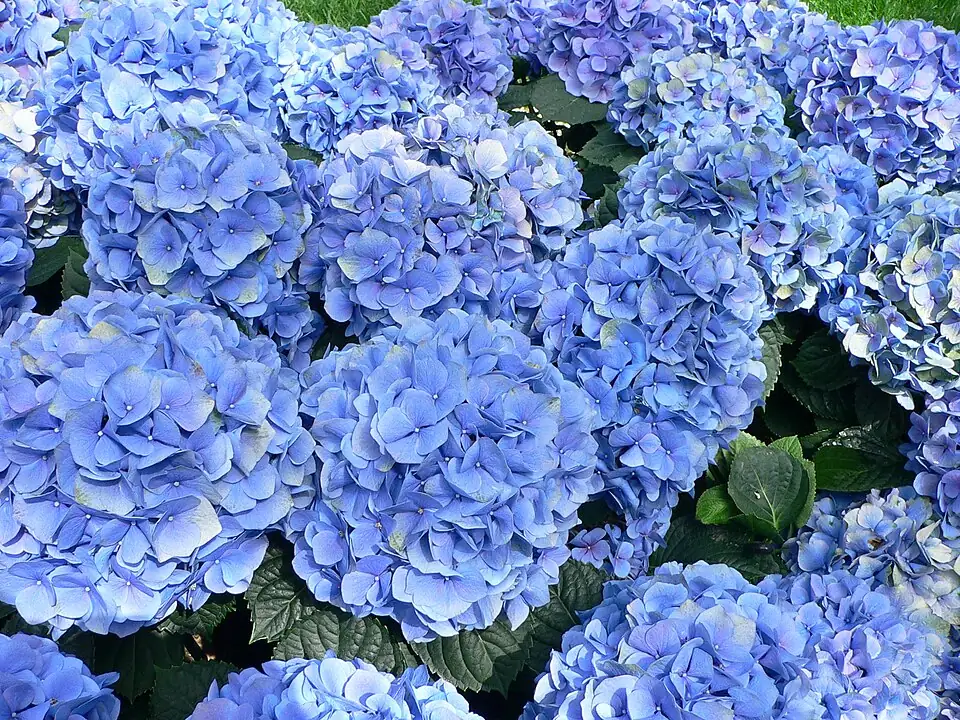

Whether you can prune hydrangeas in fall depends on the type: some already carry next year’s flower buds, and some don’t make their buds until spring. Here’s how to tell which you have, when each type is pruned, what is safe to do now, and why a hydrangea may not have bloomed, from university extension guides.
Jump to: Old wood vs. new wood When to prune each type Mophead and oakleaf Limelight and Annabelle What to do in fall No blooms? Which hydrangea do I have?
Old wood vs. new wood: why timing depends on the type
UMD Extension: “Pruning timing depends on the type of Hydrangea you have.” It also warns that “Many hydrangeas cannot replace flower buds that were accidentally removed.” The type that matters is the age of the stems that carry the flower buds.
- Old wood “is branch growth at least one year old.” Hydrangeas that bloom on it “develop flower buds during summer and autumn the year prior to when those flowers open. The flower buds lie dormant on the stems during winter” (UMD). Cutting these stems back in fall removes next year’s flowers.
- New wood “is branch growth produced in the current growing season.” These hydrangeas form buds just before they open, so “Overwintering stems do not have any dormant flower buds on them because they have not yet formed.” (UMD)
- Reblooming (remontant) hydrangeas produce “flower buds on both old and new wood” (UMD).
Even when flowers aren’t a concern, UMD says pruning “still should be avoided close to winter dormancy.”
When to prune hydrangeas, by type
| Hydrangea type | Blooms on | When to prune | In fall |
|---|---|---|---|
| Bigleaf: mophead and lacecap (H. macrophylla) | Old wood | Just after the flowers fade (UMD, UMass). UNH (New Hampshire) and Iowa State say to wait until new growth appears in spring, then cut out dead wood. | Don’t cut back |
| Mountain (H. serrata) | Old wood | Same as bigleaf (UMD, Iowa State, UMass). UNH: don’t remove stems until spring growth shows which buds are alive. | Don’t cut back |
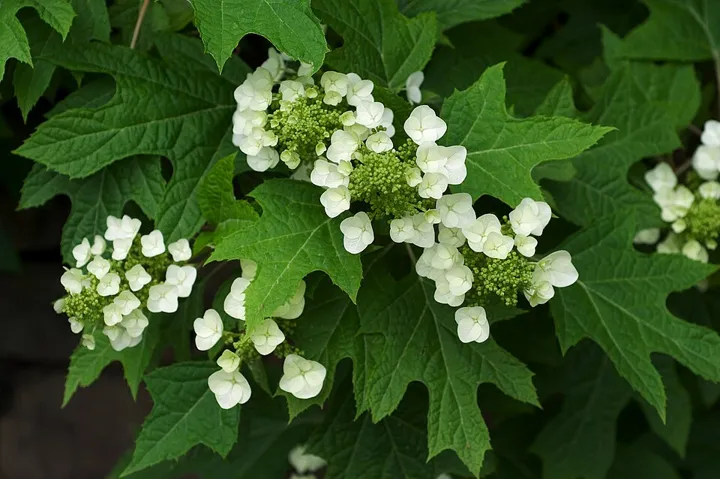
| Oakleaf (H. quercifolia) | Old wood | After flowering, in summer (UMD, Iowa State, UMass); UGA says no later than August 1. | Don’t cut back |
| Climbing (H. anomala subsp. petiolaris) | Old wood | Little if any pruning; trim far-reaching side branches shortly after flowering (UNH). | Don’t cut back |
| Reblooming bigleaf (such as Endless Summer) | Old and new wood | Early spring, or after the first flush of flowers fades; remove as little wood as possible (UMD). | Not needed |
| Smooth (H. arborescens, such as ‘Annabelle’) | New wood | Late winter or early spring (UMD, UNH, Iowa State, UMass): to about 12 inches (UMD), 6 to 12 inches (UMass), or to the ground (Iowa State). | Can wait (see below) |
| Panicle (H. paniculata, such as ‘Limelight’ and PeeGee) | New wood | Late winter to early spring, before the leaves come out (UNH, UMass); Iowa State: March or early April to reduce size. | Can wait (see below) |
About this table: Data: UMD Extension, UNH Extension, Iowa State, UMass Extension and UGA Extension (Paulding County, Georgia). Cultivar names are the examples those sources give. Not sure which type you have? See how to tell.
Pruning mophead, bigleaf and oakleaf hydrangeas: not in fall
- Prune right after flowering. UMD: for old-wood hydrangeas, “Prune just after the flowers fade.” Illinois Extension says old-wood hydrangeas “start to develop their flower buds for the following year in August and September”, so prune “as soon as possible after they are done blooming and by August 1 at the latest.” UGA Extension (Paulding County, Georgia) gives the same August 1 cutoff.
- How far. UMD: “Bigleaf and mountain hydrangeas can be trimmed to about 12 inches off the ground. Oakleaf hydrangea can be pruned to the same height or left taller”.
- In cold-winter areas, wait for spring. UNH Extension (New Hampshire) says bigleaf flower buds are often killed by cold and drying winds, so “Wait to prune your bigleaf hydrangeas until new growth appears in the spring. Make pruning cuts one quarter inch above the first set of live buds.” Iowa State: “For maximum bloom, wait until the shrubs begin to leaf out before pruning bigleaf hydrangeas.”
- Oakleaf needs little pruning. Iowa State: “This species performs best with minimal pruning. When needed, prune back stems after flowering.” For bigleaf winter protection in cold zones, see how to protect shrubs in winter.

Pruning Limelight and Annabelle hydrangeas in fall
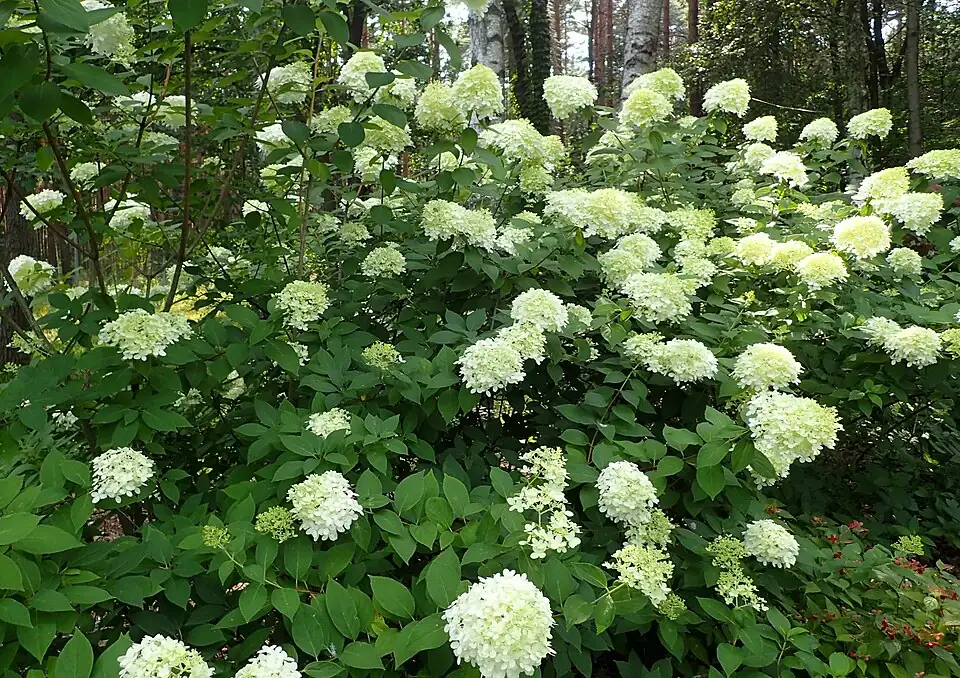
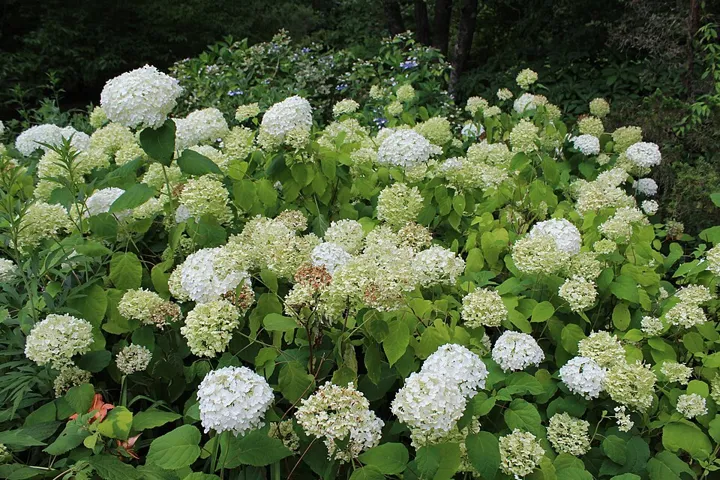
Panicle hydrangeas such as ‘Limelight’ and smooth hydrangeas such as ‘Annabelle’ bloom on new wood, so a fall cut doesn’t remove next year’s buds. Extension sources differ on whether fall is a good time:
- Fall is acceptable to some. UGA Extension (Paulding County, Georgia) says new-wood hydrangeas “can be pruned to the ground in the fall and they will emerge in the spring with bountiful blooms”, and that “‘PeeGees’ can be pruned in the fall or winter.” Illinois Extension says new-wood types “can be, and are commonly, drastically cut back in the fall. Repeatedly doing this can weaken the plant, though.” It suggests pruning every other year or every three years.
- Late winter or early spring is the more common advice. UMD Extension: for new-wood hydrangeas, “Prune in late winter or early spring.” UNH Extension: panicle hydrangeas “should be pruned in late winter to early spring before leaf emergence.” Iowa State: “Smooth hydrangeas can be pruned back to the ground in late winter/early spring.” UMass Extension gives late winter to early spring, before leaf-out, for both.
- Bigger flowers on smooth hydrangea. UNH: “Old stems will flower, but the flowers will be small. For larger, more robust flowers, prune stems to the ground in the spring.”
- Tree-form (standard) panicle hydrangeas. UMD: they “can be renewal-pruned only if you want to convert them back into a shrubby shape with lower branches; otherwise, their trunks should not be cut down.”
- Overgrown panicle hydrangeas. UNH: “Large, old shrubs can also be rejuvenated in the spring by cutting a third of the oldest stems to the ground in the first year, half the second year, and the remaining old stems the third year.”
If you want one rule: leave the stems standing over winter and cut new-wood hydrangeas back in late winter or early spring. That is the timing UMD, UNH, Iowa State, UMass and Illinois Extension all give, and UMD notes that faded flowers can provide winter interest.


What you can do to hydrangeas in fall
- Deadhead if you like. UMD: deadheading “removes only spent flowers at the branch tips (no further down the branch) and can be performed any time after flowers fade for any hydrangea type. It is not necessary to remove spent flowers to maintain plant health.”
- Or leave the flowers. UMD: “Aging and faded hydrangea flowers can develop appealing colors and provide winter interest.”
- Save dead-wood pruning for spring. UMD: “When shrubs break dormancy in spring, you will be able to see if any stems have dead tips from winter damage.” UNH’s check: “stems with live buds will be green on the inside, while dead stems will be brown.”
- Protect bigleaf buds in cold areas. UNH suggests a mesh cylinder around the plant filled with fallen leaves; details are in how to protect shrubs in winter.
For other shrubs, see when to prune flowering shrubs. For the rest of the garden, see which perennials to cut back in fall.
Why didn’t my hydrangea bloom?
- Three common causes. UMass Extension lists “too much shade”, “improper pruning”, and “winter damage to stems, or frost damage to flower buds”, which it says is especially likely with bigleaf and mountain hydrangeas.
- Older bigleaf cultivars in cold climates. Iowa State says “most older cultivars do not bloom well in Iowa as plants often die back to the ground in winter.” It notes that after a cold winter, rebloomers such as Endless Summer “die back to ground level but bloom in late summer on the current year’s growth.”
- Pruned at the wrong time. UGA: “If you have had problems in the past with your hydrangeas not blooming, it may be because you have pruned them at the wrong time or the frost has killed your blooms.”
How to tell which hydrangea you have
- Blue or purple flowers: bigleaf or mountain hydrangea. UMD: “The only commonly-grown species that can produce blue or purple flowers are bigleaf hydrangea (Hydrangea macrophylla) and mountain hydrangea (Hydrangea serrata).” Bigleaf flowers are rounded “mophead” or flat “lacecap” clusters.
- Oak-shaped leaves: oakleaf hydrangea, which “has characteristic oak-shaped leaves” (UMD).
- Cone-shaped flowers in late summer: panicle hydrangea. Iowa State: “Plants produce cone-shaped flower clusters in late summer. Flowers are initially creamy white but gradually change to pink or dark rose.”
- White, flat to round clusters: smooth hydrangea. Iowa State: “Plants produce white flowers in flat to roundish clusters in late spring and summer.” It calls ‘Annabelle’ “the most widely grown cultivar”.
- A clinging vine: climbing hydrangea, which UNH says “grows up structures with aerial rootlets along its stems”.
More guides
When to prune flowering shrubs Protect shrubs in winter How to winterize roses Cut back perennials in fall November garden tasks Low-maintenance shrubs Shrub guides Pruning guides
Frequently asked questions
Can I prune hydrangeas in fall?
For most hydrangeas, no. Bigleaf (mophead and lacecap), mountain, oakleaf and climbing hydrangeas bloom on old wood: University of Maryland Extension says they develop flower buds during summer and autumn the year before they open, so cutting them back in fall removes next year’s flowers. Prune them just after the flowers fade. Panicle and smooth hydrangeas bloom on new wood and can wait until late winter or early spring.
Should I prune hydrangeas in fall or spring?
It depends on the type. Old-wood types (bigleaf, mountain, oakleaf) are pruned just after they flower in summer, and in cold areas UNH and Iowa State Extension say to wait until new growth appears in spring. New-wood types (panicle and smooth) are pruned in late winter or early spring, according to University of Maryland, UNH, Iowa State and UMass Extension.
Can I cut back Limelight or Annabelle hydrangeas in fall?
Yes, according to some extension sources. UGA Extension in Paulding County, Georgia, says new-wood hydrangeas such as ‘Limelight’ and ‘Annabelle’ can be pruned to the ground in fall, and Illinois Extension says they are commonly cut back in fall but that doing it repeatedly can weaken the plant. University of Maryland, UNH and Iowa State Extension recommend late winter or early spring instead.
Should I cut off dead hydrangea blooms before winter?
You don’t have to. University of Maryland Extension says removing spent flowers is not necessary for plant health and can be done any time after flowers fade for any hydrangea type. Faded flowers can also add winter interest. Cut only the spent flower at the branch tip, no further down the stem.
Should I cut back hydrangeas before winter?
Not old-wood types, since their stems already carry next year’s flower buds. University of Maryland Extension also says pruning should be avoided close to winter dormancy even when flowers are not a concern. Wait until spring, when dead stem tips from winter damage are easy to see, to decide how far to cut.
When do you prune hydrangeas that bloom on old wood?
Just after the flowers fade, in summer (University of Maryland Extension). Illinois Extension says to finish by August 1 at the latest, because old-wood hydrangeas start forming next year’s flower buds in August and September; UGA Extension gives the same August 1 cutoff.
Which hydrangeas can I prune in fall?
New-wood types such as panicle (‘Limelight’) and smooth (‘Annabelle’), according to some extension sources (UGA Paulding; Illinois). Old-wood types (bigleaf, mountain, oakleaf, climbing) should not be cut back in fall.
How do I protect hydrangeas in winter?
For bigleaf types that bloom on old wood, UNH Extension says to surround the plant with burlap or chicken wire (or a mesh cylinder) and fill the enclosure with fallen leaves, then remove the protection in spring after frost risk (or once buds begin to expand). Do not prune those types in late summer or fall. University of Maryland Extension also recommends burlap or plastic wind barriers on stakes about 12 to 18 inches from winter-vulnerable shrubs. More general shrub winterizing is in our protect shrubs in winter guide.
Sources
- University of Maryland Extension: Pruning Hydrangeas
- UNH Extension: Pruning Hydrangeas [fact sheet]
- Iowa State University Extension: Pruning Hydrangeas
- UMass Extension: Growing Tips: Hydrangeas, Pruning for Blooms
- University of Georgia Extension: Pruning Hydrangeas: It Depends! (Paulding County)
- University of Illinois Extension: For showy blooms, pruning hydrangeas is all about the timing